Torpedo Bat Design Philosophy: The Science, the Story, and the Shape That Changed Baseball
Baseball bats have not fundamentally changed in over 150 years. The silhouette — narrow handle, wide barrel, heaviest at the tip — has been taken for granted as simply what a bat looks like. Nobody questioned whether it was actually optimized for how humans hit.
That changed when a physicist from MIT asked a deceptively simple question: "Where are you trying to hit the ball?" The answers players gave set off a design revolution. The torpedo bat is the result — and its philosophy is not about aesthetics. It is about correcting a 150-year-old engineering mistake.
The Problem Traditional Bat Design Never Solved
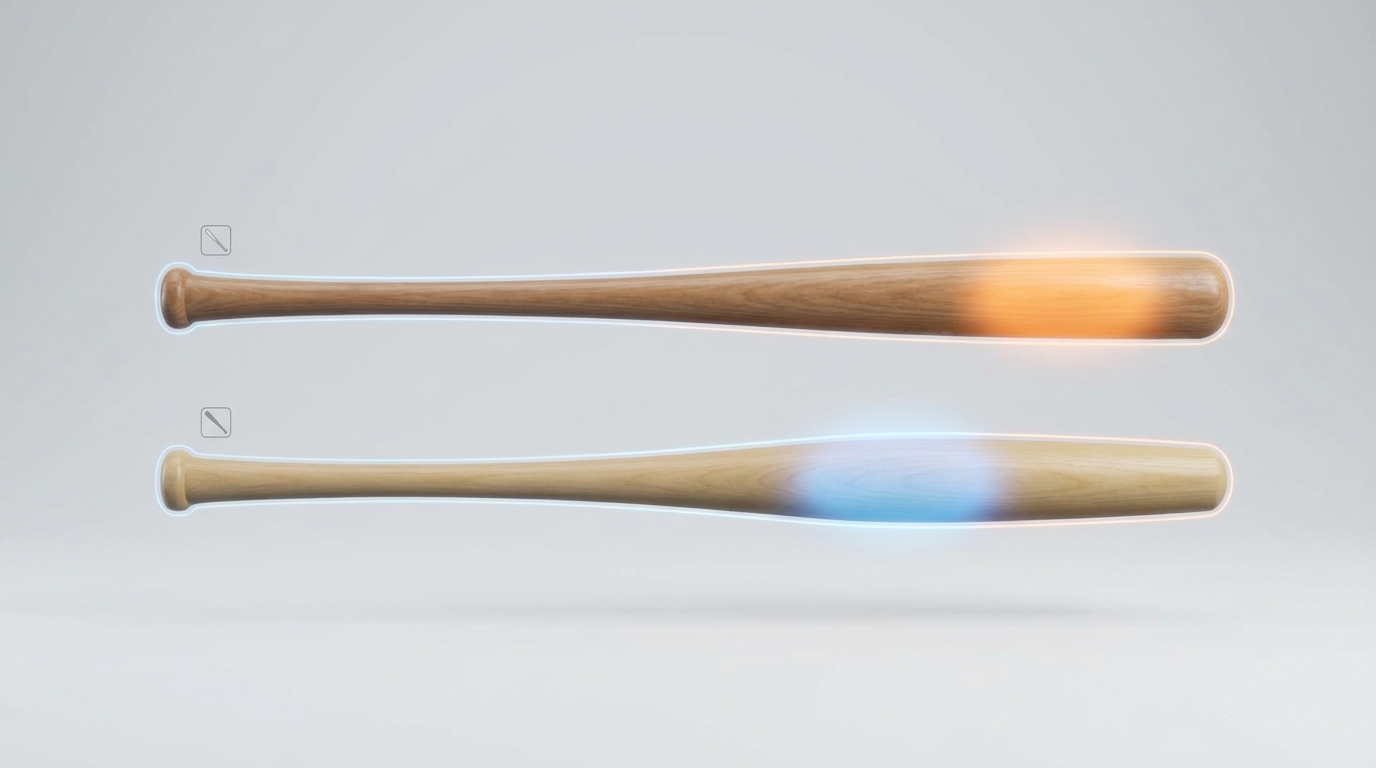
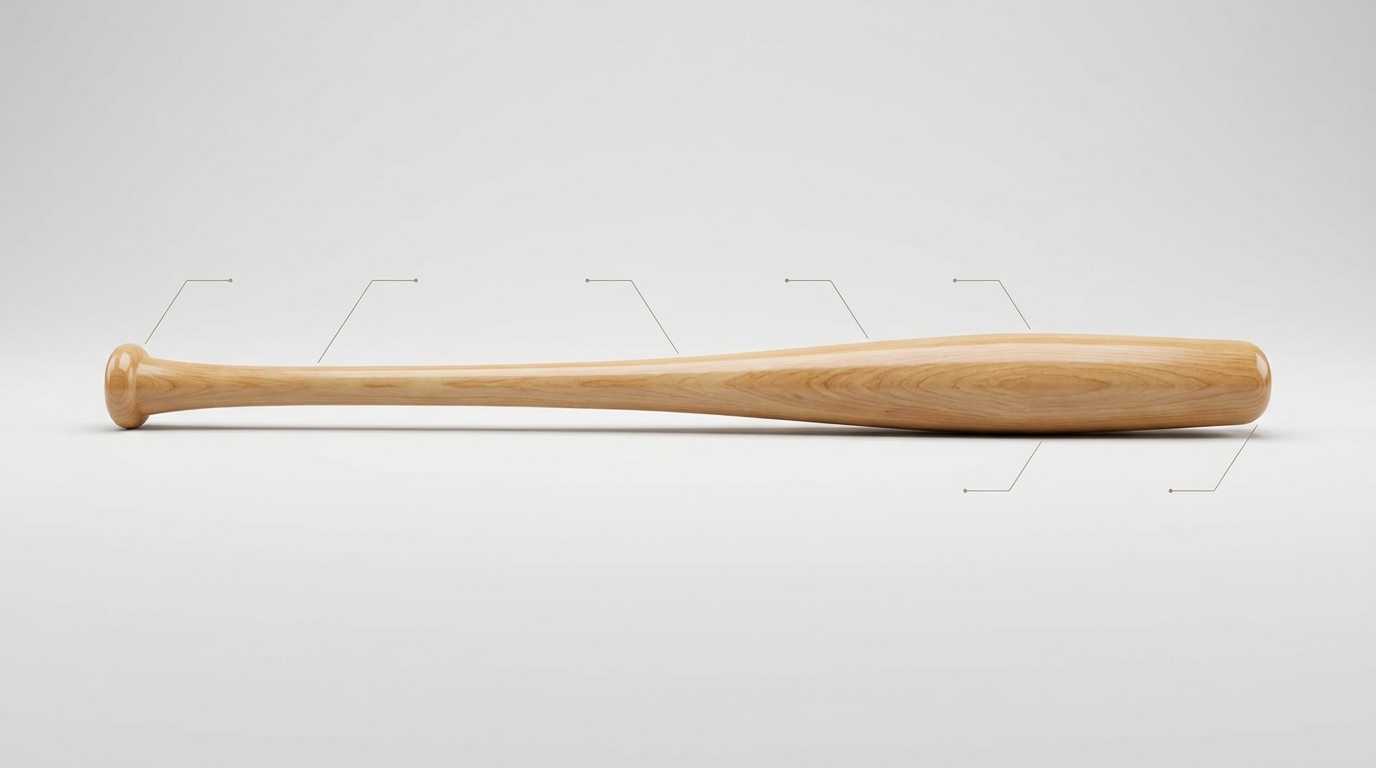
To understand why the torpedo bat exists, you first have to understand what was wrong with every bat that came before it. Traditional wood bats are built using a woodworking convention: the barrel widens gradually from the handle, reaching its maximum diameter at or very near the end of the bat, where it rounds off at the tip.
This makes intuitive sense — more wood at the end means more mass to hit the ball with. But there's a catch: the end of the bat is not where most players actually make contact.
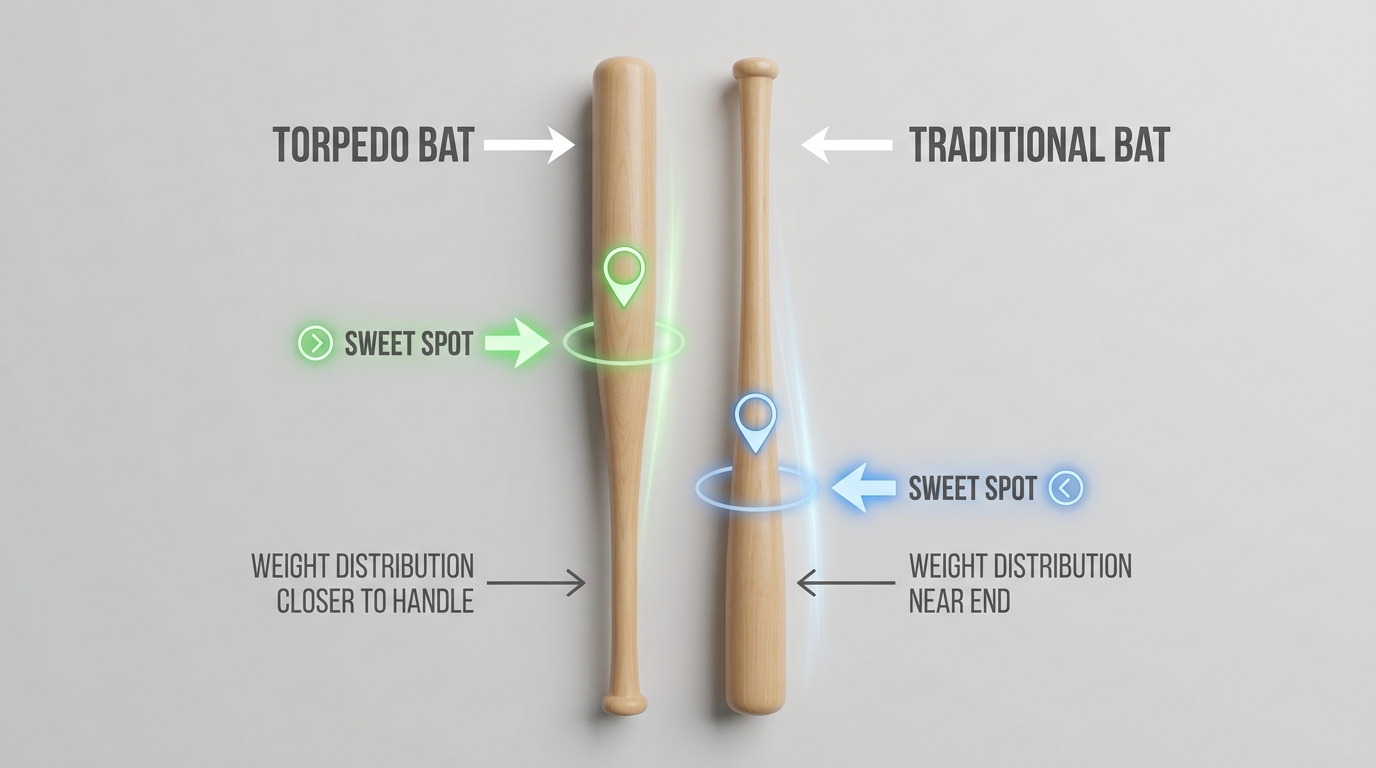
Swing data collected through high-speed cameras, bat sensors, and contact tracking across MLB and minor league players consistently showed the same pattern: the majority of contact happens 6 to 8 inches from the end of the barrel, not at the very tip. The fattest, heaviest part of the traditional bat — its theoretical "sweet spot" — was sitting in a location most hitters almost never reached.
The traditional bat design was, in essence, putting peak performance where players contact the ball the least. It was an engineering mismatch hiding in plain sight for over a century.
The Theoretical Roots: A 1963 Physics Paper That Predicted Everything
Aaron Leanhardt was not working in a vacuum when he developed the torpedo bat. The theoretical foundation for his design existed in academic literature decades before he picked up a bat.
In 1963, Stanford physicist Paul Kirkpatrick published a paper in the American Journal of Physics that contained a single sentence which would prove remarkably prescient: "The mass should be where the collision is expected to occur."
Kirkpatrick was writing about the general physics of bat-and-ball collisions, not proposing a specific bat design. But the principle was clear — and for decades, it sat in an academic journal while the baseball industry kept manufacturing bats the same way it always had.
In 2019, baseball physicist Terry Bahill went further in his book The Science of Baseball, writing: "manufacturers should enlarge the bat diameter in the region of the sweet spot, and then they can reduce the diameter in other less important regions of the barrel." He was describing a torpedo bat — years before it existed commercially.
What was missing was not the theory. It was the combination of player data, bat manufacturing access, and someone willing to break the unwritten rule that a bat's diameter never decreases before the end cap.
How Aaron Leanhardt Turned Physics Into a Bat
Aaron Leanhardt's path to the torpedo bat was methodical, not accidental. Beginning around 2022, when he was working in the Yankees minor league hitting department, he started having structured conversations with hitters about a specific question: where do you want to hit the ball?
The answer was always the same. Players pointed to a spot on the barrel 6 to 7 inches from the tip — not the end. That was their natural contact zone. And when Leanhardt looked at where the thickest part of their bat sat, it was nowhere near that spot.
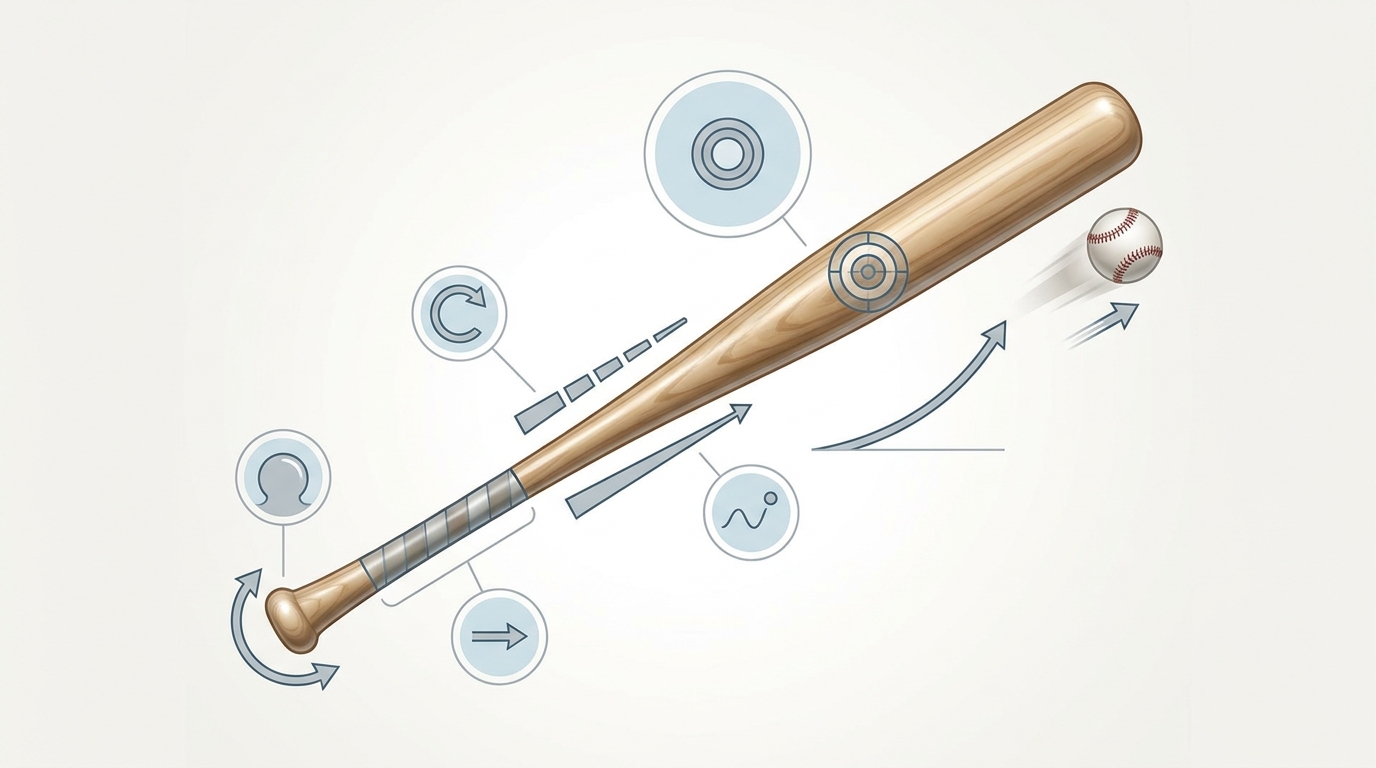
His physics training kicked in. If the problem was a mismatch between mass location and contact location, the solution was straightforward: move the mass. Take wood away from the end of the bat, where it rarely makes contact, and redistribute it to the zone where the player actually hits.
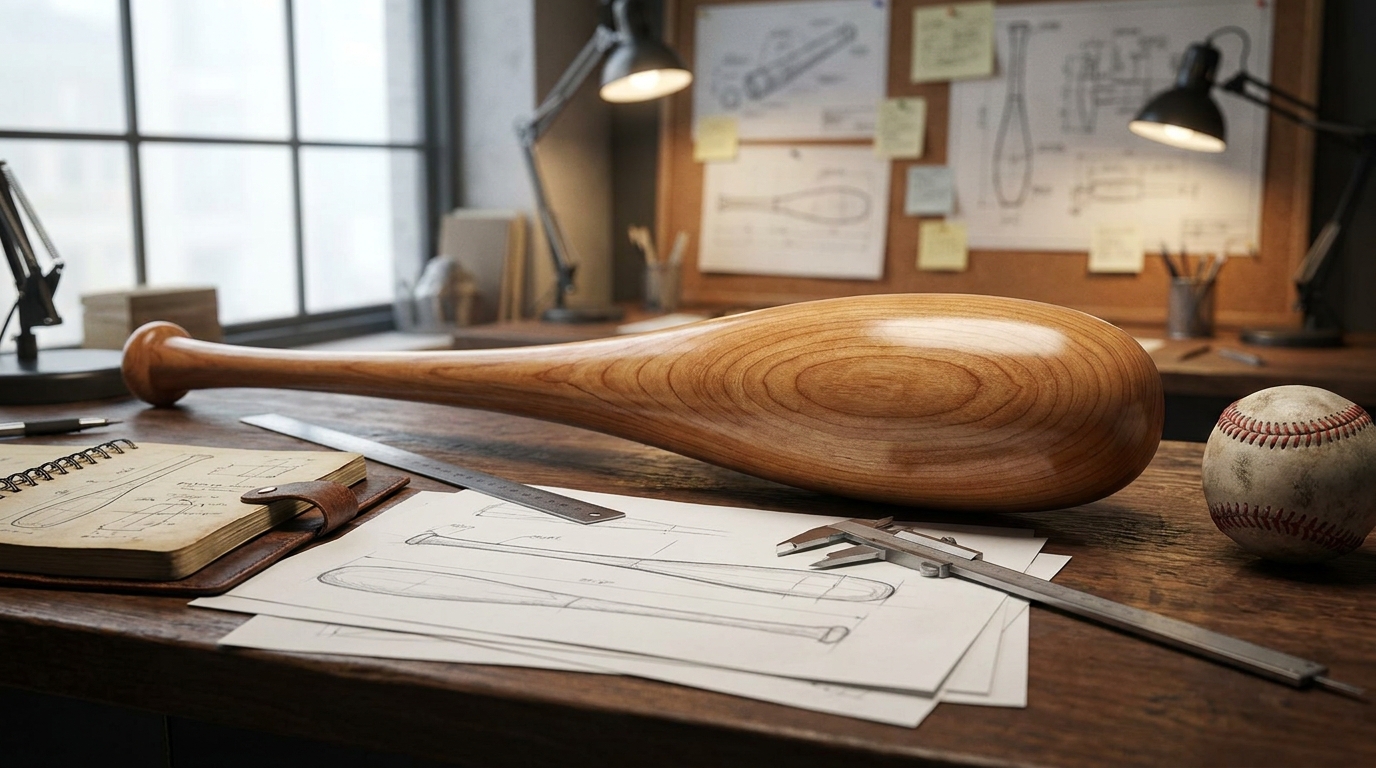
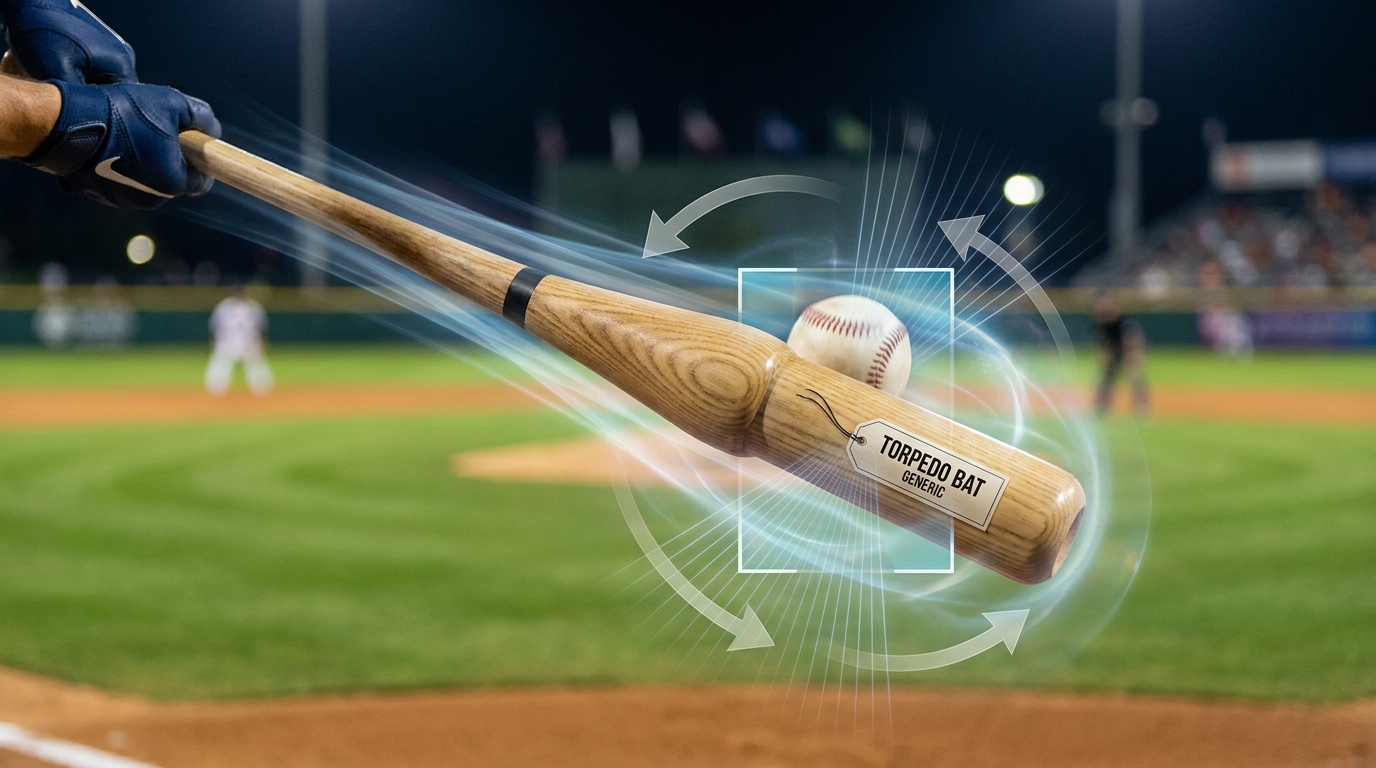
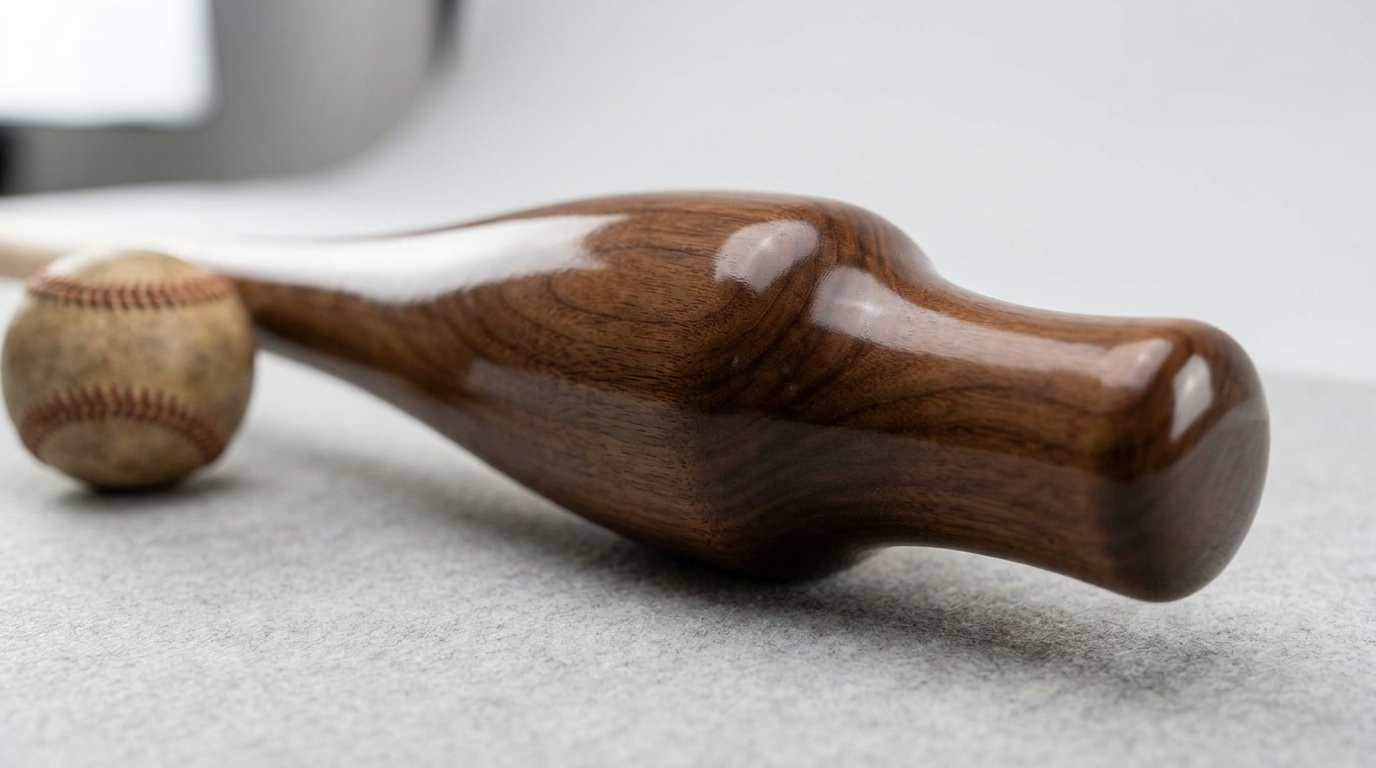
The visible result — a bat that widens aggressively in the middle of the barrel and then tapers back down before the tip — looks unusual. But it is not the point of the design. The shape is simply the geometric consequence of putting maximum wood exactly where the hitter needs it.
The Iterative Feedback Loop
Leanhardt did not design the torpedo bat alone or overnight. Beginning in 2023, he worked with MLB-approved bat manufacturers to produce prototypes. Players — first in the minors, then at the big league level — demoed the bats, gave feedback, and the designs were refined.
"There's many different makes and models that have gone through this process," Leanhardt said, "some of which never saw the field of play and some of which are hitting a lot of home runs right now."
This feedback loop is central to the torpedo bat's design philosophy. Unlike traditional bats, which are manufactured to standard profiles and fitted to players by length and weight, torpedo bats are built from the player's data outward. The bat is a response to the hitter, not a template the hitter adapts to.
The Customization Principle
Every torpedo bat is different because every hitter is different. The position of maximum barrel diameter — the key measurement that defines a torpedo bat — is unique to each player's swing profile. A hitter with a more contact-oriented, inside-out swing may have their torpedo point positioned slightly differently than a pull-heavy power hitter.
This is a fundamental shift from how baseball bats have historically been sold: as largely identical tools of the same wood species, length, and weight. The torpedo bat treats the bat as precision equipment, engineered for an individual, the way golf clubs are fit to a specific player's swing.
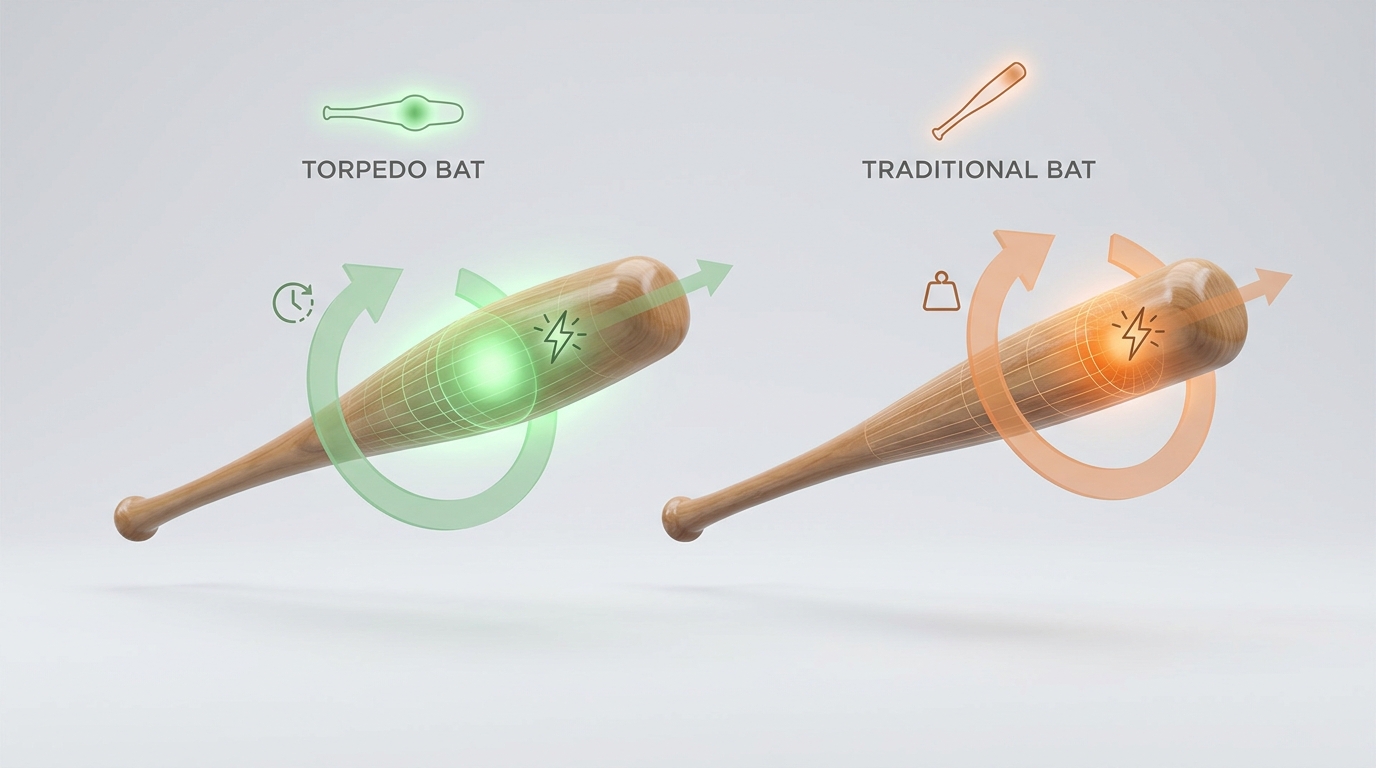
Traditional Bat vs. Torpedo Bat: Design Philosophy Side by Side
| Design Principle | Traditional Bat | Torpedo Bat |
|---|---|---|
| Max Diameter Location | Barrel tip | 6–8" from tip |
| Sweet Spot Position | Near end cap | Player-specific zone |
| Weight Philosophy | End-heavy | Contact-zone heavy |
| Moment of Inertia | Higher (harder to swing) | Lower or neutral |
| Customization | Standard profile | Built from swing data |
| Shape Profile | Cylindrical taper | Bowling pin silhouette |
| Design Origin | Woodworking tradition | Physics research |
The Design Evolution: From Theory to the Batter's Box
Stanford physicist Paul Kirkpatrick publishes: "The mass should be where the collision is expected to occur" — the theoretical foundation for the torpedo bat.
Baseball physicist Terry Bahill publishes The Science of Baseball, proposing a bat design that enlarges diameter at the sweet spot and reduces it elsewhere — a near-exact torpedo concept.
Aaron Leanhardt, while working in the Yankees minor league system, begins asking players where they prefer to make contact. The answer consistently points closer to the handle than the barrel tip.
Leanhardt begins collaborating with MLB-approved bat manufacturers to produce prototypes. Players start demoing early iterations. Multiple designs are tested and discarded.
Leanhardt joins the Yankees MLB staff as analyst. Giancarlo Stanton uses a torpedo bat in the postseason, hitting 7 HRs in 14 playoff games. The bat is barely noticed publicly.
The Yankees hit 15 HRs in 3 games using torpedo bats. The design goes viral overnight. MLB confirms legality under Rule 3.02. Every team in baseball takes notice.
Breaking the Unwritten Rule of Bat Design
For well over a century, bat makers operated under an implicit constraint: the diameter of a bat never decreases before the very end of the barrel. The barrel might taper in different ways from maker to maker, but the shape always widened from handle to tip. No one ever drew a bat profile that went wide, then narrow again, before the end cap.
Leanhardt broke this rule — not out of rebellion, but because the physics demanded it. If mass needs to sit in the middle of the barrel rather than the end, and the total bat weight must stay within a player's preferred range, then wood has to be removed from the tip region to be redistributed inward. That removal is what creates the taper-back effect that gives the torpedo bat its distinctive bowling-pin shape.
Penn State acoustics professor Dan Russell called it "an unwritten rule" that torpedo designers broke. MLB approved the design under Rule 3.02, which governs only maximum diameter (2.61 inches at the thickest point) and maximum length (42 inches). The rule says nothing about where that thickest point must be — and that silence is exactly the space Leanhardt's design occupies.
The torpedo bat is not a loophole. It is a physics-correct design that happened to fit inside rules that had never anticipated anyone would question the traditional bat profile.
Design Criticisms: What the Skeptics Get Right
The torpedo bat's design philosophy is not without legitimate critique. Understanding the counterarguments is important for anyone evaluating whether the bat is right for them.
The mass tradeoff concern
Moving wood away from the barrel tip reduces the bat's collision mass at that location. Physics holds that momentum = mass × velocity. A lighter barrel tip means slightly less kinetic energy in certain contacts. Physicists like David Levine (PhD, University of Pennsylvania) and Alan Nathan have noted this tradeoff requires careful balance.
The swing habit critique
Some hitting purists argue the torpedo bat could mask or even reinforce poor swing mechanics — particularly getting jammed on inside pitches — rather than developing the swing to handle the full barrel. If the sweet spot comes to the hitter rather than the hitter finding the sweet spot, it changes the feedback loop of plate discipline.
The sample size caveat
The bat's viral moment came in a 3-game opening series. The full-season body of evidence is still being established. Pitchers will adjust. Early-season data in baseball is notoriously volatile. Serious analysts are waiting for a larger dataset before drawing conclusions.
These are valid points. Leanhardt himself has acknowledged the tradeoffs and has been careful not to oversell the bat. The torpedo bat is a tool — one that works very well for certain hitters, particularly those whose natural contact point sits far inside the traditional sweet spot.
Frequently Asked Questions About Torpedo Bat Design
The shape is a byproduct of moving mass from the tip of the barrel to the player's contact zone. To add wood in the middle of the barrel without exceeding weight or diameter limits, wood must be removed from the end — creating the characteristic narrowing before the tip that makes the bat look like a bowling pin.
It depends on the player's swing data. The design can benefit contact hitters who naturally hit closer to the handle by putting more mass at their contact zone. For power hitters who extend and barrel the ball at the end, a traditional bat may remain optimal. The design is player-specific, not role-specific.
Not from scratch. The concept of placing mass at the contact zone dates back to a 1963 academic paper by Stanford physicist Paul Kirkpatrick. Cupped bats — which remove mass from the barrel tip — have been used for decades on the same principle. Leanhardt's contribution was translating the theory into a practical, custom-manufactured, player-specific bat design used at the MLB level.
In principle, yes — the philosophy of aligning maximum barrel diameter with the hitter's contact zone can be applied to any bat material. However, metal and composite bats are governed by their own certification standards (BBCOR, USA Baseball) beyond MLB's wood bat rules, and torpedo-profile versions of those bats would need separate regulatory approval. As of 2025, torpedo-profile availability in non-wood bats is limited.
Gallery