Torpedo Bat Aerodynamics: What the Swing Drag Science Actually Shows
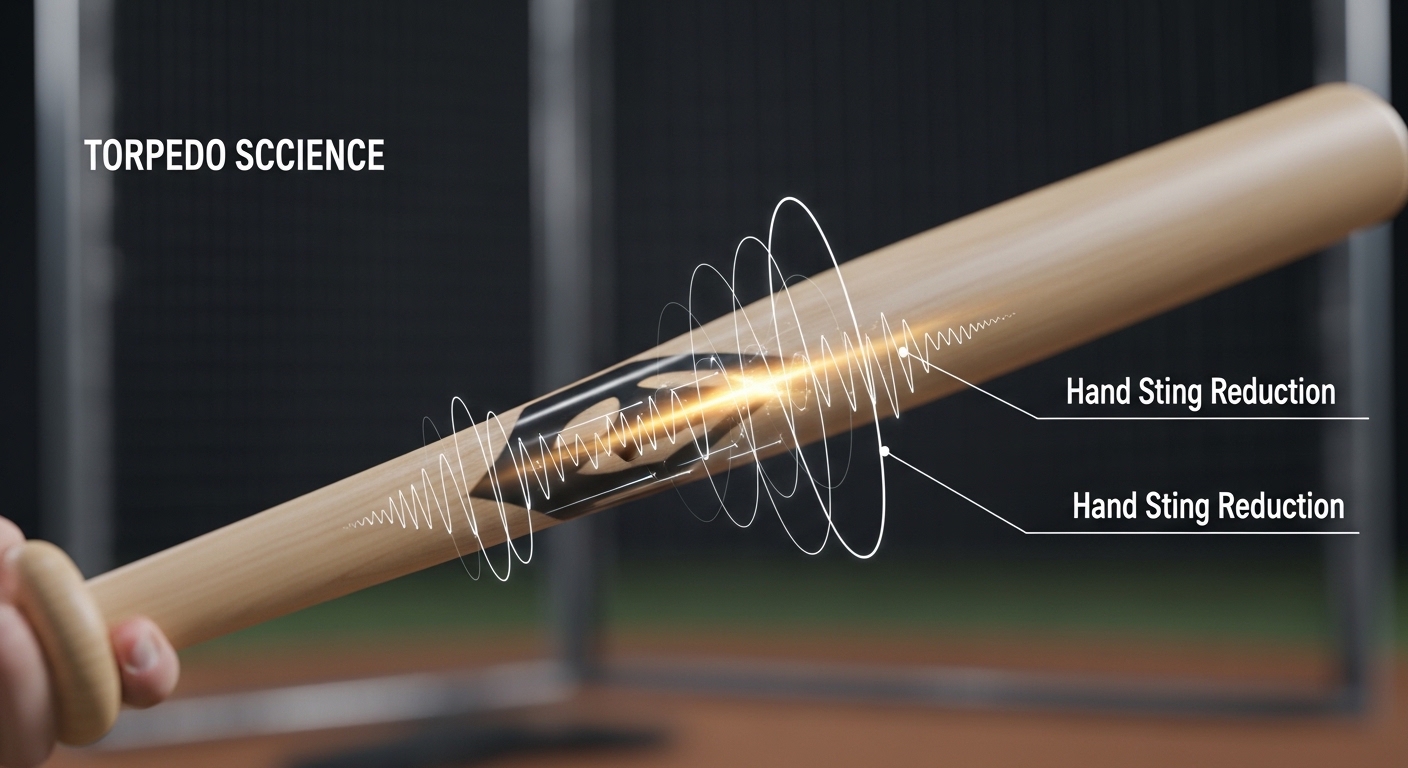
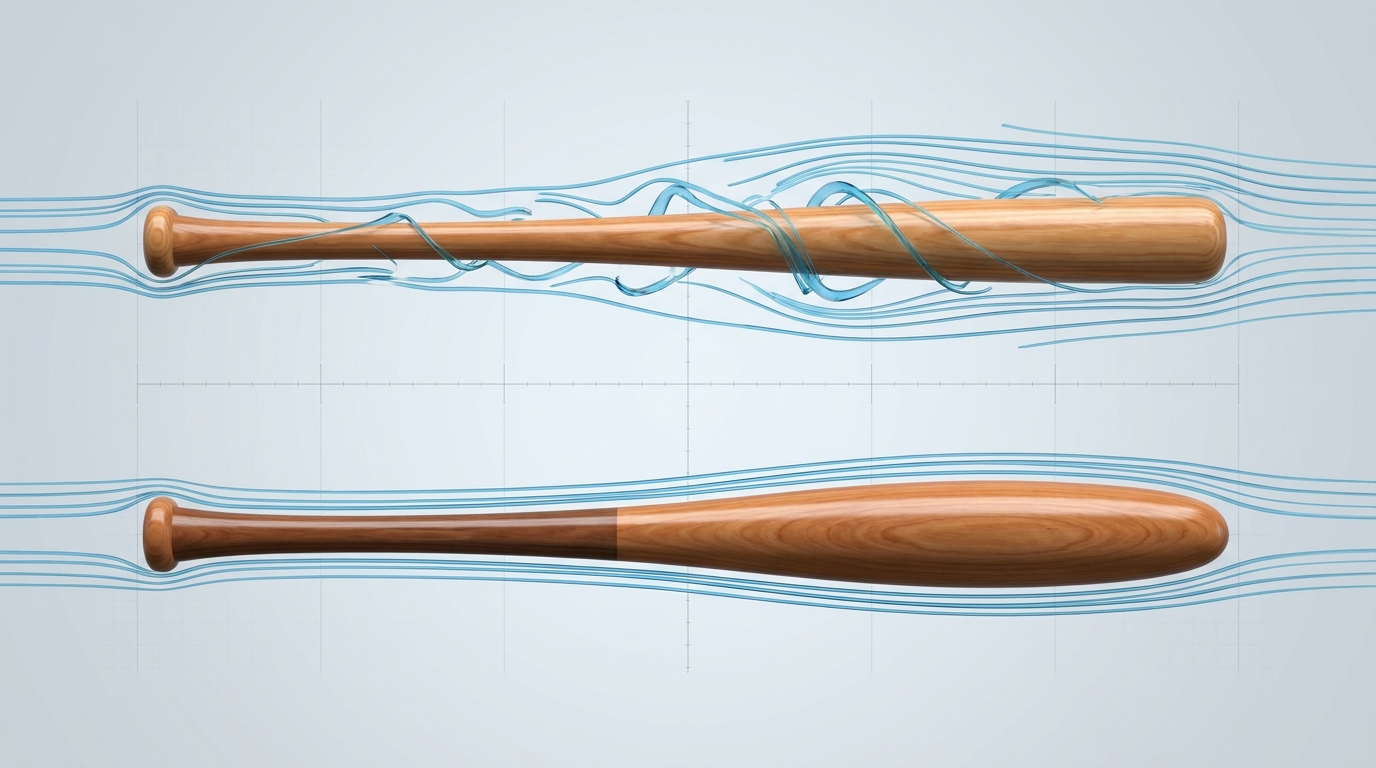
Ask most players why the torpedo bat performs better and you'll hear about the sweet spot, the wider barrel, the faster swing. Ask a physicist, and they'll add one more factor that almost nobody talks about: the torpedo bat tip moves through less air on every swing.
This is the aerodynamic dimension of the torpedo bat — real, measurable, but modest relative to the mass distribution and vibration gains covered elsewhere in this series.
Understanding where it fits — and where it doesn't — is part of understanding the full engineering picture.
Where Aerodynamics Fits in the Torpedo Bat's Performance Story
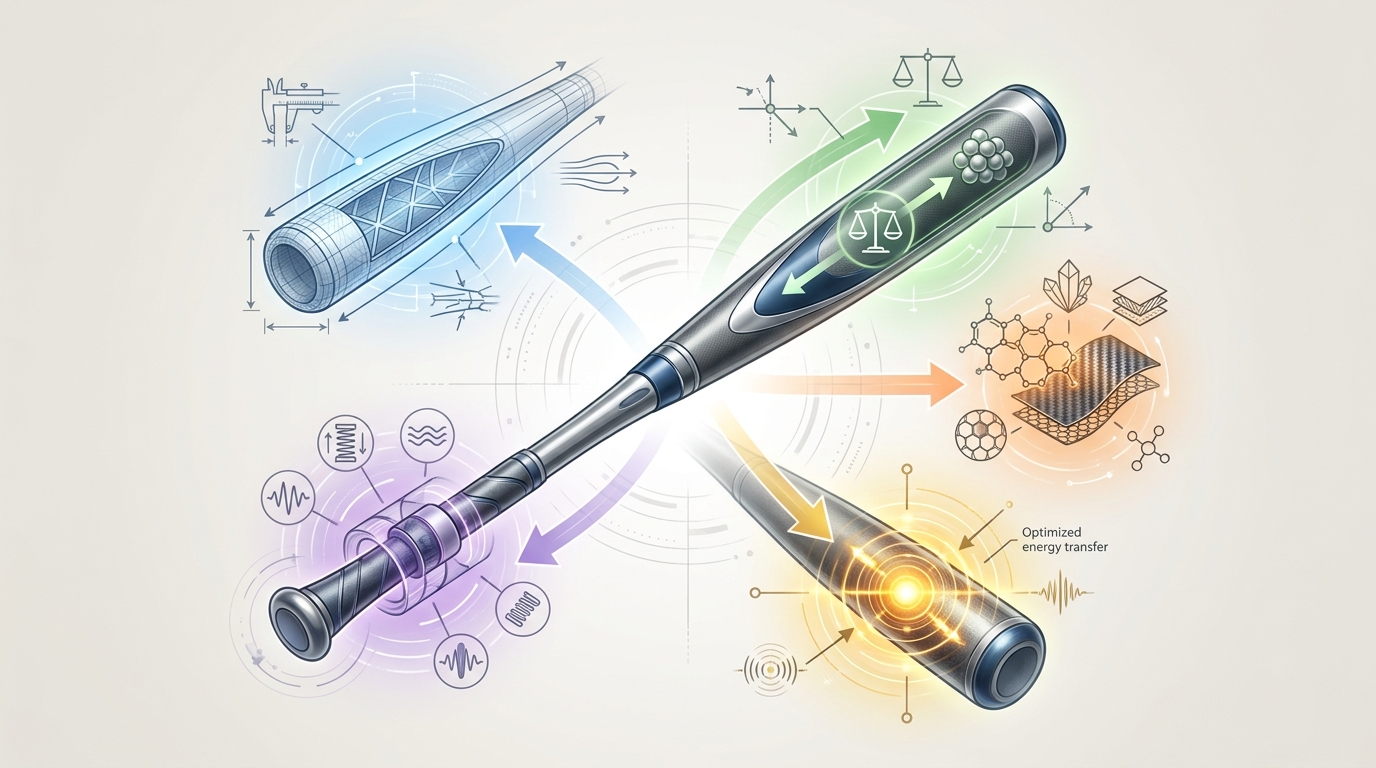
Before diving into the drag physics, it helps to establish context. The torpedo bat's performance advantages come from four distinct mechanisms. Aerodynamics is one of them — but it's important to know where it ranks and why.
| # | Performance Effect | Mechanism | Magnitude | Primary Research |
|---|---|---|---|---|
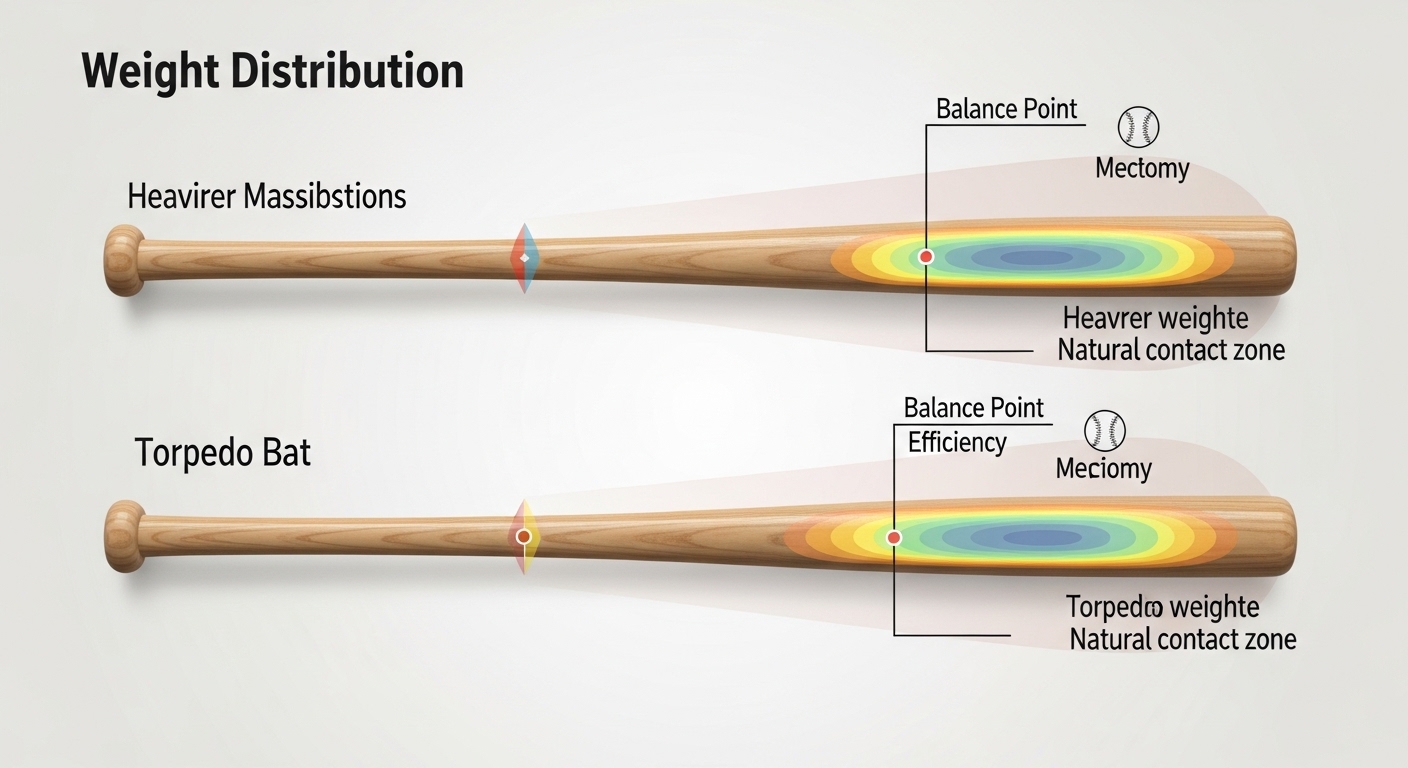
| 1 | Improved collision efficiency at contact zone | Peak mass concentration | Large — primary gain | Nathan (2025); Smith (WSU Bat Lab) |
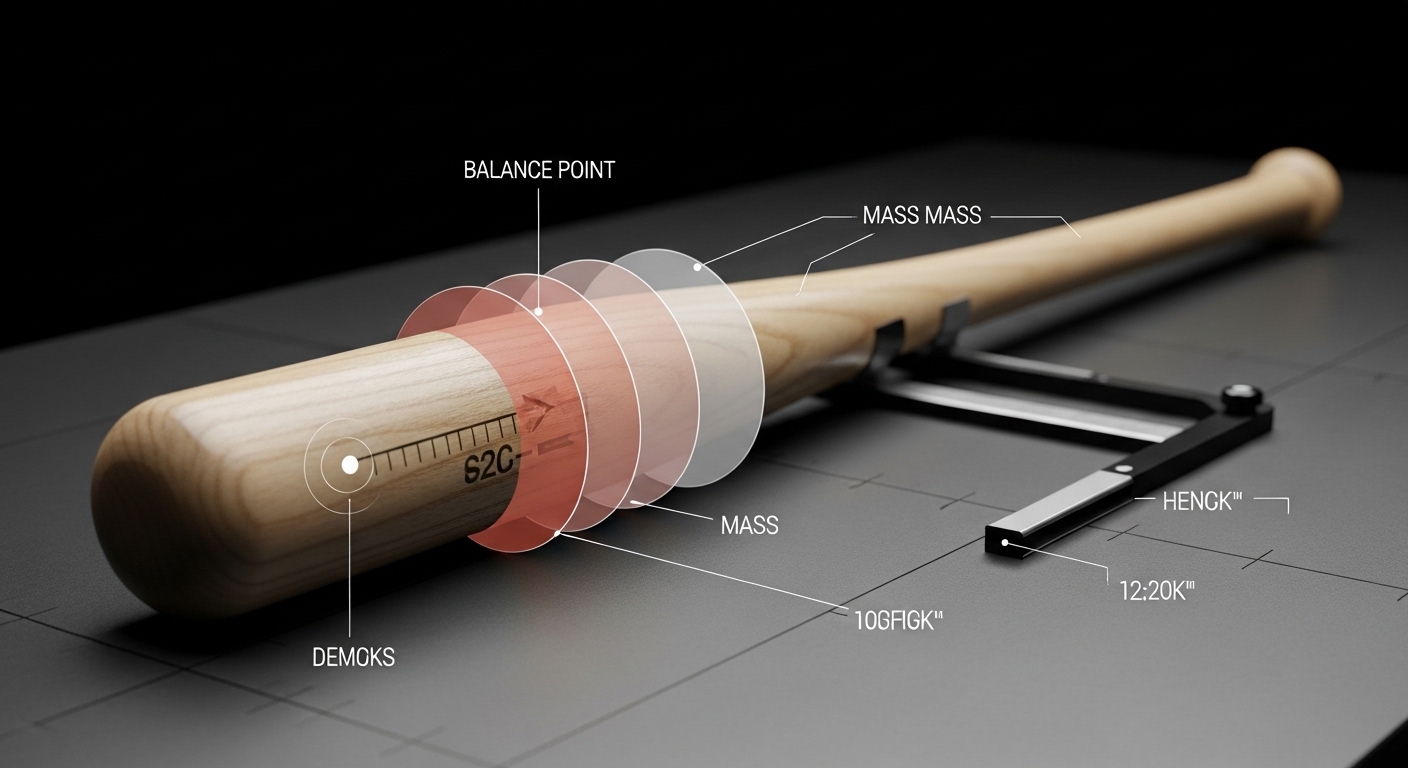
| 2 | Lower MOI → faster bat speed | Reduced distal inertia | Large — 1–3 mph bat speed gain | Koenig et al.; Nathan simulation |
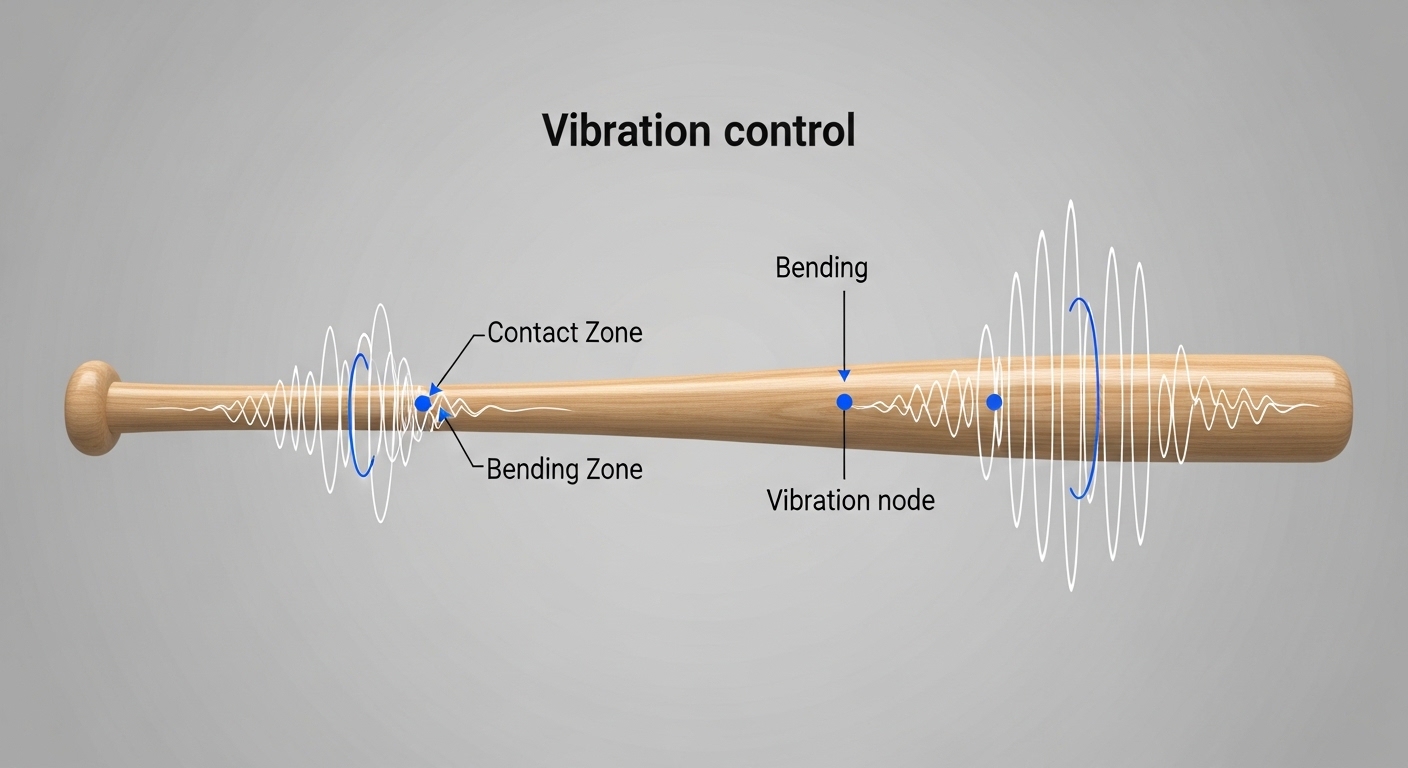
| 3 | Bending node migration → less sting | Mass redistribution shifts nodes | Moderate — real but secondary | Russell (Penn State) |
| 4 | Reduced barrel drag during swing | Narrowed tip reduces frontal area | Small — modest contribution | Koenig et al. (drag term in model) |
| 5 | Batted ball carry (post-contact) | Backspin, exit velocity, launch angle | Indirect — via contact quality | Nathan; Lloyd Smith |
This ranking matters because it shapes how we interpret any aerodynamic gain. A 0.5 mph improvement in bat speed from reduced drag is real — but it is dwarfed by the 1–3 mph gain from MOI reduction and the collision efficiency improvement from mass concentration at the contact zone.
The Drag Equation: Why the Barrel Tip Matters Most
Aerodynamic drag on any object moving through air is governed by a standard equation. NASA's Glenn Research Center uses this exact framework for baseball aerodynamics analysis.
Three of these five variables are the same for a torpedo bat and a traditional bat: air density is fixed by conditions, Cd is determined by the object's shape (a roughly cylindrical barrel in both cases), and the bat moves at the same rotational velocity because the player is the same.
The one variable that changes is A — the frontal cross-sectional area. And this is where the torpedo bat's geometry produces a genuine aerodynamic effect.
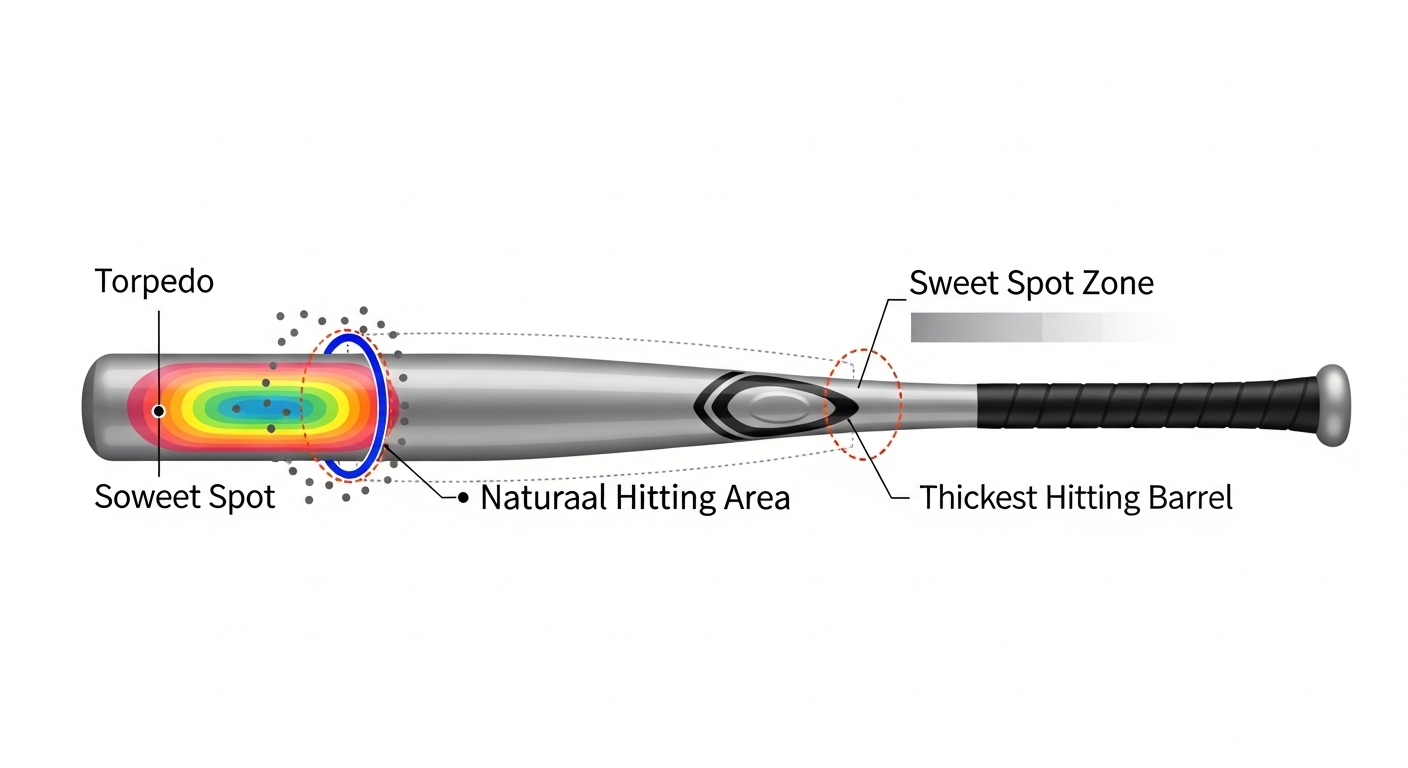
On a traditional bat, the barrel tip is at maximum diameter: 2.45–2.61 inches. The tip is the widest part of the bat — and it is also the fastest-moving part during a swing, sweeping through the hitting zone at approximately 68–76 mph. Drag force scales with the square of velocity — so tip drag is disproportionately large relative to any other part of the bat.
On a torpedo bat, the tip is narrowed to approximately 2.10–2.30 inches by the reverse taper — reducing the frontal area at the fastest-moving zone. The drag equation directly predicts the consequence: less frontal area at maximum speed = less drag force at the point where drag is highest.
The Physics Numbers: How Much Frontal Area Does the Torpedo Reduce?
The drag reduction can be estimated directly from the geometry. Cross-sectional area of a circle is πr².
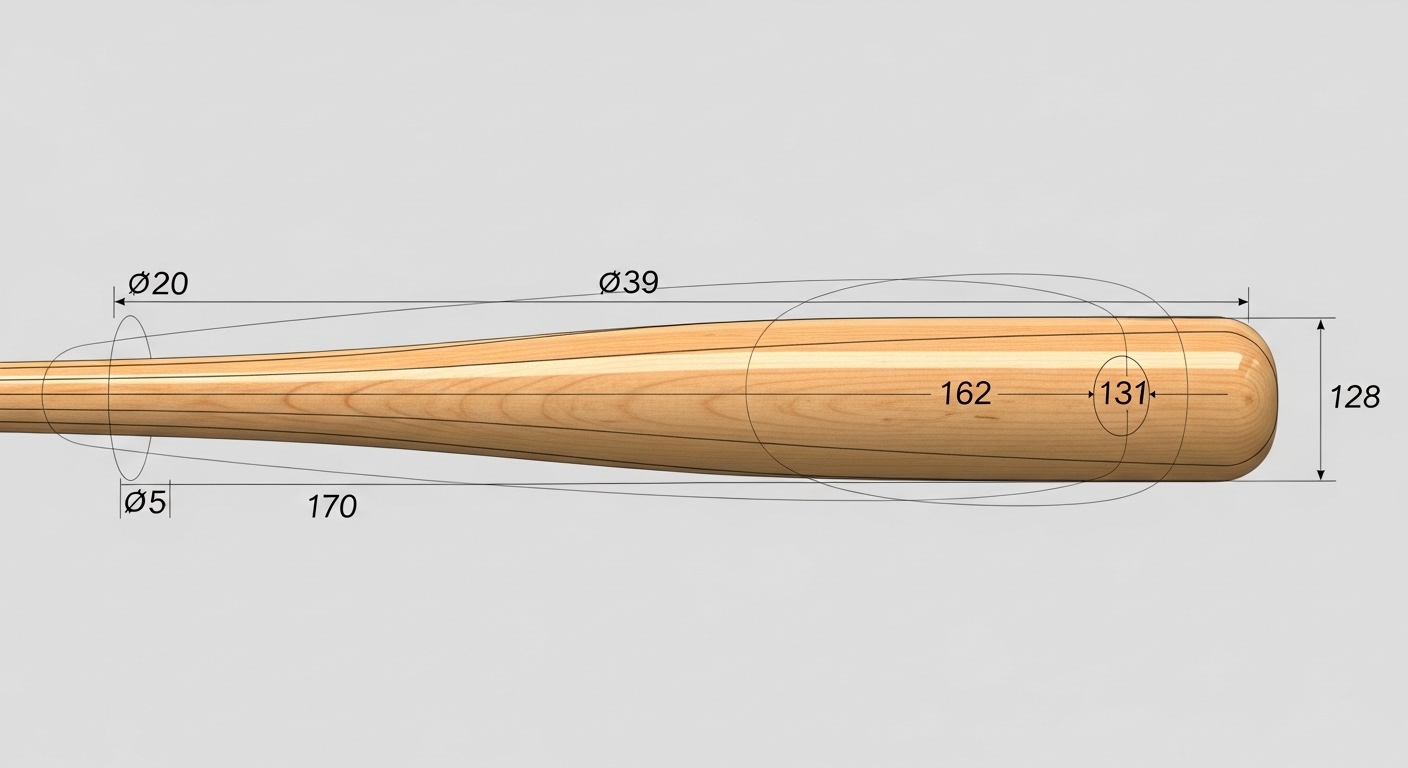
For a 2.61-inch traditional tip: radius = 1.305 inches, area ≈ 0.0372 ft². For a 2.20-inch torpedo tip: radius = 1.10 inches, area ≈ 0.0264 ft². That is a frontal area reduction of approximately 29% at the tip zone.
Since drag force is directly proportional to frontal area, the torpedo's narrowed tip produces approximately a 29% reduction in drag force at the tip zone compared to a maximum-diameter traditional bat at that location. Across the full barrel sweep, the net total swing drag reduction is smaller, perhaps 5–15% of total barrel drag — but it is real, measurable, and cumulative with the MOI reduction.
Swing Drag Zone by Zone: Where Torpedo Geometry Makes a Difference
The drag reduction is not uniform across the bat — it is concentrated at the tip, which is where the torpedo's reverse taper removes width.
| Bat Zone | Approx. Speed | Diameter | Drag Contribution | Torpedo Change |
|---|---|---|---|---|
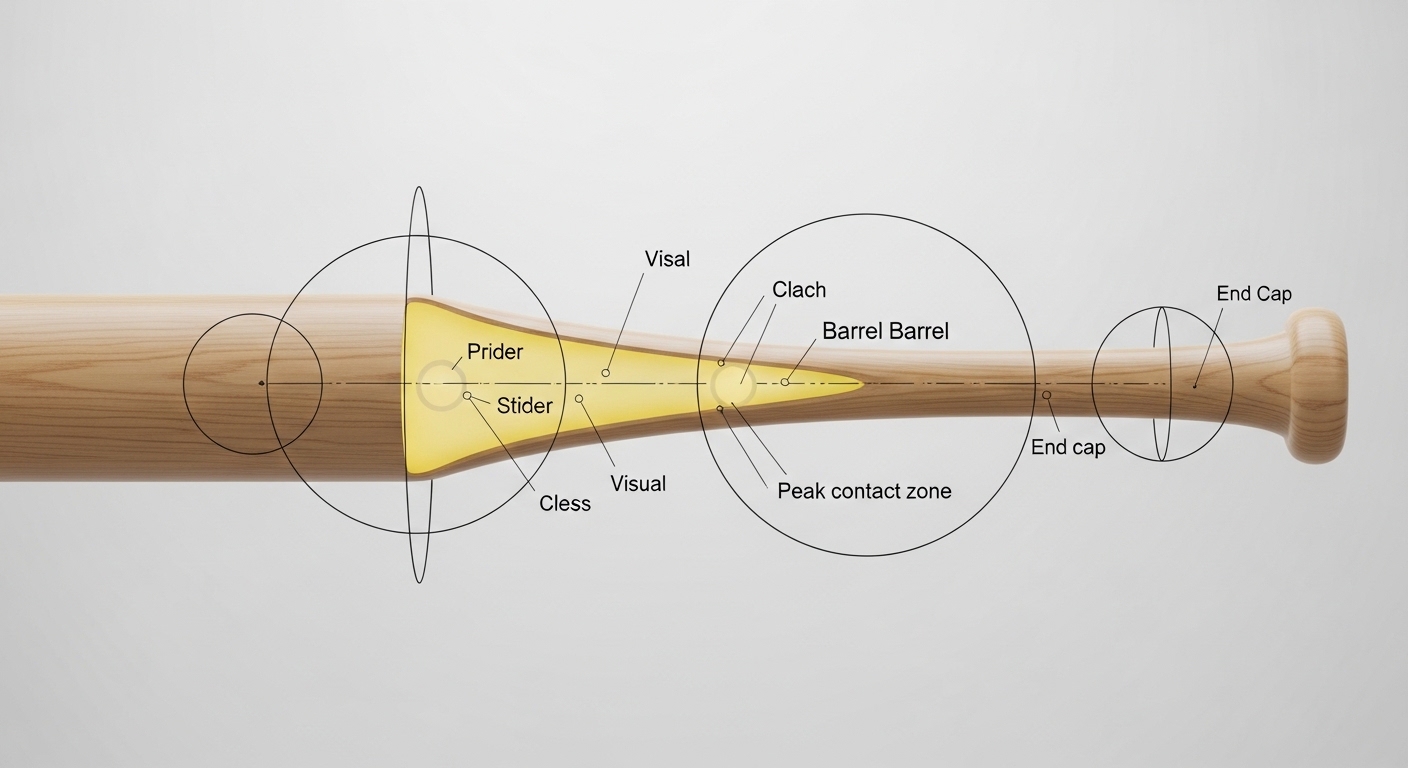
| Barrel tip (0–3") | ~68–76 mph | ~2.45–2.61" (traditional) | Highest — fastest + widest | ↓ Narrowed to ~2.10–2.30" |
| Peak barrel zone (6–8") | ~63–70 mph | ~2.45–2.50" (torpedo peak) | Medium — same as traditional | Unchanged or marginal ↑ |
| Transition zone (10–16") | ~55–63 mph | Tapering from barrel | Low | No significant change |
| Handle (16–30") | ~35–55 mph | ~0.93" — narrow | Minimal — slow + thin | No change |
| Net drag effect | Full swing | Whole bat profile | Tip zone dominant | Small ↓ in total swing drag |
The net takeaway: the torpedo bat's aerodynamic gain is narrow in scope but well-targeted. It reduces drag precisely where drag is highest — at the fastest, widest zone of the traditional bat's profile. The rest of the bat is largely unchanged aerodynamically, which is why the total drag improvement is modest rather than transformative.
Drag Physics Reference: Traditional vs. Torpedo at the Barrel Tip
| Variable | Symbol | Traditional Bat (tip) | Torpedo Bat (tip) | Effect on Drag |
|---|---|---|---|---|
| Air density (sea level) | ρ | 0.00237 slug/ft³ | 0.00237 slug/ft³ | Identical — no change |
| Tip speed (typical) | v | ~68–76 mph (100–111 ft/s) | ~68–76 mph (same) | Identical — no change |
| Frontal area at tip | A | ~0.037 ft² (2.61" diam.) | ~0.028–0.032 ft² (narrowed) | ↓ 10–24% — torpedo advantage |
| Drag coefficient | Cd | ~0.4–0.6 (cylinder, turbulent) | ~0.4–0.6 (similar profile) | Similar — profile shape unchanged |
| Drag force at tip | D | D = ½ρv²CdA (higher A) | D = ½ρv²CdA (lower A) | ↓ proportional to area reduction |
Koenig et al.'s peer-reviewed research on bat swing speed explicitly includes aerodynamic drag of both the bat and the batter's arms in its MOI-swing speed model — one of the few published studies to formally treat bat aerodynamics as a component of swing performance.
The Dimpled Bat Precedent: Aerodynamics Has Always Mattered
The torpedo bat is not the first bat design to target aerodynamic drag. In 1994, US Patent 5284332A was granted for a baseball bat with dimpled surface texture — explicitly designed to reduce aerodynamic drag during the swing using the same surface roughness principle that makes golf balls travel farther.
The torpedo bat achieves a drag reduction through a different mechanism (reduced frontal area rather than reduced Cd), but it is operating in the same physical space that inventors recognized as performance-relevant three decades ago.
- The 1994 dimpled bat patent attacked the
Cdterm in the drag equation. - The torpedo bat attacks the
Aterm. - Both are genuine engineering approaches to the same drag reduction goal — one using surface texture, one using geometry.
Batted Ball Aerodynamics: How the Torpedo Bat Affects Ball Flight
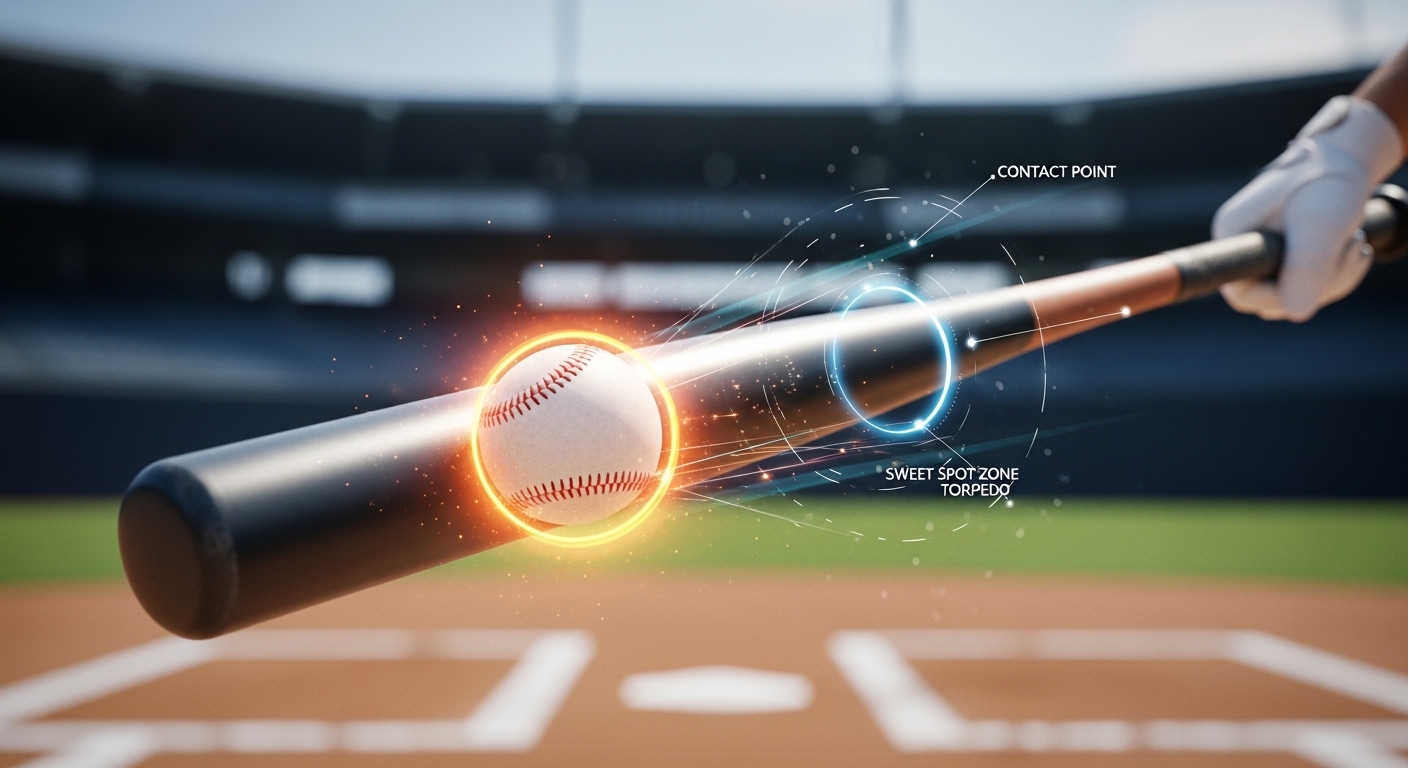
The second aerodynamic dimension of the torpedo bat is not about the bat moving through air — it's about the ball moving through air after it leaves the bat. This is where exit velocity, launch angle, backspin, and air density interact to determine how far and how fast the ball travels.
The torpedo bat's effect on batted ball aerodynamics is almost entirely indirect — it flows from the improved contact quality at the sweet spot, not from any direct interaction between bat design and ball flight physics.
| Flight Factor | Primary Determinant | Torpedo Bat Effect | Real-World Impact |
|---|---|---|---|
| Exit velocity | Bat speed + collision efficiency | ↑ at contact zone — torpedo's primary gain | Higher EV → more carry on same trajectory |
| Launch angle | Swing plane + attack angle | No direct change from bat geometry | Unchanged — player-controlled |
| Backspin rate | Contact geometry (slightly glancing) | Improved contact quality may improve backspin consistency | Potential minor carry improvement |
| Air drag on ball | Ball seam, speed, Reynolds number | Not affected by bat design | No change from torpedo |
| Magnus lift (backspin) | Backspin rpm + velocity | Potential minor improvement via contact quality | Small potential carry gain |
| Altitude / weather | Air density (temperature, humidity, altitude) | Not affected by bat design | No change from torpedo |
The most important row: air drag on the ball is not affected by bat design. The ball's Cd is fixed by its seam structure and surface texture. What is within the bat designer's control is exit velocity — and that is where the torpedo bat's real aerodynamic contribution to ball flight lies: higher EV from better contact quality produces more carry.
The Honest Aerodynamic Summary: Real, Modest, Well-Targeted
The torpedo bat has a genuine aerodynamic advantage over a traditional maximum-diameter bat. Its narrowed tip zone reduces frontal cross-sectional area by 10–29% at the fastest-moving section of the barrel, which the drag equation translates directly into reduced swing drag at the point where drag is highest.
This contributes a small amount of additional bat speed — accumulative with the larger MOI-driven gain, not competing with it.
What the torpedo bat does not do aerodynamically: it does not meaningfully change its own drag coefficient, it does not alter the ball's aerodynamic properties post-contact, and it does not produce a dramatic swing speed improvement from aerodynamics alone. The aerodynamic gain is best understood as a passive bonus — an automatic consequence of the reverse taper geometry that was designed for mass redistribution, not drag reduction.
Frequently Asked Questions: Torpedo Bat Aerodynamics
Does the torpedo bat's shape reduce aerodynamic drag during the swing?
Yes — modestly. The torpedo's reverse taper narrows the barrel from its peak diameter back down to approximately 2.10–2.30 inches at the tip, compared to 2.45–2.61 inches on a traditional bat at the same location. Since drag force is proportional to frontal area and the tip is the fastest-moving section of the bat, this narrowing reduces drag at exactly the highest-drag zone. The total swing drag reduction is estimated at 5–15% of total barrel drag — genuine but smaller than the MOI and mass concentration gains.
How does the drag equation apply to a swinging baseball bat?
The drag equation — D = ½ρv²CdA — applies to each section of the bat independently. Air density (ρ) and drag coefficient (Cd) are effectively the same for both bat designs at a given barrel section. Velocity (v) varies along the bat from near-zero at the hands to 68–76 mph at the tip. Frontal area (A) is the variable the torpedo bat changes — by narrowing the tip zone diameter. Since drag scales with v² and A together, the tip zone (highest v) produces the greatest drag, and the torpedo's narrowing of that specific zone produces the most aerodynamically significant reduction.
Does the torpedo bat make the ball travel farther aerodynamically?
Indirectly, yes — through exit velocity. The torpedo bat's higher exit velocity at the contact zone (from mass concentration and improved collision efficiency) means the ball leaves the bat faster. Higher exit velocity produces more carry because the ball travels faster through air that is trying to slow it down. The torpedo bat does not alter the ball's own aerodynamic properties — its drag coefficient, seam drag, or Magnus lift coefficient are unchanged. The carry improvement is a consequence of better contact, not of changed ball flight physics.
Why isn't aerodynamics the primary torpedo bat performance story?
Because the drag reduction — while real — is smaller than the mass distribution gains. A 10–29% frontal area reduction at the tip translates to a fraction of a mph of bat speed gain. By contrast, the MOI reduction from moving mass away from the tip produces 1–3 mph of bat speed gain, and the collision efficiency improvement at the contact zone adds further performance independent of swing speed. The aerodynamic gain is additive and real, but it ranks fourth in magnitude among the four main torpedo bat performance mechanisms.
Is the torpedo bat's aerodynamic advantage related to the dimpled bat patent?
They target the same physical mechanism — reducing swing drag — but through different approaches. The 1994 dimpled bat patent (US5284332A) targeted drag reduction by lowering the drag coefficient (Cd) via surface texture, similar to how golf ball dimples work. The torpedo bat reduces drag by decreasing frontal area (A) via geometric profile changes. Both are valid engineering approaches to the drag equation's variables, but only the torpedo bat's approach is clearly within MLB's rules — Rule 3.02 requires a smooth, round stick, which the dimpled surface violated.
Continue Exploring Torpedo Bat Technology
Gallery