Torpedo Bat Glossary: Every Term You Need to Know
The torpedo bat debate is full of language that gets thrown around fast — moment of inertia, exit velocity, collision efficiency, barrel rate. Some of these terms come from physics. Some come from MLB's Statcast tracking system. Some are pure baseball tradition.
All of them matter if you want to fully understand how and why the torpedo bat works.
Use this page as your reference guide while reading the other pages in our torpedo bat series.
Quick-Reference: Key Metrics and What They Mean
| Metric | MLB Average | Elite Threshold | Torpedo Bat Impact |
|---|---|---|---|
| Bat Speed | 70–75 mph | 80+ mph | ↑ via lower MOI |
| Exit Velocity | 88–90 mph | 95+ mph (hard hit) | ↑ at contact zone |
| Barrel Rate | ~8% | 15%+ (elite) | ↑ via wider sweet spot |
| Sweet Spot Launch | 8–32° LA | Statcast threshold | No direct change |
| Hard-Hit Rate | ~36% | 50%+ (elite) | ↑ via contact quality |
| Squared-Up Rate | ~28% | 35%+ (elite) | ↑ via aligned mass |
Physics & Mechanics Terms
PhysicsCore physics concepts that explain how the torpedo bat actually produces its performance advantages.
B Bending Vibration Node
The point along a bat's barrel where vibration from contact is minimized. When the ball strikes the bat at or near the bending vibration node, the hitter experiences minimal sting or vibration in the hands. On most wood bats, this node sits 6–7 inches from the barrel tip — closely aligned with the torpedo bat's peak diameter location. Aligning the sweet spot with the vibration node maximizes both energy transfer and comfort.
C Collision Efficiency (q)
A physics ratio describing how much of the bat's kinetic energy is transferred into the ball at the moment of contact. Collision efficiency depends on where the ball hits the barrel, the local mass at that point, and the bat's structural vibration properties. At the sweet spot, collision efficiency is highest. The torpedo bat improves collision efficiency at the player's natural contact zone by concentrating mass exactly there — making typical contacts more energetically effective than on a traditional bat.
D Distal Inertia
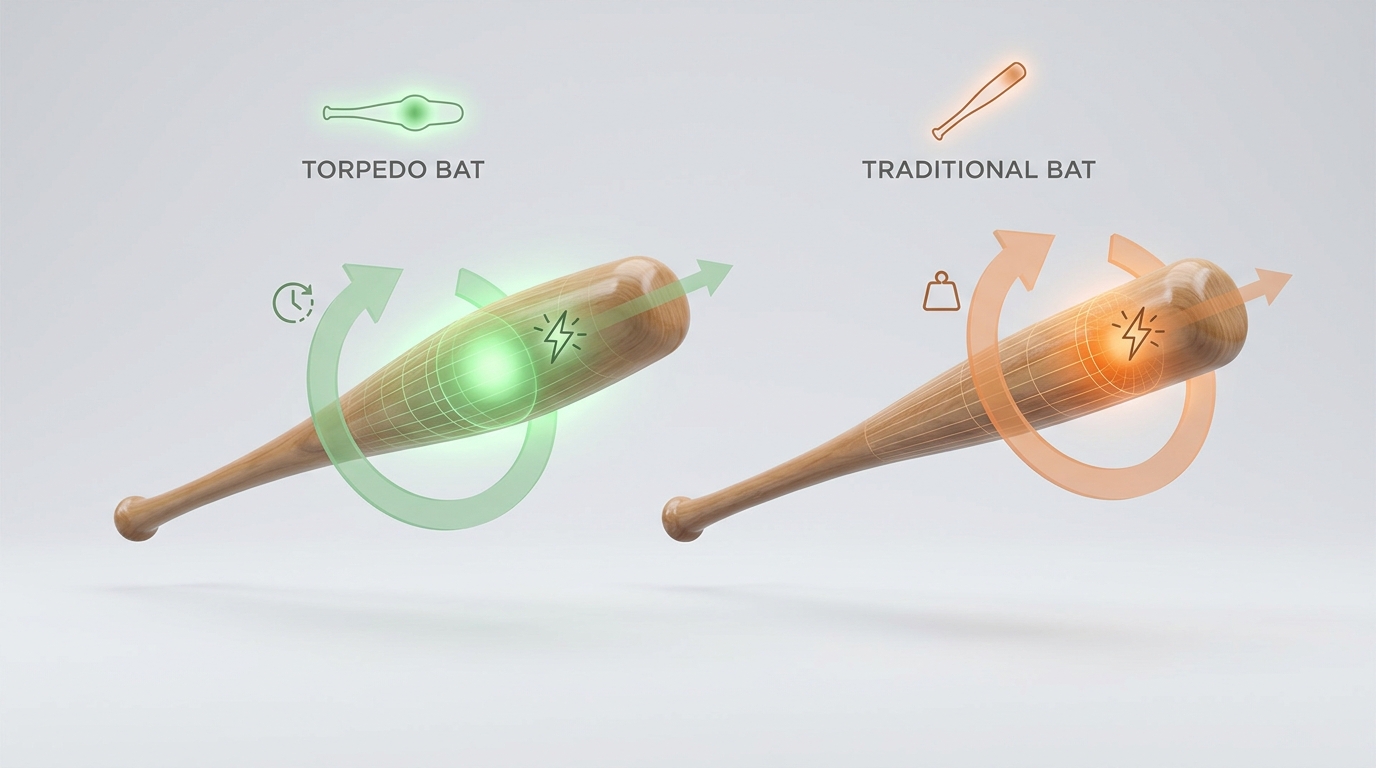
The resistance to rotation created specifically by mass located far from the pivot point — in baseball, mass at the barrel tip. High distal inertia makes a bat harder to swing and harder to adjust mid-swing. The torpedo bat reduces distal inertia by moving mass away from the tip and toward the contact zone, making the bat quicker through the zone and easier to control on off-speed or breaking pitches.
E Effective Bat Mass (m_eff)
The amount of mass that is physically 'behind' the ball at the moment of contact. Effective bat mass determines how much kinetic energy the bat can deliver to the ball during the collision. More mass at the contact point = harder hit ball. The torpedo bat places maximum mass precisely at the player's natural contact zone, increasing effective bat mass there — while accepting lower effective mass near the barrel tip where that player rarely hits.
K Kinetic Chain
The sequential transfer of force from the lower body through the hips, core, shoulders, arms, and hands into the bat. A properly sequenced kinetic chain allows a player to generate maximum bat speed with minimum effort. The torpedo bat does not alter the kinetic chain itself, but its lower MOI means a given kinetic chain input produces more bat acceleration — making efficient kinetic chains even more effective.
M Moment of Inertia (MOI)
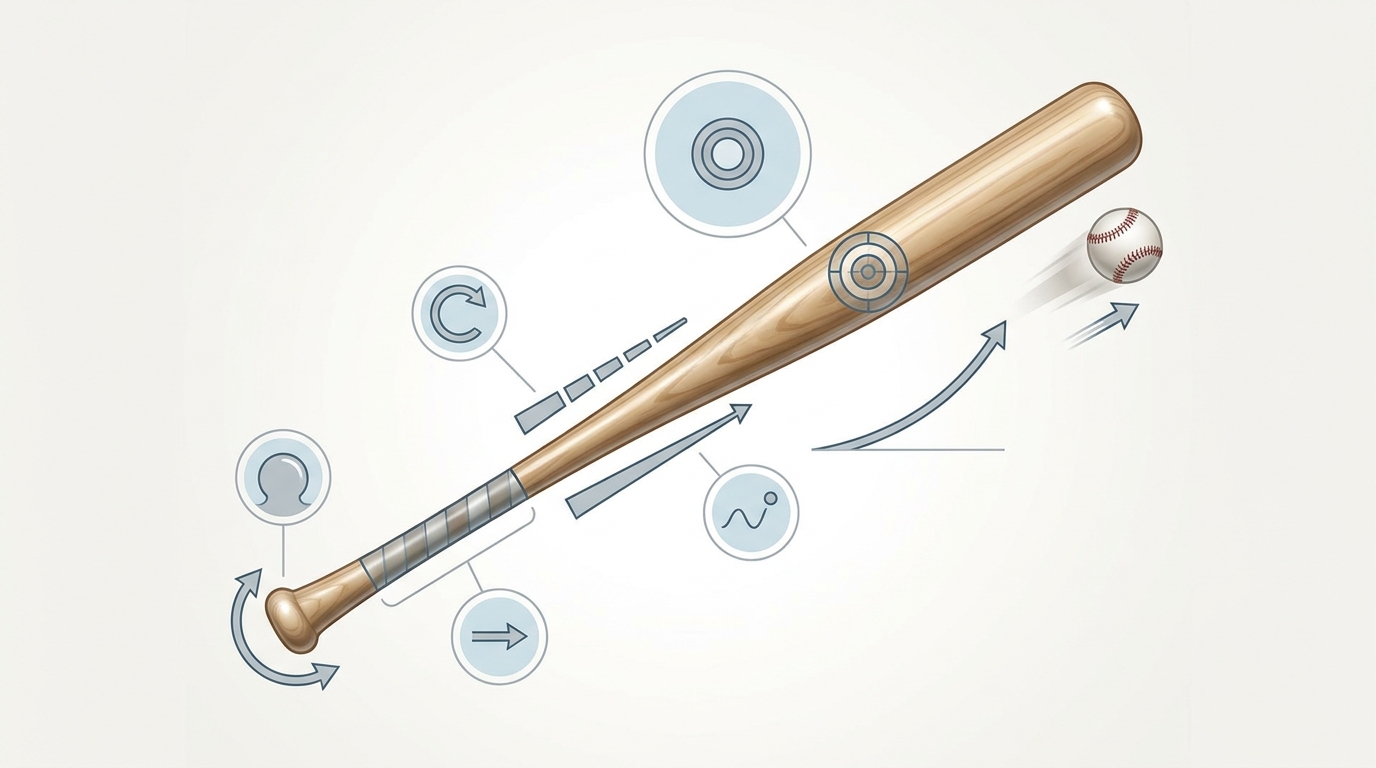
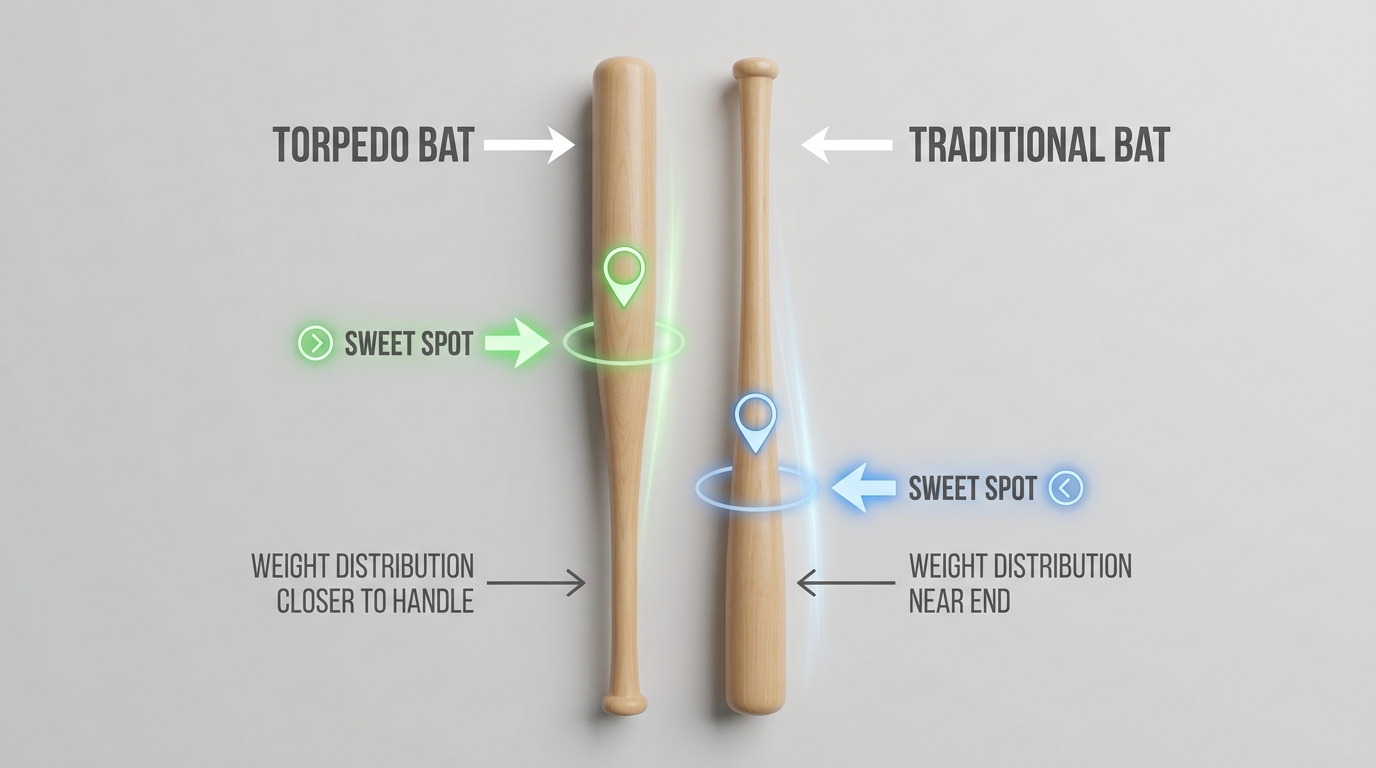
The resistance of an object to rotational acceleration — in plain terms, how hard the bat is to swing. MOI depends on both the bat's total mass and where that mass is distributed. A bat with more mass near the tip has higher MOI (harder to swing) than a bat with the same total weight but mass concentrated near the hands. The torpedo bat's central design principle is reducing MOI by moving mass away from the tip, enabling faster swing speeds without reducing total bat weight.
M Momentum (p = mv)
In physics, momentum equals mass multiplied by velocity. At the moment of bat-ball contact, the bat's momentum determines how much force it delivers to the ball. The torpedo bat tradeoff involves this equation: moving mass away from the tip reduces momentum at that location (less m), but the bat's higher swing speed (more v) can partially or fully compensate. For most hitters, the net result at their actual contact zone is higher momentum — but at the very tip, momentum is lower.
Statcast & Analytics Terms
StatcastMeasurable performance metrics used to evaluate hitters in modern baseball, captured by MLB's in-stadium tracking technology.
A Attack Angle
The angle at which the barrel of the bat approaches the ball at contact, measured in degrees. A positive attack angle means the bat is swinging slightly upward at contact (swing plane trending upward); a negative attack angle means the bat is descending. Research shows that a slight positive attack angle (6–12°) increases the probability of hitting a line drive or fly ball, since it matches the typical downward trajectory of a pitched ball. The torpedo bat does not directly change attack angle, but the bat's lower MOI can affect how naturally a hitter gets into their preferred attack angle plane.
B Barrel (Statcast definition)
A batted ball event with the ideal combination of exit velocity and launch angle. MLB defines a barrel as a batted ball with a minimum Expected Batting Average (xBA) of .500 and Expected Slugging Percentage (xSLG) of 1.500. In practice, barrels require a minimum exit velocity of approximately 98 mph at a launch angle between 26–30°, with lower EV thresholds accepted at higher launch angles. Barrel rate (barrels per plate appearance) is one of the most predictive hitting metrics in modern analytics.
B Barrel Rate
The percentage of a hitter's plate appearances (or batted ball events) that produce a barrel — a batted ball with the Statcast-defined ideal combination of exit velocity and launch angle. The MLB average barrel rate is approximately 7–8%. Elite hitters exceed 15%. The torpedo bat's wider sweet spot and higher exit velocity at the natural contact zone can meaningfully improve barrel rate for well-matched hitters by converting near-barrels into true barrels.
B Bat Speed
How fast the barrel of the bat is moving, in miles per hour, at the moment it contacts the ball — or where contact would have been made on a swing and miss. MLB's Statcast measures bat speed at a point 6 inches from the barrel tip (the center of the traditional sweet spot). The average MLB bat speed is approximately 70–75 mph; elite power hitters reach the mid-80s. Every 1 mph increase in bat speed produces approximately 1.2 mph of additional exit velocity, all else being equal. The torpedo bat increases bat speed by reducing MOI.
E Exit Velocity (EV)
The speed, in miles per hour, of the baseball as it leaves the bat immediately after contact. Exit velocity is the single most important output metric of a swing — it measures the result of bat speed, contact quality, and mass at contact combined. MLB's Statcast measures EV for every batted ball event (BBE). Hard-hit threshold: 95+ mph. Elite threshold: 100+ mph. At 100+ mph EV, batting average is approximately .700. The torpedo bat's primary performance claim is improved exit velocity at the hitter's natural contact zone.
E Expected Batting Average (xBA)
A Statcast metric that estimates the probability a batted ball becomes a hit, based solely on its exit velocity and launch angle — independent of defensive positioning or defensive ability. xBA is useful for identifying hitters whose results are being suppressed or inflated by factors outside their control. A torpedo bat that improves exit velocity and contact quality should show improvement in xBA for well-matched hitters, before real-world defense factors are applied.
H Hard-Hit Rate
The percentage of a hitter's batted ball events with an exit velocity of 95 mph or higher. The MLB average hard-hit rate is approximately 36%. Elite hitters sustain 50%+. Hard-hit rate is considered a leading indicator of sustainable offensive performance — a hitter with a high hard-hit rate but poor results (due to bad luck or defense) is expected to regress positively. The torpedo bat's wider effective sweet spot directly targets improvement in hard-hit rate by converting near-hard-hit contacts into confirmed ones.
L Launch Angle (LA)
The vertical angle, in degrees, at which the ball leaves the bat after contact. Negative values indicate ground balls; 0° is a line drive parallel to the ground; positive values indicate fly balls. Optimal launch angle ranges vary by hitter type, but the Statcast sweet-spot zone of 8–32° produces the highest batting averages and slugging percentages. The torpedo bat does not directly alter launch angle — that is determined by the swing path and attack angle — but improved contact quality at the natural contact zone reduces the number of mis-hits that produce unintended ground balls.
S Squared-Up Rate
A Statcast metric that measures how often a hitter makes contact that attains the maximum possible exit velocity given their bat speed and the pitch speed. A swing is considered squared up when the attained exit velocity reaches at least 80% of the maximum possible exit velocity for that swing. A higher squared-up rate indicates more efficient contact — the bat's mass is meeting the ball at the right location with the right timing. The torpedo bat is specifically designed to increase squared-up rate by placing the barrel's optimal contact zone where the player actually hits.
S Sweet Spot (Statcast definition)
In Statcast analytics, a batted ball with a launch angle between 8 and 32 degrees. This is the range of launch angles that most consistently produces hits, including line drives and well-struck fly balls. Sweet Spot % (LA SwSp%) measures how often a hitter produces batted ball events in this range. Note: this is different from the structural 'sweet spot' of the bat (see below). The torpedo bat targets improvement in both — the structural sweet spot of the barrel and, indirectly, the statistical sweet spot of launch angle by improving contact quality.
Bat Anatomy & Manufacturing Terms
AnatomyTerms describing the physical components and construction of a baseball bat — essential background for evaluating torpedo bat specifications.
B Barrel
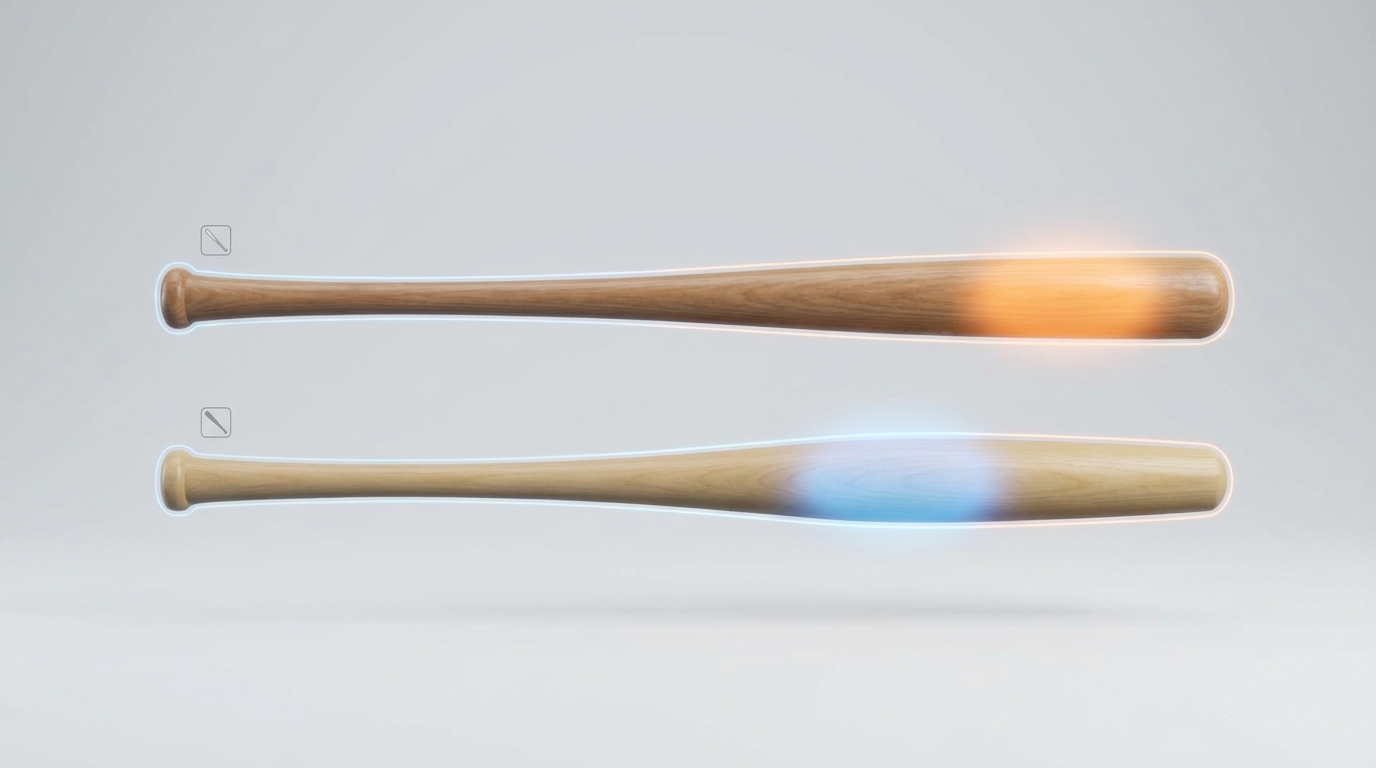
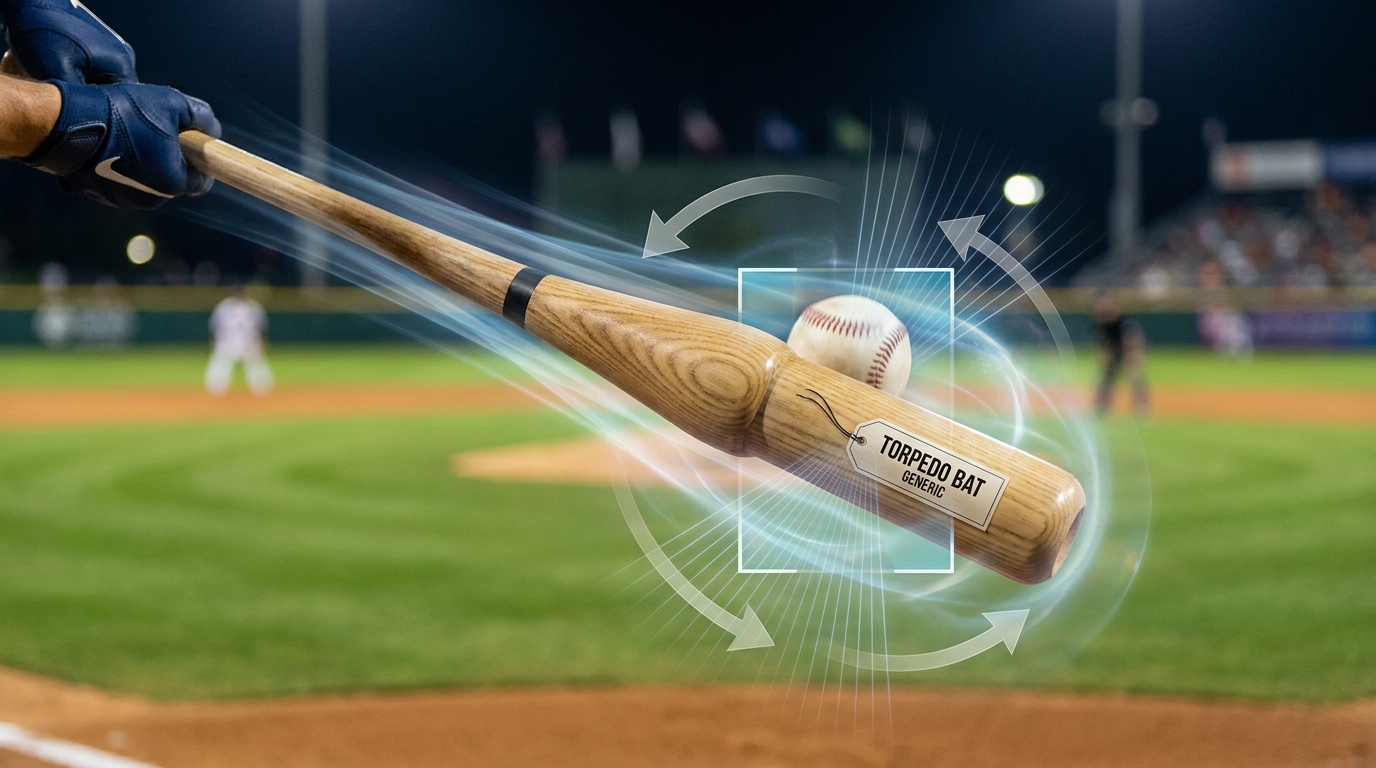
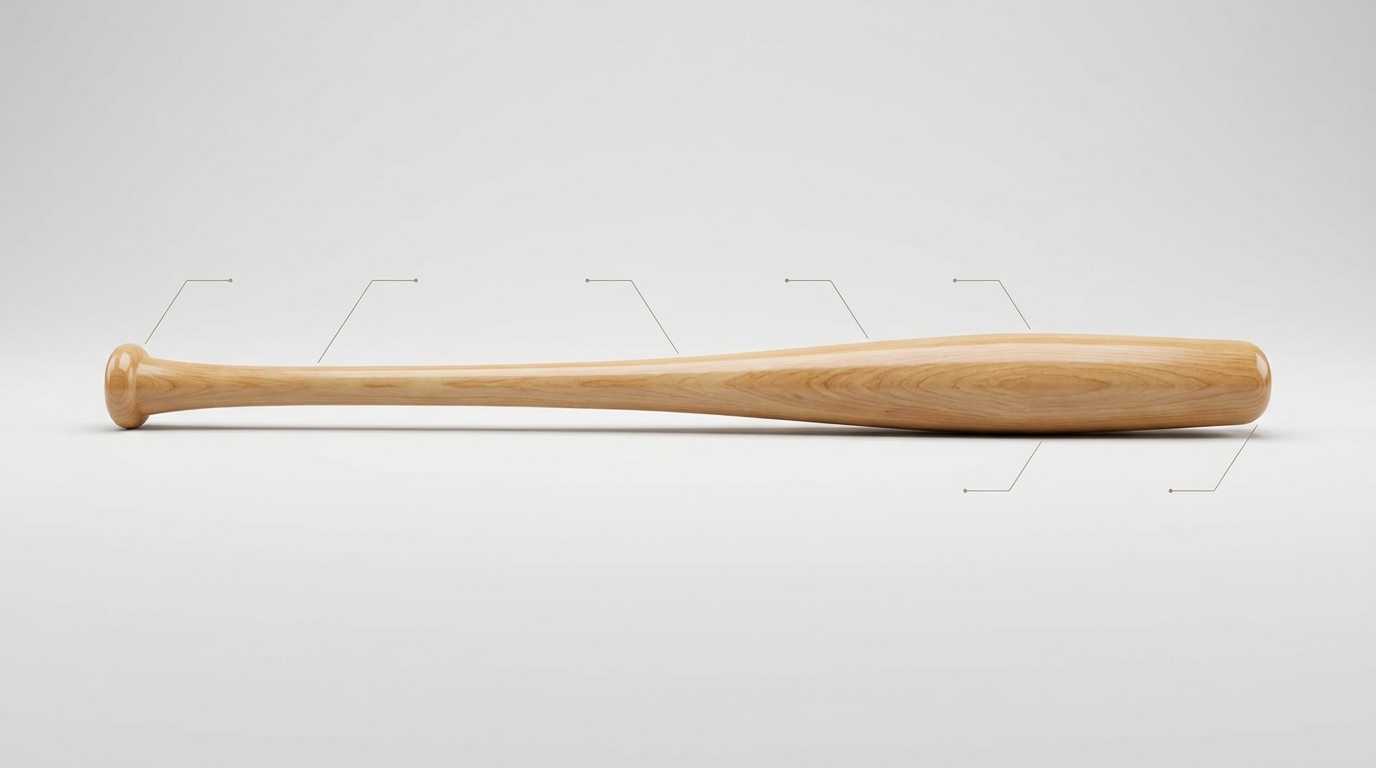
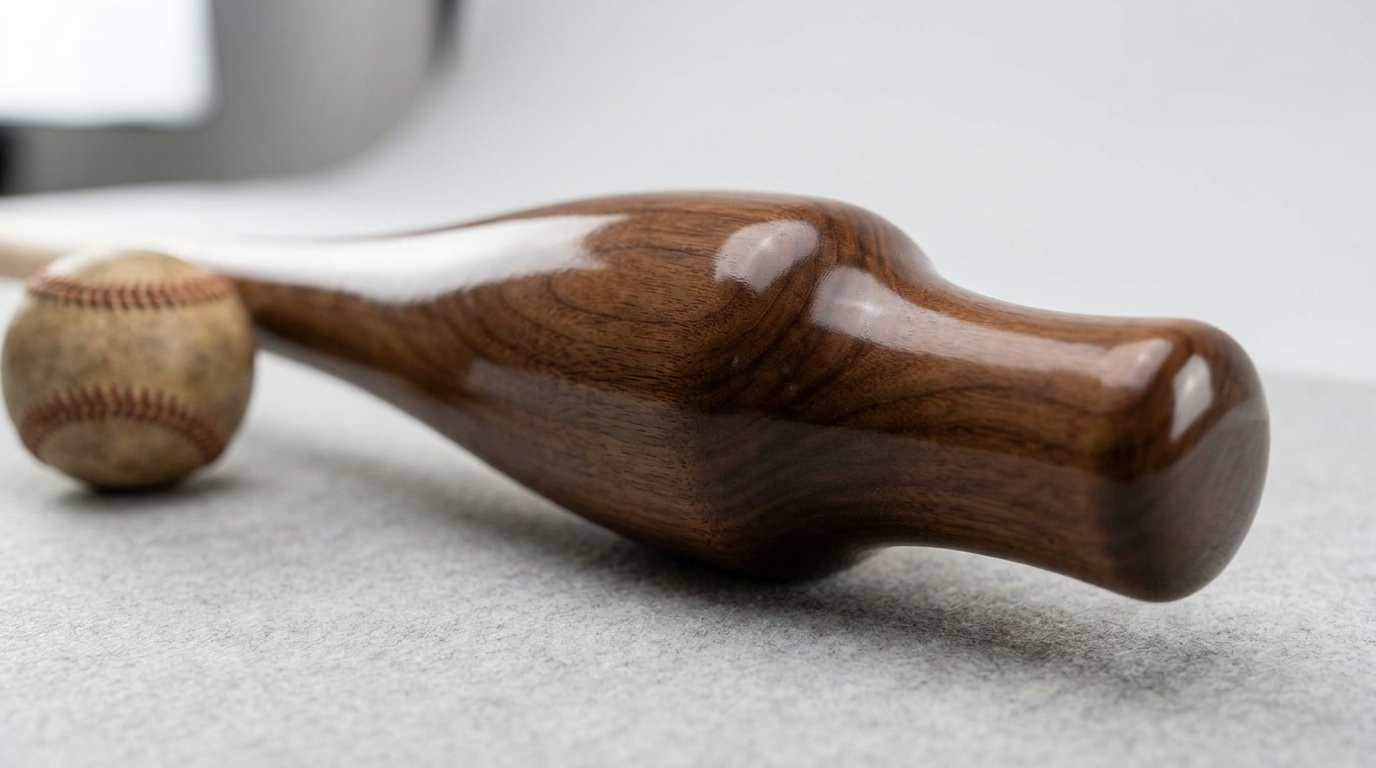
The wide, heavy section of the bat designed to contact the ball. Traditional barrels widen from the taper to a maximum diameter at or near the end cap. The torpedo bat's barrel is uniquely shaped: it widens to a maximum diameter at the player's natural contact zone (6–8 inches from the tip), then narrows again before the end cap. This reverse taper creates the torpedo's distinctive bowling-pin appearance.
B Bat Drop
The numerical difference between a bat's length in inches and its weight in ounces, expressed as a negative number. A 34-inch bat weighing 31 ounces has a bat drop of -3. In MLB, players use bat drops typically between -2 and -4. A higher drop (larger negative number, e.g., -5) means the bat is lighter relative to its length — easier to swing but potentially less momentum. The torpedo bat's design operates entirely within standard bat drop specifications; the design changes where the weight sits, not the total weight.
E End Cap
The rounded tip at the very end of the barrel. On traditional bats, the end cap sits at the barrel's widest point. On torpedo bats, the end cap sits at a narrowed section — because the barrel has already tapered back down before the tip. Torpedo end caps can be flat or cupped (with a small hollow indentation to further reduce tip weight). The narrowed diameter around the torpedo's end cap area creates a structural vulnerability: contacts at the very tip are more likely to cause damage than on a traditional bat.
G Grain Slope
The angle of the wood grain relative to the long axis of the bat, measured in degrees. MLB mandates a maximum slope of grain deviation of 3 degrees or less for maple and birch bats (since 2008), enforced via the ink dot test. Straighter grain means the bat is less prone to multi-piece shattering on contact — a critical safety standard. All torpedo bats must pass the same ink dot grain slope test as traditional MLB bats.
H Handle
The thin section of the bat between the taper and the knob, where the player grips the bat. Handle diameter typically ranges from 0.90 to 1.00 inches in MLB. Thinner handles flex more and generate more whip; thicker handles are more durable and absorb vibration better. The torpedo bat's handle specifications are essentially unchanged from traditional bats — the design changes are concentrated entirely in the barrel profile.
I Ink Dot Test
MLB's mandatory quality control test for maple and birch bats, required since 2008. An ink dot is applied to the unfinished handle of the bat billet, revealing the orientation of the wood grain. Inspectors measure the slope of grain relative to the bat's long axis. Only billets with a slope of ≤3 degrees pass and qualify for MLB use. The test was introduced after a 2008 study of bat shattering incidents found a strong correlation between steep grain slope and multi-piece bat failures — the most dangerous type of breakage.
K Knob
The flared base at the bottom of the bat handle, serving as a physical stop that prevents the bat from slipping through the batter's hands during the swing. Torpedo bats are available with the same knob styles as traditional bats: standard, flared, cone, and bell. The bell knob — which adds mass at the very base of the handle — is philosophically aligned with the torpedo bat's mass-redistribution concept, and some players pair the two for a compounded 'proximal weight' effect.
S Sweet Spot (Structural)
The zone on the barrel that produces the best combination of exit velocity, ball control, and minimal vibration (sting) in the hands at contact. Structurally, the sweet spot is determined by three overlapping factors: the bending vibration node, the center of percussion, and the location of maximum effective bat mass. On a traditional bat, this zone sits near the end of the barrel — 2 to 3 inches from the tip. On a torpedo bat, the sweet spot is custom-positioned based on the player's swing data, typically 6 to 8 inches from the tip. The torpedo bat's primary design goal is to widen and reposition this zone to align with where the hitter actually makes contact.
T Taper
The transition section connecting the narrow handle to the wider barrel. Traditional bats have one taper — widening from handle toward the barrel end. Torpedo bats have an additional reverse taper: after the barrel reaches its maximum diameter at the contact zone, it narrows again toward the end cap. The steepness and positioning of both the forward and reverse tapers are precision-engineered in torpedo bats using CNC machinery loaded with player-specific measurements.
W Wood Species (Maple)
The dominant wood used in MLB-grade wood bats, including torpedo bats. Sugar maple's high density (~45 lbs/ft³) and surface hardness make it ideal for packing mass into the torpedo's narrower contact zone without exceeding diameter limits. Maple produces a hard, dense surface that maximizes exit velocity. The primary drawback is its breakage pattern: maple bats tend to shatter into large, fast-moving pieces, which is why grain slope requirements were introduced in 2008.
W Wood Species (Birch)
The fastest-growing wood species in MLB bat usage, particularly among contact hitters and players exploring torpedo designs. Birch starts with hardness comparable to maple but adds natural flex — it deforms slightly on contact and springs back, adding a trampoline-like effect. Birch bats also harden with use over the first few swings. Its slightly lower density than maple makes it easier to achieve the desired bat weight in the torpedo profile without concentrating too much mass. Birch's natural flex is especially useful in the torpedo design's contact zone, where off-center hits are more likely to be manageable.
W Wood Species (Ash)
The traditional wood used in baseball bats for most of the sport's history. Ash is lighter and more flexible than maple or birch, giving it a 'whippy' feel that some contact hitters prefer. However, ash has fallen to approximately 10% of MLB bat usage, largely replaced by maple since the early 2000s. Its lower density and greater flexibility make it less ideal for torpedo bat designs, which rely on high-density wood to concentrate mass in the contact zone.
Rules & Regulations Terms
RulesOfficial MLB rules that govern bat specifications — the regulatory framework the torpedo bat operates within.
B BBCOR
The certification standard required for non-wood bats used in high school (NFHS) and NCAA college baseball. BBCOR limits the energy returned from the bat-ball collision, making metal and composite bats perform more like wood bats in terms of exit velocity. All BBCOR bats must display a .50 BBCOR stamp. Torpedo bats in their current MLB form are wood bats not subject to BBCOR standards — but if torpedo-profile metal or composite bats are developed for amateur leagues, they would need separate BBCOR or USA Baseball certification.
C Cupped Bat
A bat with a small hollow indentation carved into the barrel tip, removing weight from the very end to reduce swing weight. Cupped bats have been legal in MLB since 1975. They represent a predecessor philosophy to the torpedo bat: both designs reduce distal mass to lower MOI and increase swing speed. The torpedo bat takes this principle significantly further by not merely removing mass from the tip, but redistributing that mass to the player's natural contact zone.
R Rule 3.02 (MLB Bat Specifications)
The Official Baseball Rule governing bat construction for Major League Baseball. Rule 3.02 requires that a bat: (1) be a smooth, round stick; (2) not exceed 2.61 inches in diameter at the thickest point; (3) not exceed 42 inches in length; and (4) be made from one piece of solid wood. Notably, Rule 3.02 does not specify where the thickest point must be located — the regulatory gap that makes the torpedo bat fully legal. MLB confirmed torpedo bats meet all Rule 3.02 requirements when questions arose after the Yankees' 2025 Opening Series.
U USA Baseball Standard
The bat certification standard for youth baseball leagues in the United States (ages 14 and under), introduced in 2018. Bats certified under the USA Baseball standard display a 'USA Baseball' mark and are designed to more closely replicate the performance of wood bats. Like BBCOR, this standard governs non-wood bats. Torpedo-profile bats at the youth level would require separate USA Baseball certification. Always verify league requirements before purchasing any bat for youth play.
Now That You Know the Terms — Go Deeper
This glossary is designed to work alongside the full torpedo bat topic series. Every term defined here appears in context in one or more of the following pages:
Gallery