Torpedo Bat Vibration Control: The Acoustics Science Behind Less Sting
Every baseball player who has ever jammed a pitch or caught the end of the bat knows exactly what bat sting feels like: a sharp, painful buzz that shoots through the hands the instant wood meets ball in the wrong location.
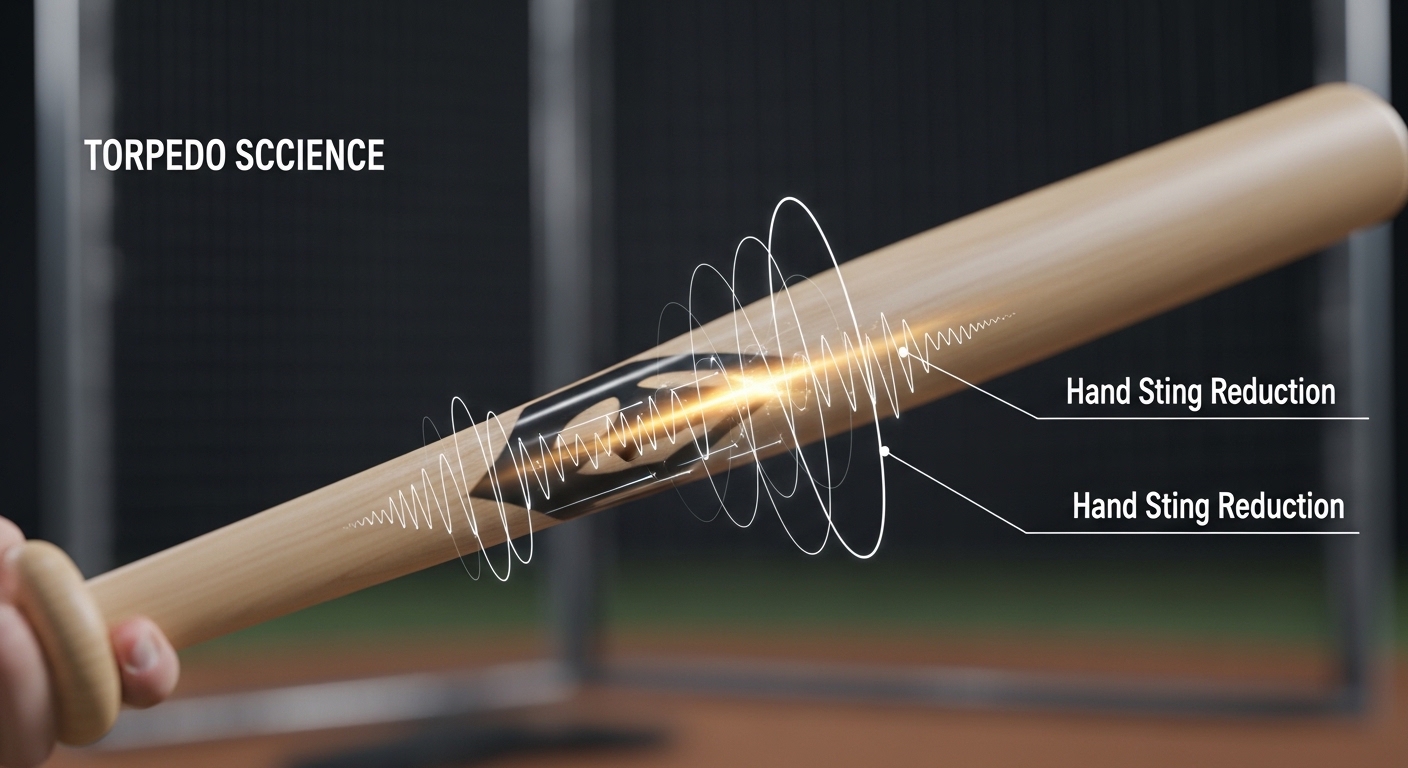
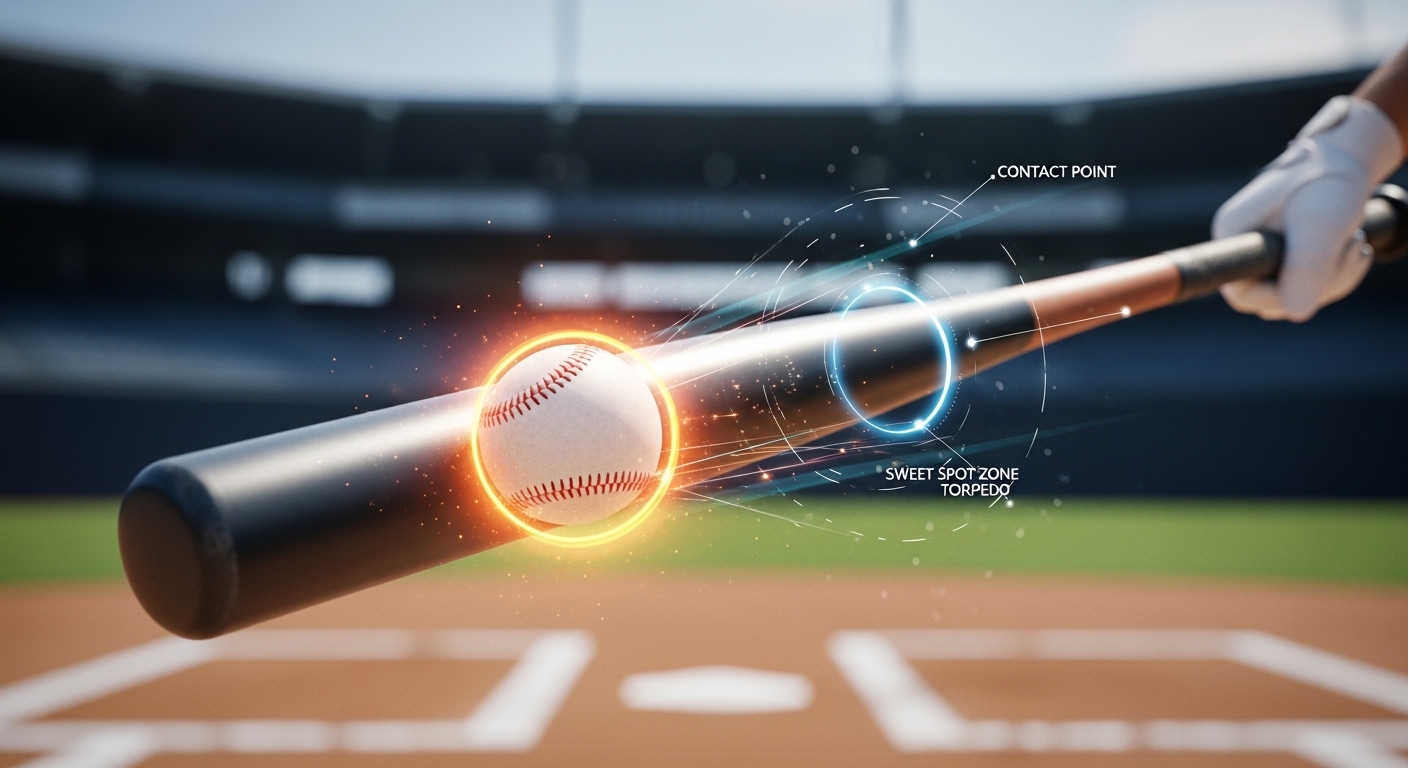
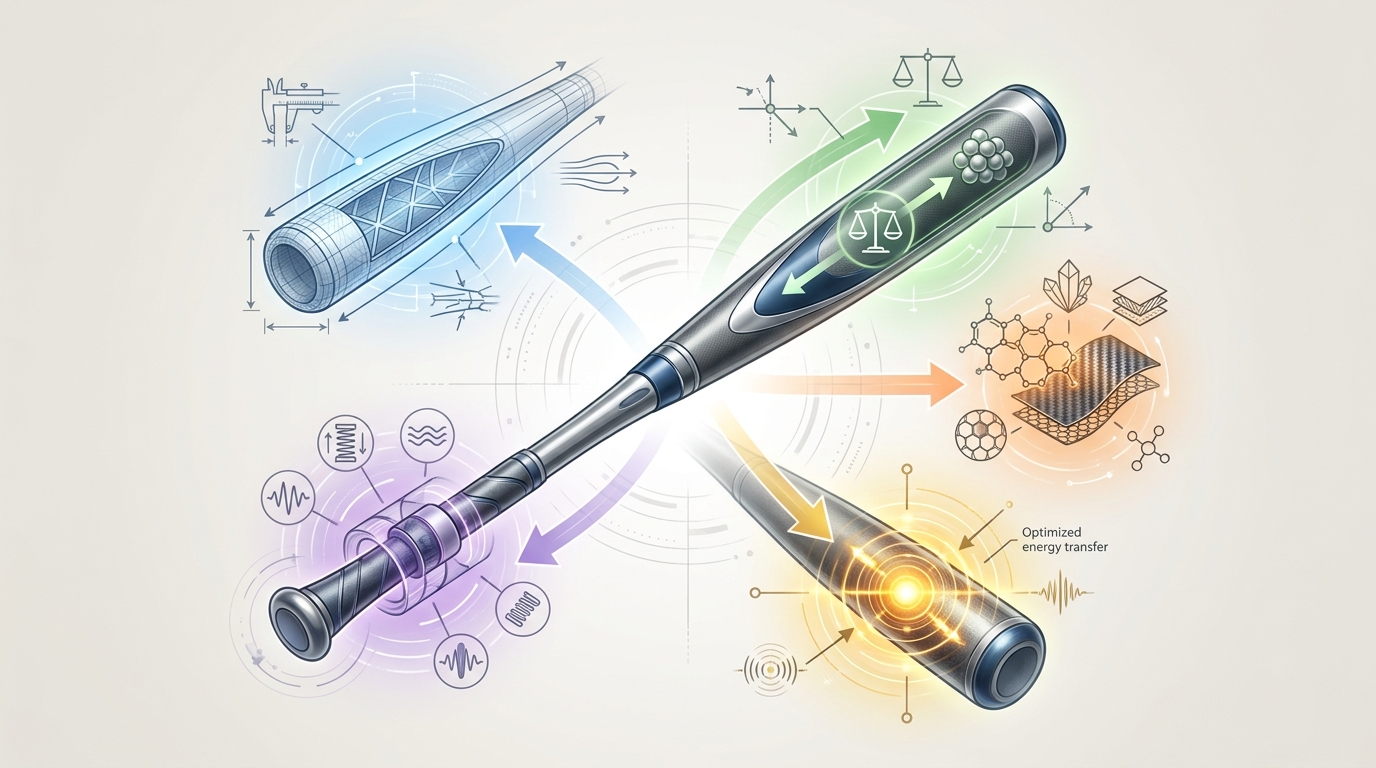
The torpedo bat reduces it — not because it was specifically designed to, but because the same mass redistribution that creates the wider sweet spot also repositions the bat's bending vibration nodes closer to where the player actually makes contact.
This is the least-discussed but most technically elegant dimension of the torpedo bat's performance profile.
Why Bats Sting: The Physics of Bending Modes
To understand what the torpedo bat does to vibration, you first need to understand what causes bat sting in the first place. The answer comes from the work of Daniel A. Russell, Professor of Acoustics at Penn State University.
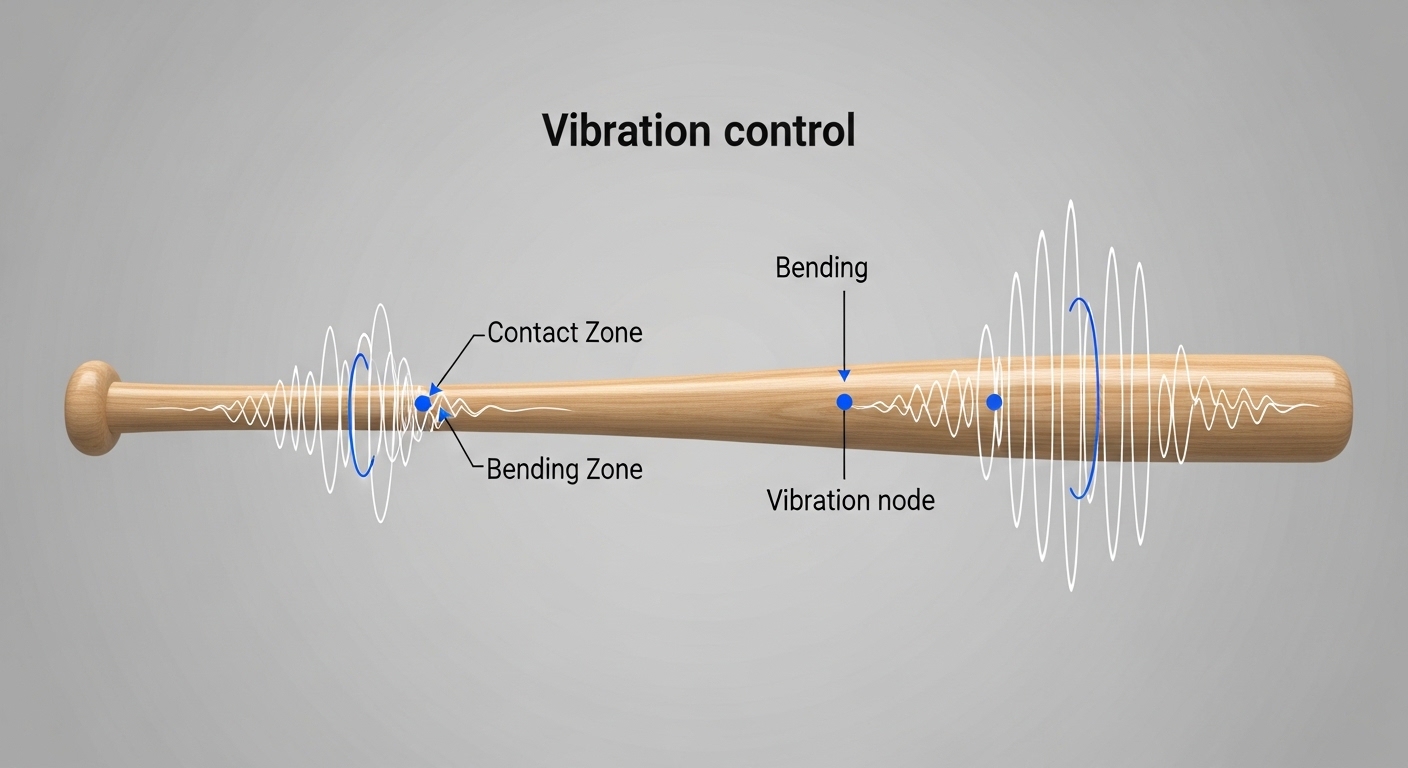
When a baseball bat makes contact with a ball, the impact creates a mechanical impulse that travels through the bat and triggers bending vibrations — oscillations in which the bat flexes and bounces at specific resonant frequencies.
The pain comes from the handle. When the bat vibrates after contact, that vibration travels down the handle and into the player's hands. If the vibration frequency falls within the range of maximum hand sensitivity — and it usually does — the result is the painful sting that players know well.
The Two Critical Bending Modes
For a standard 34-inch adult baseball bat, there are three primary bending modes. The first two are the ones that matter most for performance and for sting.
First Bending Mode (B1)
~170 Hz- Node: ~5–7 inches from barrel tip
- Sting effect: Sting in heel of proximal (bottom) hand
- Relevance: High
Second Bending Mode (B2)
~600–700 Hz- Node: ~2–5 inches from barrel tip
- Sting effect: Painful sting in fleshy thumb-forefinger of top hand
- Relevance: HIGHEST (Primary Sting Source)
Third Bending Mode (B3)
~1,200–1,500 Hz- Node: Near handle section
- Sting effect: Above most hand sensitivity range
- Relevance: Low
Russell's research found that human hands are most sensitive to vibration between 200–700 Hz — a range that precisely overlaps both the first and second bending modes of a standard bat. The second bending mode at ~600–700 Hz lands at the peak of human hand sensitivity, which is why off-center hits feel so punishing.
Nodes: The Hidden Geography of the Sweet Spot
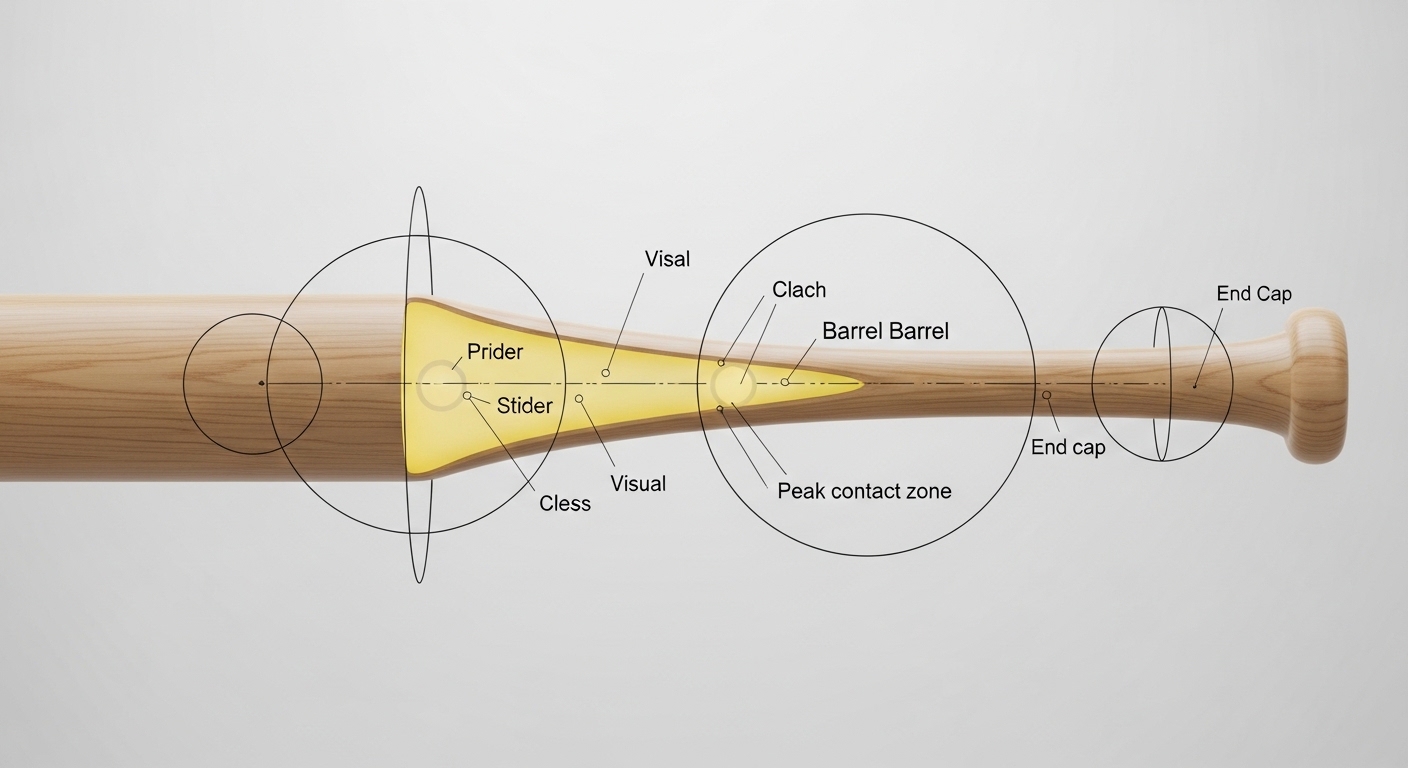
The key concept that connects bending mode science to the torpedo bat is the node. A node is a location on the bat where a specific bending mode has zero displacement — the bat does not move at that point during that mode's vibration.
When contact is made at or very near a node, that mode is not excited — it simply does not activate. No vibration of that mode means no sting from that mode.
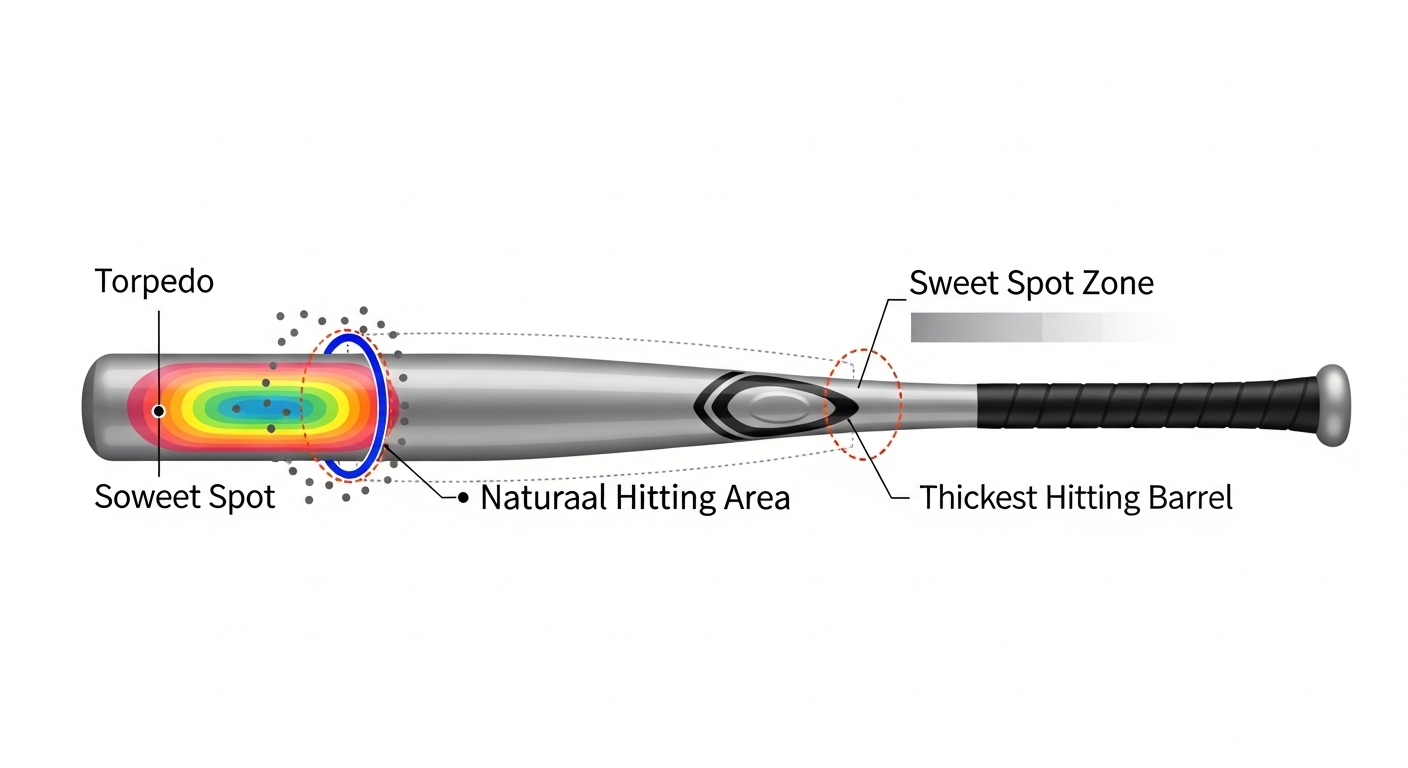
Russell's research defines the sweet spot of a bat as the zone on the barrel between the nodes of the first and second bending modes — approximately 5–7 inches from the barrel tip on a standard 34-inch wood bat. Contacts in this zone fall between the nodes of both critical modes: neither mode is fully excited, vibration is minimized, and sting is dramatically reduced.
The Problem: This sweet spot node zone (5–7 inches from the tip) sits very close to the very end of the barrel. But most players make contact 6–8 inches from the tip, slightly inside that zone. The result is that typical contact on a traditional bat often lands just outside the ideal node zone — generating more vibration than necessary.
How the Torpedo Bat Shifts the Vibration Nodes
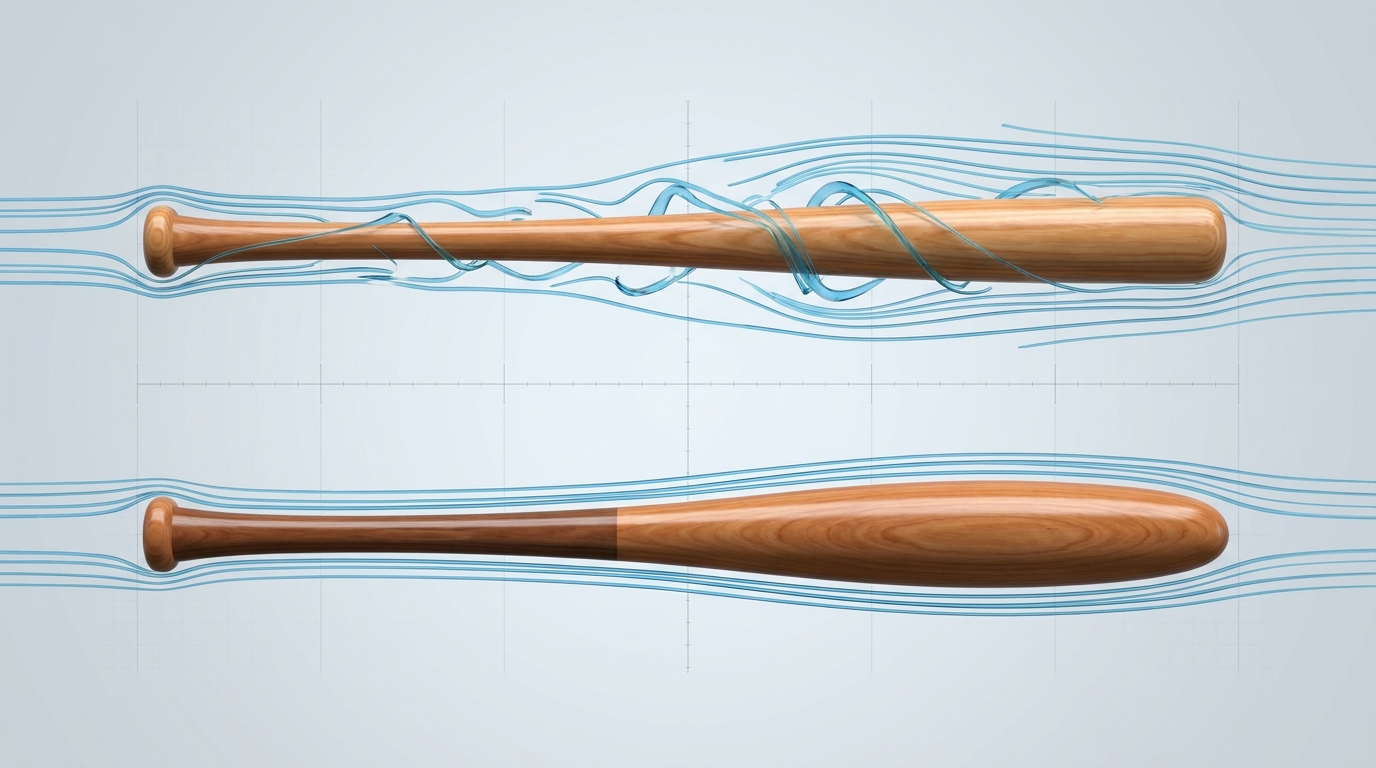
This is where the torpedo bat's geometry produces its passive vibration control benefit. The nodes of the bending modes are not fixed properties of a bat's length and species — they are determined by the bat's mass distribution.
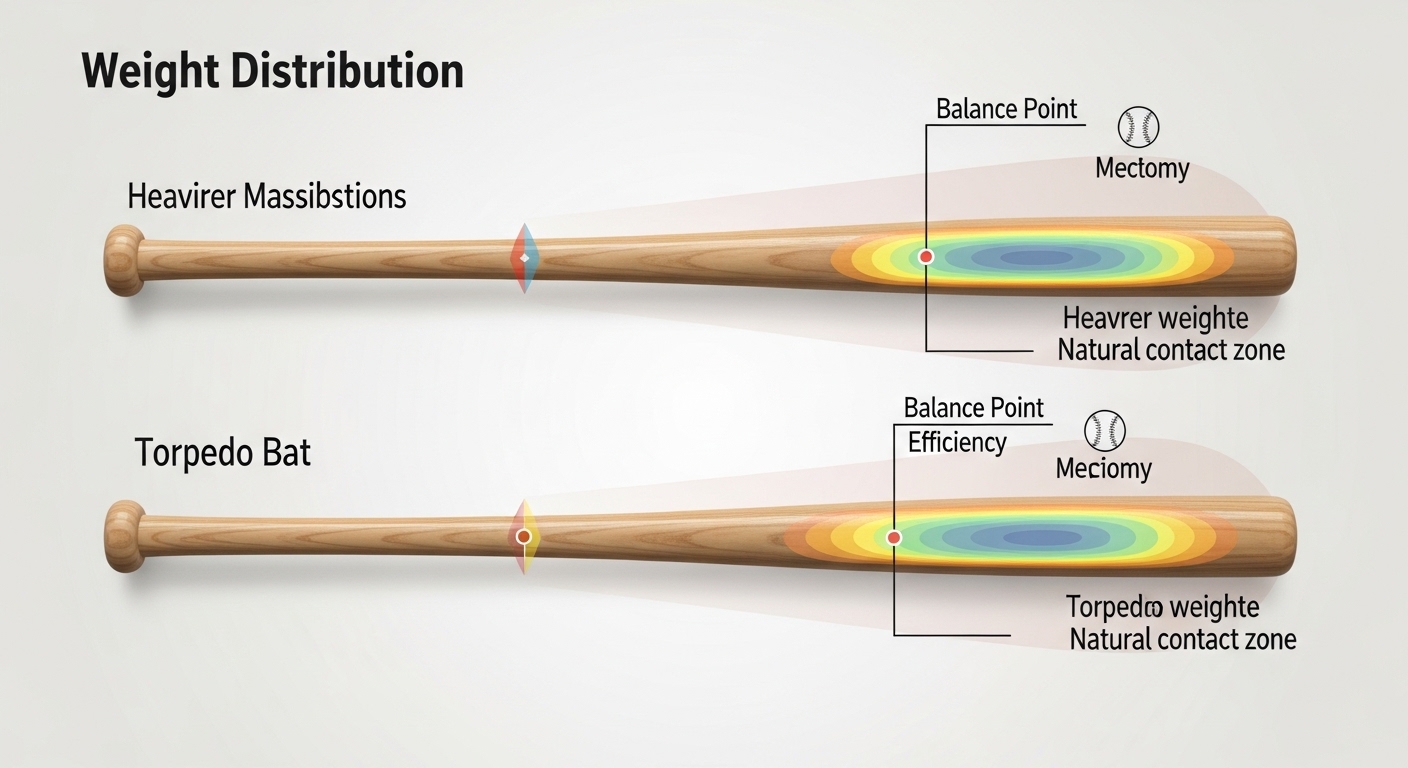
When the torpedo bat redistributes mass from the barrel tip to the contact zone (6–8 inches from the tip), it shifts both the first and second bending mode nodes inward — toward the contact zone. The exact amount of the shift depends on the specific mass redistribution profile, but the direction is consistent: mass moving toward the contact zone brings the nodes with it.
| Design Point | Traditional Bat | Torpedo Bat | Outcome |
|---|---|---|---|
| 1st bending node (barrel) | ~5–7" from tip | Shifts toward 6–8" | Moves closer to player's contact zone |
| 2nd bending node (barrel) | ~2–5" from tip | Shifts inward with mass | More separation from tip; contact zone cleaner |
| COP location | ~5–6" from tip | ~6–8" from tip | Converges with node location |
| Peak mass location | Near tip | ~6–8" from tip | All three points converge in same zone |
| Player contact zone | ~6–8" from tip | ~6–8" from tip | Contact now meets nodes + COP + mass |
| Net vibration at contact | High — contact often between nodes | Lower — contact closer to nodes | Less sting + more energy to ball |
The Three-Point Convergence: Mass, COP, and Node
The torpedo bat's vibration control benefit is most powerful because it does not occur in isolation. It converges with two other performance improvements that the same mass redistribution produces — creating a compounding effect.
Maximum barrel mass at 6–8 inches from tip → maximum collision efficiency.
COP migrates toward 6–8 inches → zero reactive force at handle.
Nodes shift toward 6–8 inches → minimal vibration excitation.
On a traditional bat, these three points are distributed across different barrel locations. On a torpedo bat, they are engineered to converge in the same zone — the player's actual contact zone.
Bending Mode Reference: Traditional vs. Torpedo
| Mode | Freq. Range | Barrel Node Location | Handle Node | Sting Location | Relevance |
|---|---|---|---|---|---|
| 1st Bending | ~170 Hz | ~5–7" from tip | Under top hand | Heel of proximal hand | HIGH |
| 2nd Bending | ~600–700 Hz | ~2–5" from tip | Distal hand zone | Fleshy thumb-forefinger | HIGHEST |
| 3rd Bending | ~1,200–1,500 Hz | Near handle | Multiple nodes | Minimal | LOW |
| Torpedo Shift | Nodes migrate w/ mass | Toward contact zone (6–8") | Slightly repositioned | More contacts near nodes | KEY GAIN |
Other Bat Vibration Damping Mechanisms: How They Compare
The torpedo bat's passive node-shift approach is not the only way to reduce bat sting. Several active damping mechanisms have been developed. Understanding how they compare contextualizes what the torpedo bat achieves through geometry alone.
| Damping Mechanism | Found In | Mode Targeted | Effectiveness | Torpedo Compatible? |
|---|---|---|---|---|
| Mass redistribution (torpedo) | Torpedo bats | 1st & 2nd (indirect) | Moderate — via node shift | ✅ Native to design |
| Knob dynamic absorber | Youth/amateur bats | 2nd bending (primary) | High — directly targets sting | ✅ Compatible |
| Elastomer plug (knob) | Youth bat models | 1st & 2nd | Good — adds damping | ⚠️ Limited MLB use |
| Two-piece construction | Metal/composite bats | Handle vibration | High — decouples barrel | ❌ Not applicable (wood) |
| Cupped end | Traditional + torpedo | Mild tip mass reduction | Low — small mass effect | ✅ Optional add-on |
| Batting gloves | Players (personal) | Attenuates perception | Moderate — absorbs impulse | ✅ Always compatible |
The most powerful active damping mechanism Russell identified was the knob dynamic absorber — a small tuned-mass damper placed inside the bat knob and calibrated to the frequency of the second bending mode (~600–700 Hz). When properly tuned, this absorber effectively removes the second bending mode from the bat's vibration response.
The torpedo bat does not include a knob dynamic absorber in its standard design. However, some players pair torpedo barrels with bell knobs — which add mass at the knob base and can serve a mild passive damping function.
What Players Actually Feel: The Torpedo Bat's Tactile Profile
The vibration science translates directly into player experience. Players who have switched to torpedo bats consistently report a specific set of tactile changes.
- Reduced sting on mishits within the barrel zone Because the torpedo's node zone overlaps better with the contact zone, off-center hits that land in the wider barrel area generate less second bending mode vibration — and noticeably less sting.
- "Softer" feel on well-struck balls When contact is made precisely at the COP-node convergence zone, hitters describe the feel as unusually clean or "soft." This is the physical signature of COP alignment: zero reactive force at the handle.
- Stronger feedback on tip mishits The tradeoff: contacts at the very tip of the torpedo bat — in the narrowed, lighter zone — generate more vibration, not less, because that zone is farther from the node migration point.
- Improved bat control perception Some players report that the bat feels more controllable or more like an extension of the hands. This may be related to the lower MOI combined with the reduced handle vibration.
Frequently Asked Questions: Torpedo Bat Vibration Control
Does the torpedo bat actually reduce hand sting?
Yes — but selectively. The torpedo bat's mass redistribution shifts the bending vibration nodes toward the player's natural contact zone. For contacts within that zone, less vibration is generated and sting is meaningfully reduced. For contacts at the very tip of the bat — where the torpedo is narrower and nodes have not migrated — sting may actually be worse than on a traditional bat.
What causes bat sting in the first place?
Bat sting is caused by bending vibrations triggered at the moment of contact. The bat oscillates at specific resonant frequencies — approximately 170 Hz for the first bending mode and 600–700 Hz for the second. Both fall within the range of maximum human hand sensitivity. When contact is made away from the vibration nodes, these modes are fully activated and the resulting handle vibration causes pain.
What is a vibration node on a baseball bat?
A vibration node is a location on the bat where a specific bending mode has zero displacement — the bat does not move at that point during that mode's oscillation. Contact made at or near a node produces minimal vibration of that mode. The sweet spot of a bat can be defined as the zone between the barrel-end nodes of the first and second bending modes.
Why are the two bending mode frequencies so important?
The first bending mode (~170 Hz) and second bending mode (~600–700 Hz) are critical because they fall within the range of maximum human hand sensitivity to vibration (200–700 Hz). The second mode at ~600–700 Hz is particularly painful — it coincides with the peak sensitivity frequency of the fleshy region between the thumb and forefinger of the top hand.
Can the torpedo bat's vibration control be combined with other damping mechanisms?
Yes. The torpedo bat's passive node shift is geometric — it does not conflict with active damping mechanisms. Players who want maximum vibration control could theoretically combine a torpedo barrel with a knob dynamic absorber (tuned to the second bending mode frequency), batting gloves, and an optional cupped end. These mechanisms are additive, not competing.
Continue Exploring Torpedo Bat Technology
Gallery