Torpedo Bat Materials: The Wood Science, Billet Selection, and Finishing Technology
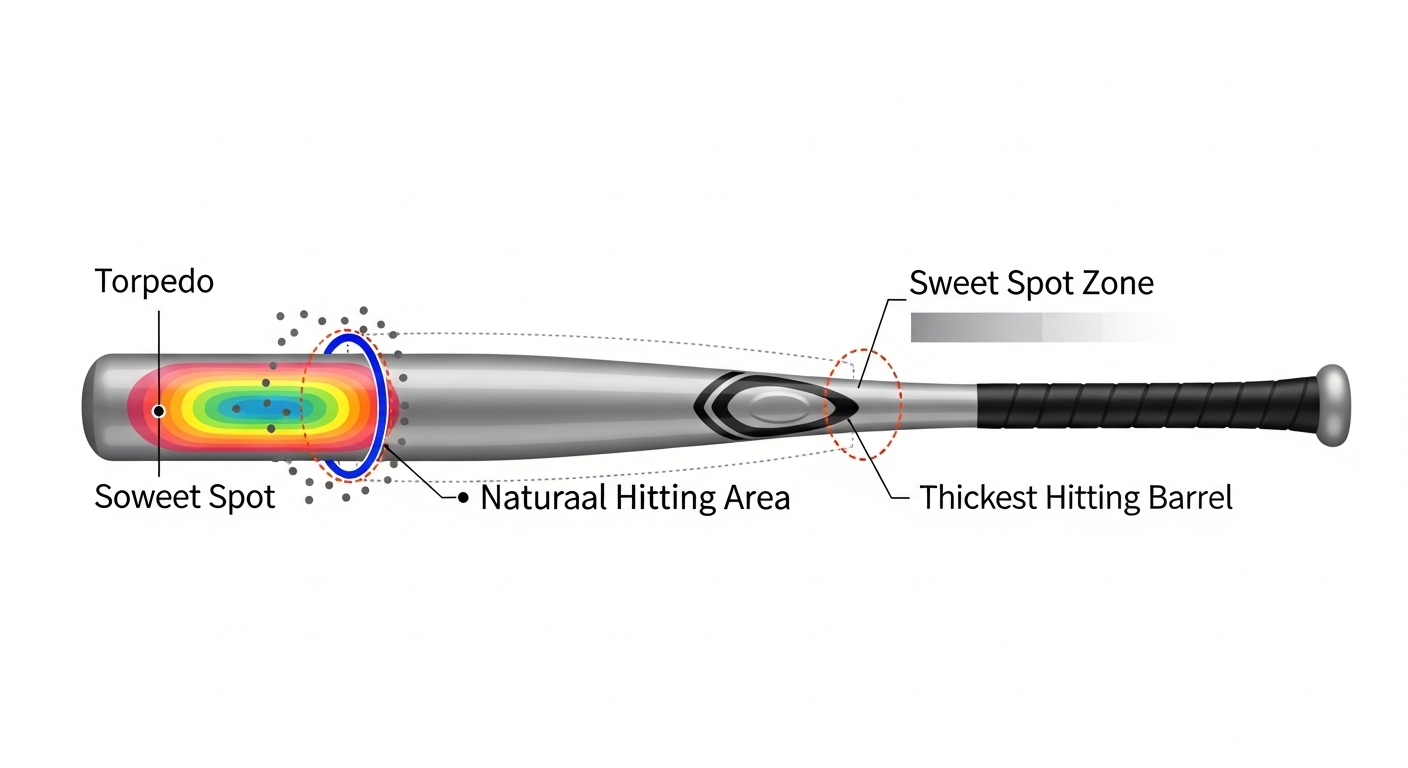
Every engineering decision in the torpedo bat design — the precise barrel geometry, the carefully calculated weight distribution, the repositioned sweet spot — ultimately depends on one thing: the material it's made from.
Wood is not a uniform substance. Two billets of the same species, cut from trees in the same forest in the same year, can have measurably different densities, grain orientations, moisture levels, and structural properties.
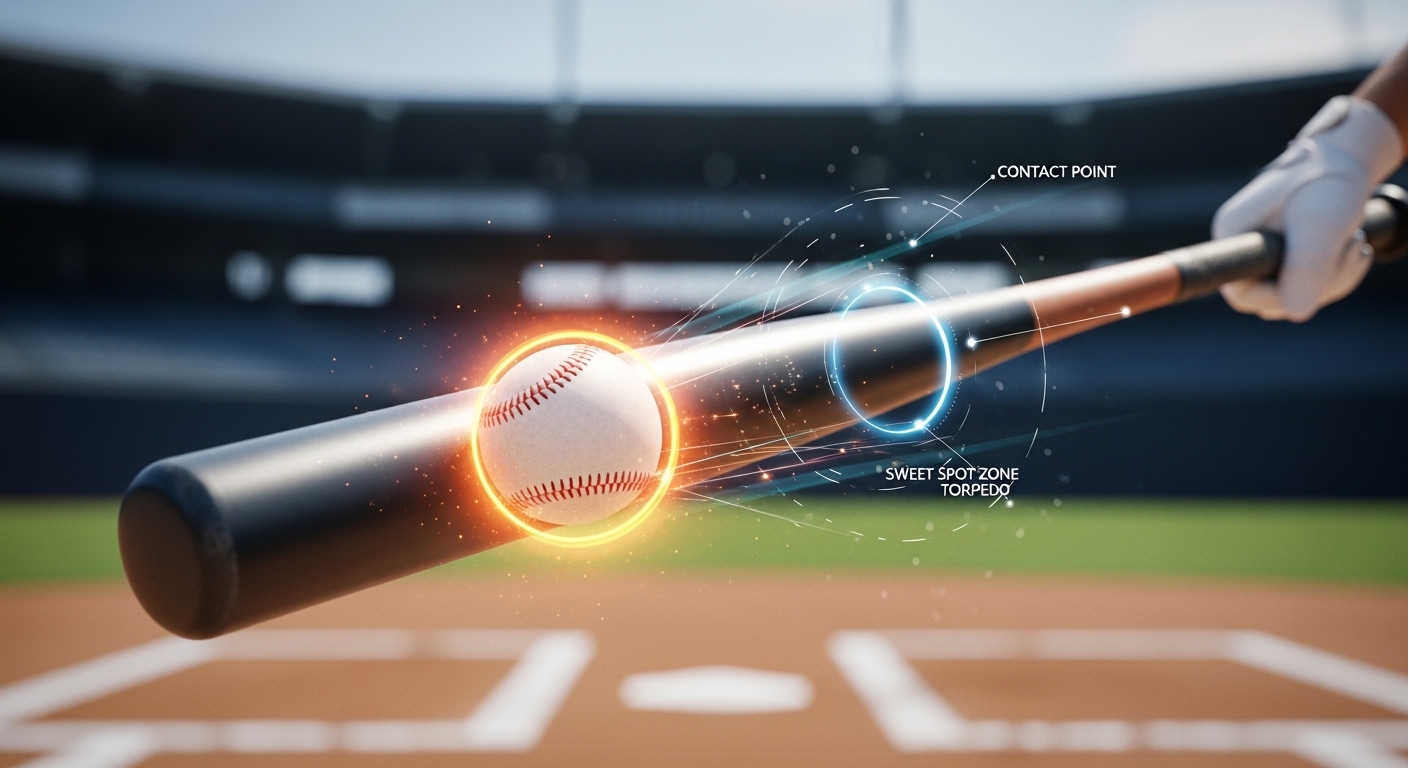
The torpedo bat's demand for mass precision in a narrow contact zone makes material selection more critical than for any traditional bat design.
Wood Species Comparison: Maple, Birch, and Ash
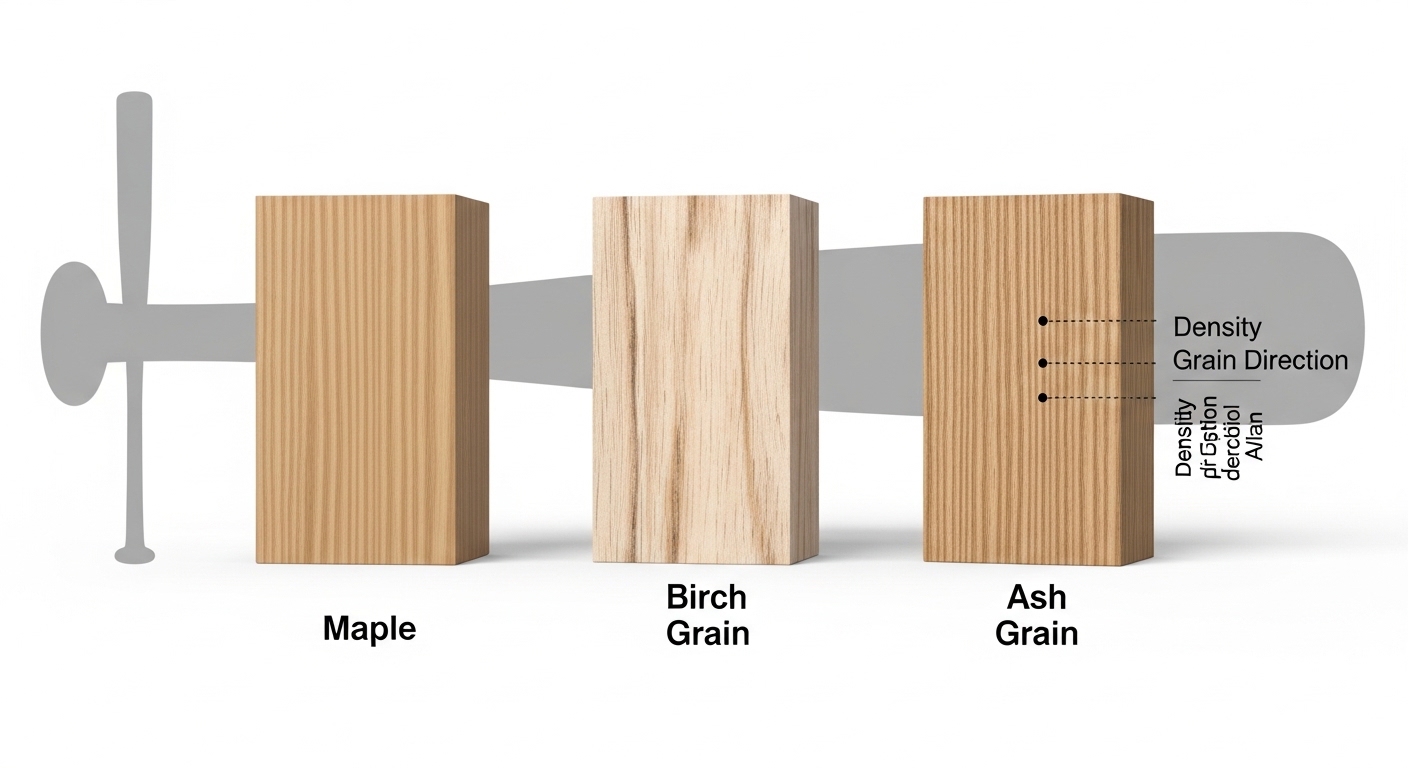
Every MLB-grade wood bat — including every torpedo bat — is made from one of three wood species. Each has a distinct performance and structural profile. Not all three are equally suited to the torpedo design's specific material demands.
| Property | 🍁 Maple | 🌿 Birch | 🌾 Ash |
|---|---|---|---|
| Janka Hardness | 1,450 lbf | 1,260 lbf (hardens w/ use) | 1,320 lbf |
| Density (lbs/ft³) | ~44–47 lbs/ft³ | ~40–43 lbs/ft³ | ~38–42 lbs/ft³ |
| Grain Structure | Diffuse-porous; tight, fine | Diffuse-porous; curly grain | Ring-porous; visible grain lines |
| Flexibility | Low (very stiff) | Medium (natural flex) | High (most flexible) |
| Break-in Period | None — ready immediately | Yes — hardens over first uses | None — but flakes with age |
| Breakage Pattern | Shatters / multi-piece (dangerous) | Cleaner fracture; less multi-piece | Splinters along grain (predictable) |
| Moisture Sensitivity | High — gains weight in humidity | Medium | High — grains flake when dry |
| Ink Dot Required? | Yes (since 2008) | Yes (since 2008) | No — ring-porous; grain visible |
| MLB Usage (est.) | ~65–70% | ~20–25% | ~8–10% |
| Torpedo Suitability | ★★★★★ Primary choice | ★★★★☆ Excellent alternative | ★★☆☆☆ Not recommended |
| Best For (torpedo) | Power hitters; maximum pop in narrow contact zone | Contact hitters; forgiveness on off-center torpedo hits | Traditional use; not suited to torpedo geometry demands |
🍁 Maple — The Dominant Choice for Torpedo Bats
Hard maple (Acer saccharum, specifically sugar maple) is the overwhelming choice for torpedo bats at the MLB level, accounting for approximately 65–70% of professional wood bat use overall. Its dominance in the torpedo design is even more pronounced than in traditional bat manufacturing.
Why Maple Is Best Suited to Torpedo Geometry
- Density advantage: Maple's density of approximately 44–47 lbs/ft³ — the highest of the three main species — delivers the most effective bat mass in the narrowest barrel zone.
- Diffuse-porous grain: Unlike ash's ring-porous grain, maple's pores are distributed evenly throughout the wood. This creates a uniform surface that compresses without flaking on contact.
- Compaction effect: On a torpedo bat where the contact zone is precisely concentrated, maple actually improves in hardness over time at exactly the zone it was designed for.
The Cold Climate Advantage
Not all maple is equal. The best billets for professional baseball bats come from cold-climate growing regions — primarily northern Pennsylvania, New York, and the Canadian provinces of Ontario and Quebec.
Trees grown in cold climates with defined seasons develop tighter, denser annual growth rings. The shorter growing season forces the tree to produce denser wood fiber per year, resulting in billets that are noticeably harder and heavier per unit volume.
The Maple Tradeoff: Breakage Pattern
Maple's density and stiffness come with a significant safety consideration. When a maple bat breaks, it tends to shatter into large, fast-moving pieces rather than splintering along a grain. This multi-piece fracture (MPF) pattern is dangerous.
🌿 Birch — The Rising Star for Contact-Oriented Torpedo Hitters
Yellow birch (Betula alleghaniensis) has become the fastest-growing wood species in professional baseball, and it is increasingly the preferred material for torpedo bats built for contact-oriented hitters.
The Break-in Property
Birch bats are softer than maple when new. The surface compresses slightly on first contact, and hardens progressively over the first 20–50 swings as the wood fibers compact at the contact point.
Torpedo-specific advantage: Since the torpedo is engineered to concentrate contact in one zone, the birch hardens most aggressively exactly there — reinforcing the design's intent through the material's own natural behavior.
Birch Flex and Torpedo Forgiveness
Where maple transfers energy through pure rigidity, birch adds a slight "trampoline effect" — a micro-flex on contact that returns some elastic energy into the ball.
Combined with the torpedo's wider effective sweet spot, this flex makes birch torpedo bats notably more forgiving on off-center contacts within the barrel zone. For contact hitters who value bat-to-ball consistency over raw power, the birch torpedo is arguably the most technically appropriate choice.
Birch Density and Weight Engineering
Birch's slightly lower density (~40–43 lbs/ft³ vs. maple's 44–47 lbs/ft³) means that a birch torpedo bat must use slightly more wood volume at the contact zone to achieve the same effective bat mass as a maple build.
Manufacturers compensate either by slightly widening the peak barrel zone on birch models or by selecting denser billets from the top of the birch density range.
🌾 Ash — Traditional, But Not Suited to Torpedo Geometry
White ash (Fraxinus americana) was the dominant bat wood for most of baseball's history, only overtaken by maple in the early 2000s. It remains in use at the professional level — but it is not well suited to torpedo bat designs.
Why Ash Is Not Recommended for Torpedo Bats
- Ring-porous grain structure: Ash has clear visible grain lines — and clear structural discontinuities between those lines.
- Structural weakness: The torpedo's reverse taper narrows the barrel end, reducing wood cross-section at the tip zone. For ash, with its ring-porous grain, the narrowed tip zone creates a predictable failure plane.
- Higher breakage risk: Tater Bat Co. notes that even their maple torpedo model carries increased breakage risk at the narrowed tip. For ash, this structural risk is significantly higher.
Billet Sourcing and Grading: Where Torpedo Material Quality Starts
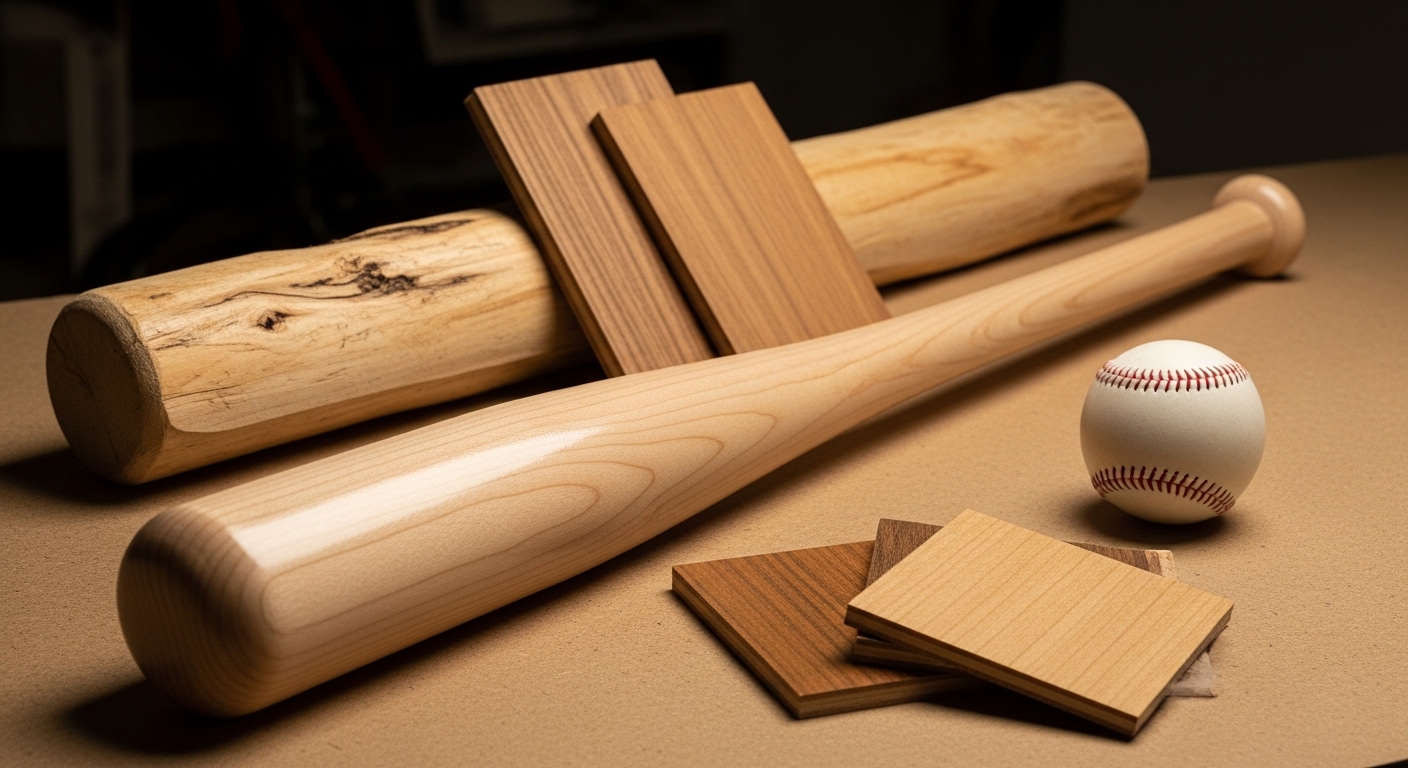
Before any lathe or CNC machine touches the wood, the torpedo bat's material quality is determined. A billet — the cylindrical wood blank from which the bat is turned — is typically 37 inches long and 2.75 inches in diameter.
Split Billets vs. Sawn Billets
This is the most consequential material sourcing decision in wood bat manufacturing, and one that most players never hear about.
Sawn Billets
- Cut from logs using a saw — efficient, consistent in dimension
- Prone to cutting across the wood's natural grain rather than following it
- When the saw cuts across the grain, the resulting billet has a structural weakness along the cut path
- Creates a slope of grain deviation that makes the bat disproportionately likely to fracture
Split (Hand-Split) Billets
- Produced by literally splitting the log along its natural grain — following the wood's own fiber direction
- Result: a billet whose grain runs parallel to the bat's long axis along its entire length
- Structurally stronger, produce straighter grain, and almost entirely eliminate slope-of-grain failures
- For torpedo bats: The reverse taper's narrowed tip zone is the structural weak point — split billets are essential for safety
Billet Grading: What Grade Does a Torpedo Bat Need?
Bat billets are graded on a scale from MLB/Pro grade (highest) down to youth/practice grade. Torpedo bats require Pro or Pro Select grade billets to deliver their performance and safety promises.
| Grade | Grain Quality | Density | Typical Use | Torpedo Suitable? |
|---|---|---|---|---|
| Pro/MLB | Straightest available; ink dot ≤3° | High — premium selection | MLB game bats; pro-level orders | ✅ Yes — required |
| Pro Select | Excellent; 24"+ straight grain | Good to high | High-level amateur; minor league | ✅ Yes — most torpedo bats |
| Select | Good; minor cosmetic imperfections | Medium to good | Serious amateur; adult leagues | ⚠️ Acceptable — check density |
| Practice | Lower; may have cosmetic flaws | Variable | Practice/training bats | ❌ Not recommended |
| Youth/Entry | Basic standards | Lower | Youth leagues; beginner | ❌ Not suitable |
Critical grading criteria for torpedo billets: (1) grain slope ≤3° (ink dot certified); (2) density in the upper range for the selected species; (3) no end-checking, knots, or honeycombing. Of these, density is the most torpedo-specific requirement — because the contact zone mass calculation depends on the billet's actual density, not an average species density.
Finishing Processes: How PRO-X, ProPACT, and Bone Rubbing Protect the Design
Once a torpedo bat is turned on a CNC lathe, its engineering precision is complete — but its surface is still raw wood. The finishing processes applied before the bat reaches the player determine how well that precision is protected through the rigors of game use.
Bone Rubbing: The Foundation of Every Premium Torpedo Bat
Bone rubbing is a process in which the bat's surface is repeatedly compressed using a smooth, hard bone or bone-equivalent tool. The compression forces the outermost wood fibers together, increasing surface density and hardness beyond the wood's natural state.
For a torpedo bat, bone rubbing is applied with particular attention to the contact zone — the peak barrel area — where surface hardness directly affects exit velocity. Tater Baseball describes the process plainly: "Bone rubbing compresses the wood fibers, making the bat harder, improving durability, and increasing ball exit speeds."
Manufacturer Finish Systems Compared
| Manufacturer | Finish System | Process | Torpedo Benefit | Warranty |
|---|---|---|---|---|
| Marucci | PRO-X | Bone rubbing + proprietary chemical hardening + clear coat | Surface compression protects narrowed tip zone; higher durability per swing | Standard MLB game bat warranty |
| Victus | ProPACT | Surface strengthening treatment; increases wood hardness beyond natural state | Extends lifespan; improved consistency at barrel contact zone | 60–61 day warranty (model-specific) |
| Louisville Slugger | Standard + UV cure | Bone rubbing + UV light curing post-finish application | Surface hardness locks in CNC precision; consistent feel across units | MLB player inventory standard |
| Tater Bat Co. | Bone rub standard | Full bone rubbing process; fiber compression focus | Higher barrel density; Tater recommends Drop 2 to offset tip vulnerability | 30-day limited warranty |
| Phoenix Bats | Standard finish | Bone rubbing + standard lacquer finish | Clean surface; consistent torpedo profile from Ohio maple/birch billets | Standard amateur warranty |
Torpedo Bat Material Care: How to Preserve Your Investment
The torpedo bat's materials are more sensitive to environmental conditions than a traditional bat, because the narrowed tip zone has less wood cross-section to buffer against moisture absorption, expansion, and stress. Proper care is not optional — it is part of protecting the precision that was engineered into the bat.
Store indoors, away from temperature extremes. Avoid car trunks, unheated garages, and outdoor bat bags. Temperature swings cause wood to expand and contract, weakening grain bonds — especially at the torpedo's narrowed tip.
Avoid humidity above 60%. Maple bats are particularly moisture-sensitive, absorbing up to an ounce of water weight in high-humidity conditions. The bat's weight distribution changes as moisture affects the barrel zone.
Rotate the bat on impact. Hit with the label up or down (perpendicular to the face grain) to maximize structural integrity at the contact zone. Hitting off the face grain weakens ash and birch particularly.
Use only for baseball contact. Hitting batting practice balls, pitching machine balls, or other non-game balls with the wrong hardness can stress the torpedo's narrowed tip zone disproportionately.
Break in birch torpedo bats. Budget the first 20–50 swings on birch torpedo bats as break-in contact before game use. This compresses the contact zone fibers and brings the surface hardness to its game-ready level.
Frequently Asked Questions: Torpedo Bat Materials
What is the best wood for a torpedo bat?
For the majority of hitters — especially power hitters or those prioritizing maximum pop — hard maple from cold-climate growing regions is the best choice. Its high density (~44–47 lbs/ft³) delivers the most effective bat mass in the torpedo's concentrated contact zone. For contact hitters, or players who want more forgiveness on off-center contacts within the torpedo zone, yellow birch is an excellent alternative — its natural flex and progressive hardening behavior complement the torpedo design's forgiveness goals.
Why doesn't the torpedo bat use ash?
Ash's ring-porous grain structure creates structural discontinuities along the length of the bat. The torpedo's reverse taper narrows the barrel end — reducing wood cross-section at the tip zone. Combined with ash's grain structure, this creates a compounding breakage risk at the narrowed tip that makes ash torpedo bats impractical for professional use. Most torpedo manufacturers produce only maple and birch torpedo models.
What is the difference between PRO-X and ProPACT finishing?
Both are proprietary surface hardening systems applied after bone rubbing. Marucci's PRO-X penetrates the surface fibers chemically, bonding them and creating a harder surface layer. Victus' ProPACT is described as a process that strengthens the wood surface for enhanced lifespan — the exact chemistry is proprietary but the performance outcome (harder surface, longer bat life) is consistent with a similar approach. Both systems are designed to protect the torpedo's engineered geometry through game use, with particular value at the structurally vulnerable narrowed tip zone.
Why does the growing climate of the wood matter?
Wood density is directly influenced by growing conditions. Trees in cold climates with defined seasons produce tighter annual growth rings — more wood fiber per year of growth. Cold-climate maple from Pennsylvania, northern New York, or Canadian provinces yields billets that are measurably denser and harder than warm-climate maple from the same species. For torpedo bats, where contact zone mass is precisely calculated using the wood's density, higher-density billets allow the geometry to achieve its mass target without requiring larger barrel diameters.
Are split billets worth the premium for torpedo bats?
For serious players, yes. Split billets follow the wood's natural grain orientation, producing straighter grain alignment along the bat's long axis. This dramatically reduces the slope-of-grain failure risk that causes multi-piece shattering — a particularly important safety concern at the torpedo's narrowed tip zone. Premium torpedo bat manufacturers use split billets (or equivalent hand-inspection processes) specifically because the torpedo design's structural geometry makes grain quality more safety-critical than in traditional bat designs.
Continue Exploring Torpedo Bat Technology
Gallery