Torpedo Bat Comparisons: Which Bat Is Right for You?
The torpedo bat is not the right bat for everyone. That statement — which most torpedo bat content avoids making — is the starting point for an honest comparison. This section cuts through the noise with five focused comparison pages, each targeting a specific decision.
The Critical Distinction: Fitted vs. Off-the-Shelf Torpedo Bats
The most important thing to know before comparing bats: amateur torpedo bats sold at retail are NOT the same as the custom-fitted MLB torpedo bats that Aaron Leanhardt designed for Anthony Volpe and Cal Raleigh.
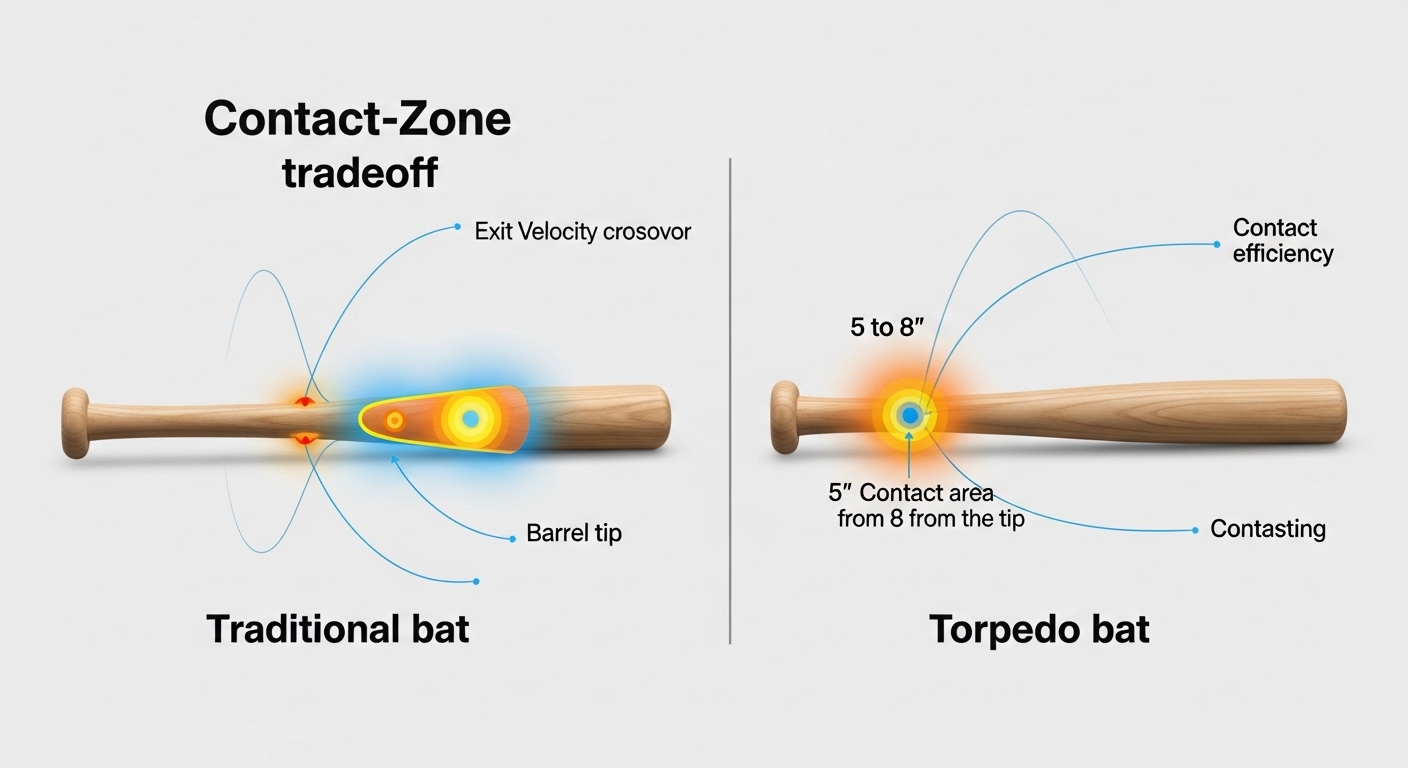
The MLB torpedo bat's performance advantage flows from two sources: the torpedo geometry AND the Statcast data pipeline that places the peak mass precisely at each individual player's natural contact zone. An off-the-shelf torpedo bat uses the torpedo shape with a standardized peak diameter location — typically at 6–7 inches from the tip.
"The torpedo bats that manufacturers are rushing out for amateurs right now are NOT the same thing that the pros are swinging. Focusing on the shape of the bat completely misses the point." — AZ Snake Pit
The Mid-Season Reality Check: What Actually Happened to Torpedo Bat Users
Before comparing the torpedo bat against other designs, it helps to look at the honest mid-season record for the players who adopted torpedo bats in 2025. The AZ Snake Pit maintained one of the only independent wRC+ trackers for torpedo bat users.
| Player | 2024 wRC+ | 2025 wRC+ | Change | HR (games) | Verdict |
|---|---|---|---|---|---|
| Cal Raleigh (SEA) | 117 | 179 | +62 pts | 19 HR / 53 G | ✅ Breakout — torpedo confirmed |
| Anthony Volpe (NYY) | ~95 | ~125 est. | Positive | Hard-hit: 35→48% | ✅ Clear improvement |
| Paul Goldschmidt (NYY) | ~90 | ~120 (BA +94 pts) | Contact quality ↑ | EV flat | ✅ Contact gain — not power |
| Nico Hoerner (CHC) | 103 | 102 | ~0 (wash) | SLG flat | — Neutral: no gain, no loss |
| Alec Bohm (PHI) | 115 | 93 | -22 pts | SLG: .448→.384 | ❌ Decline — likely mismatch |
| Willson Contreras (STL) | 140 | 101 | -39 pts | Sig. decline | ❌ Decline — age or mismatch |
| Colson Montgomery (CWS) | N/A (debut) | ~130 (21 HR/71 G) | Rookie breakout | 21 HR | ✅ Best natural experiment |
The table tells a clear story: the torpedo bat delivers when the player's contact zone matches the design and when the adoption was data-driven. Roughly 60% positive outcomes, roughly 40% neutral or negative, with the quality of bat fitting being the primary differentiator.
Master Decision Matrix: Which Bat for Which Situation
Use this matrix to find the right comparison page for your specific situation. Green cells indicate the torpedo bat is likely advantageous; red cells indicate it is likely disadvantageous.
| Situation / Profile | vs. Traditional | vs. Alloy | vs. Composite | Youth Version | See Page |
|---|---|---|---|---|---|
| Contact hitter, zone 6–8" from tip | ✅ Switch | Depends on league | Composite may match | Recommended | vs. Traditional |
| Power hitter, tip-contact tendency | ❌ Stay traditional | Alloy may suit better | Composite sweet spot | Not recommended | Pros & Cons |
| Elite bat speed (80+ mph) | Modest gain only | Wood vs. metal — different tools | Wood vs. composite — different tools | Check league rules | vs. Traditional |
| High school player, BBCOR required | Wood for training only | ✅ Alloy BBCOR torpedo | ✅ Composite BBCOR torpedo | USA Bat certified | vs. Alloy / vs. Composite |
| Youth player (Little League / 12U) | Training only | Check league rules | Check league rules | USA Bat versions exist | Youth Guide |
| Cold weather / outdoor play | Wood fine in cold | Alloy best in cold | ❌ Composite cracks < 60°F | Alloy preferred | vs. Composite |
| Budget-limited player | Wood bats break | ✅ Alloy — most durable | Composite costs more | Alloy most cost-effective | vs. Alloy |
The Five Comparison Pages
Torpedo vs. Traditional Wood
The core comparison — EV curves, AZ Snake Pit wRC+ data, feel, and the Statcast-based 'should I switch?' framework.
📊 Deep dive →Torpedo vs. Alloy
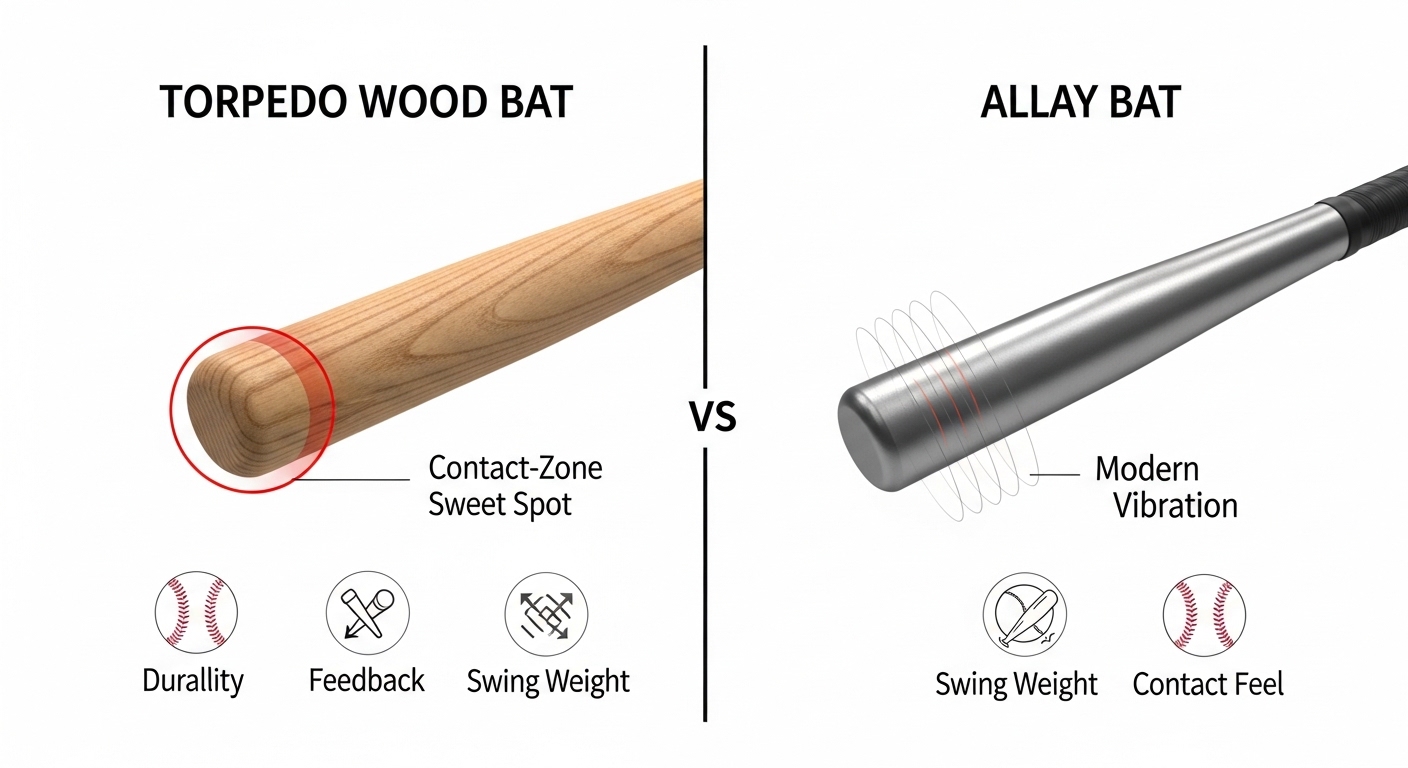
Wood torpedo vs. metal alloy — BBCOR ceiling, cold weather, durability, and the feel divide that separates wood from metal.
📋 Deep dive →Torpedo vs. Composite
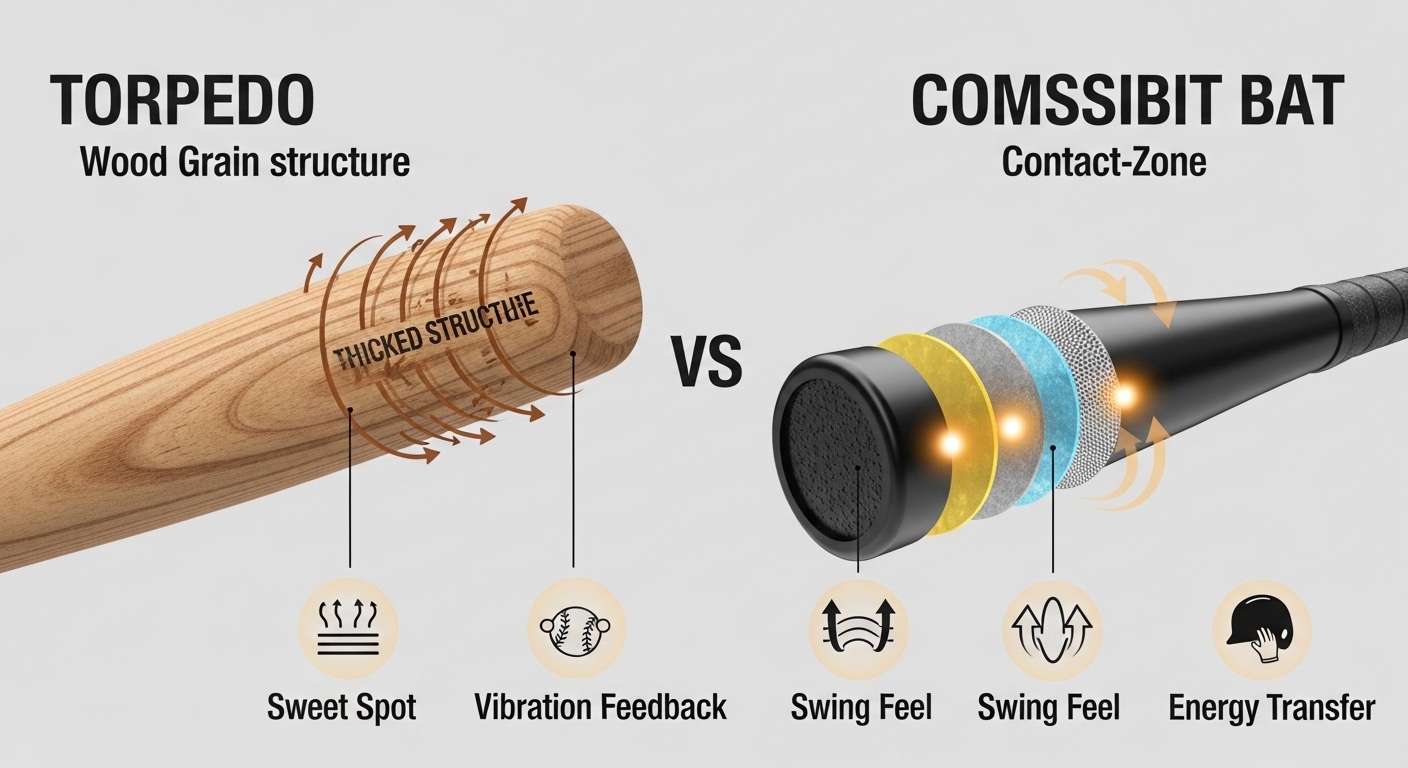
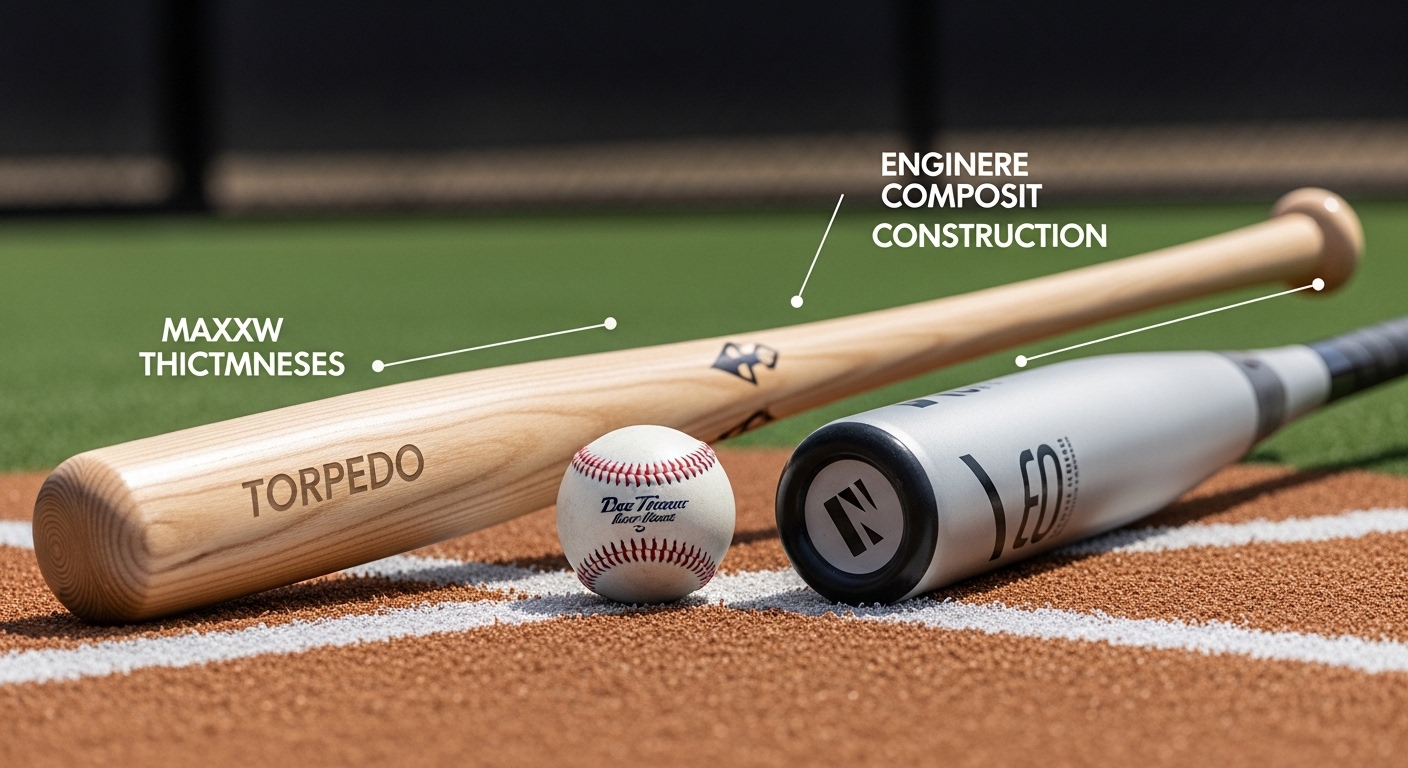
Trampoline effect, break-in period, cold-weather cracking, and sweet spot engineering — wood torpedo vs. composite construction.
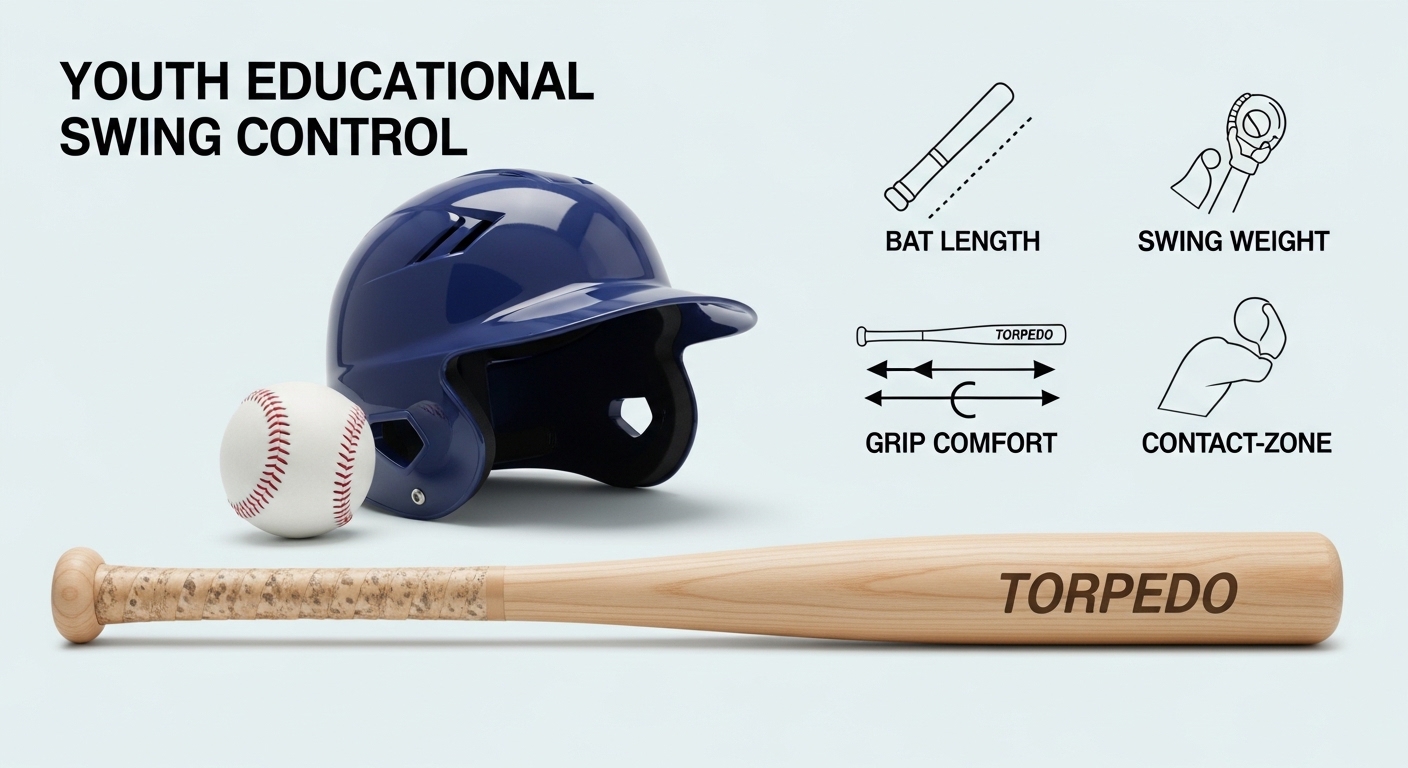
⚙️ Deep dive →Youth Torpedo Bat Guide
Which leagues allow torpedo bats for youth players, what the rules say, and whether youth players should train with them.
🔰 Deep dive →Pros and Cons
The complete torpedo bat scorecard — every pro and con grounded in real data, not marketing claims.
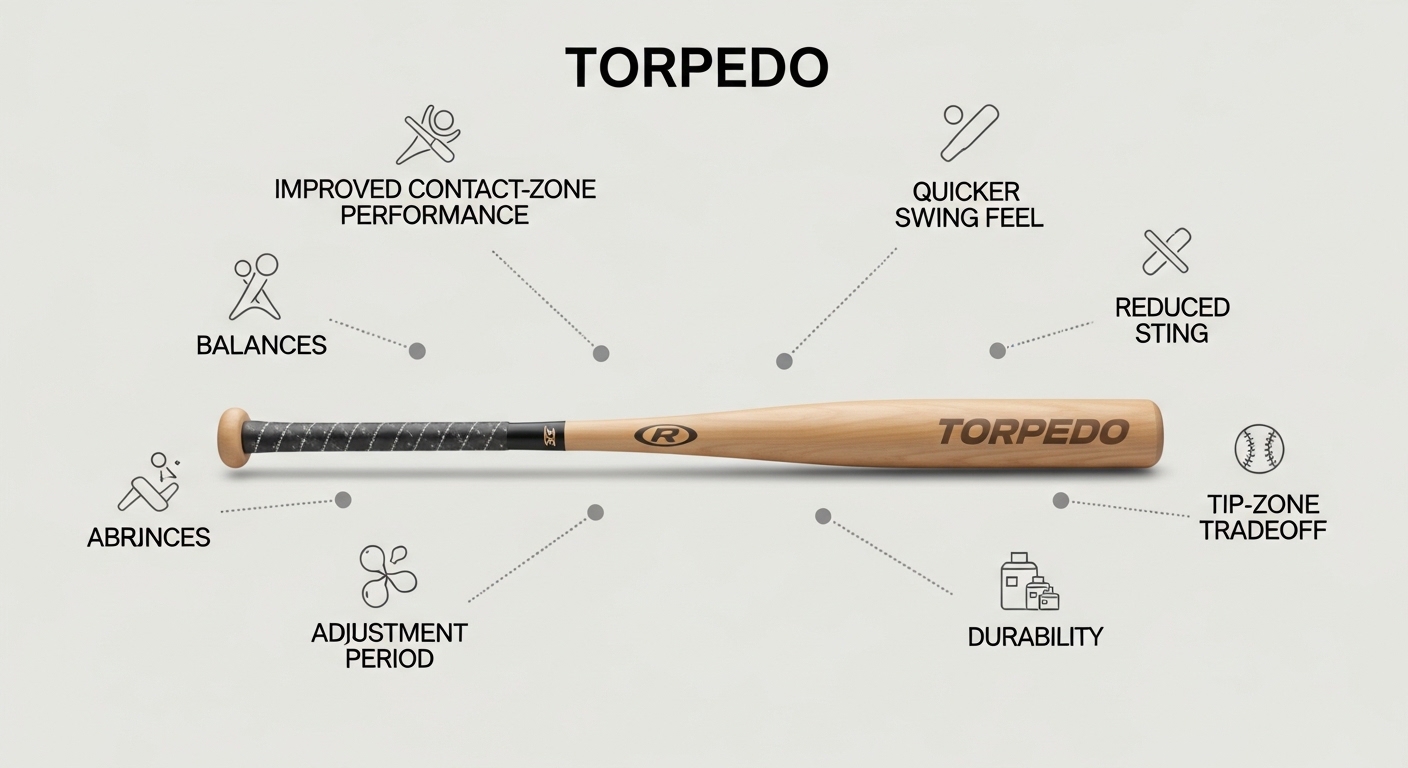
⚖️ Deep dive →Quick Reference: Torpedo Bat Pros and Cons (Grounded in Data)
- 5–7% higher EV at contact zone — BPL barrel map
- +1–3 mph bat speed gain — lower MOI (Yankees 5-player data)
- Wider sweet spot zone — Nathan's 'non-trivial' finding
- Raleigh: 179 wRC+, 55+ HR pace — AZ Snake Pit tracker
- Less sting on near-miss contacts — vibration node migration
- +8.3 ft fly ball distance gain — ESPN 13-user group
- CNC manufacturing precision — no mass variance issue
- Legal in MLB and most leagues — Rule 3.02 compliant
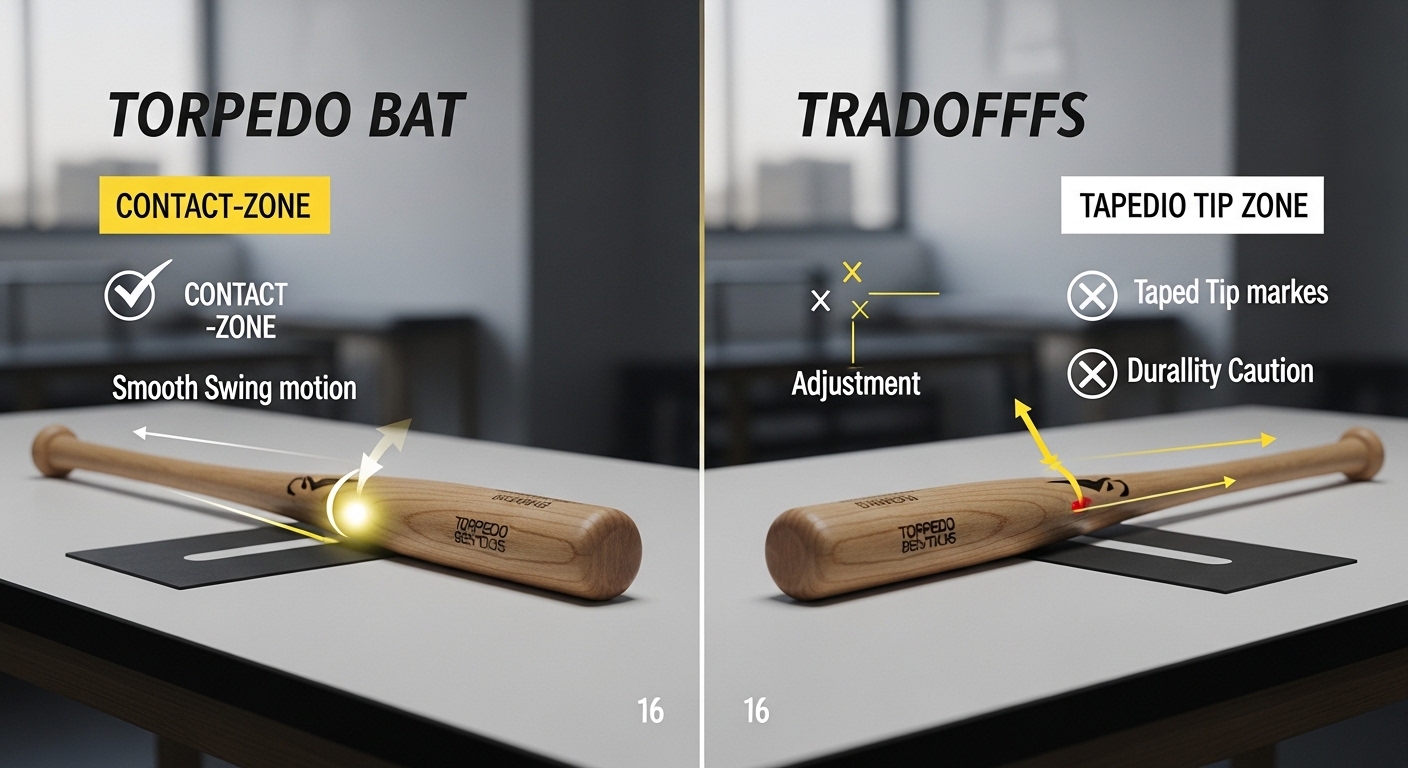
- 2–3% lower EV at barrel tip — Nathan simulation
- Not universal — 39% of 18-player study showed EV decline
- Adjustment period — muscle memory recalibration required
- Bohm: -22 wRC+ decline — mismatch case
- Tip zone more vulnerable to breakage — Tater Drop 2 rec.
- Non-Yankees users: SLG .404 (below 2024) — Cockcroft ESPN
- Amateur bats NOT same as MLB custom-fitted bats
- Some youth leagues restrict non-standard barrel profiles
The Three Questions That Determine Whether a Torpedo Bat Is Right for You
Across all five comparison pages, the same three questions determine whether a torpedo bat will improve your performance. Answer them honestly before committing to a purchase or a switch.
Question 1: Where does your contact zone sit?
The torpedo bat's peak mass is positioned at approximately 6–7 inches from the barrel tip in most off-the-shelf designs. If your natural contact zone is in that range, the torpedo design will align its peak mass with your hitting pattern. If you contact the ball more toward the very tip or significantly closer to the handle, the benefit is smaller or absent.
Question 2: What is your bat speed?
The torpedo bat's second mechanism — MOI reduction — delivers bat speed gains of approximately +1 to +3 mph for players starting below 78 mph bat speed. For players already at 80+ mph (elite bat speed), the MOI gain is minimal. The Volpe/Raleigh profiles represent the ideal torpedo bat user.
Question 3: What level do you play at and what does your league allow?
A solid one-piece wood torpedo bat is legal in MLB and in any league that permits solid wood bats. A torpedo-profile alloy or composite bat requires the same certification as any other non-wood bat in that league — BBCOR for NCAA/NFHS, USA Bat for Little League. Check your league's rules before purchasing.
Frequently Asked Questions: Torpedo Bat Comparisons
Gallery