How Does a Torpedo Bat Work? The Physics Behind Baseball's Most Talked-About Bat
When the New York Yankees hit nine home runs in a single game on Opening Day 2025, the internet immediately wanted to know: does the torpedo bat actually work — and if so, how?
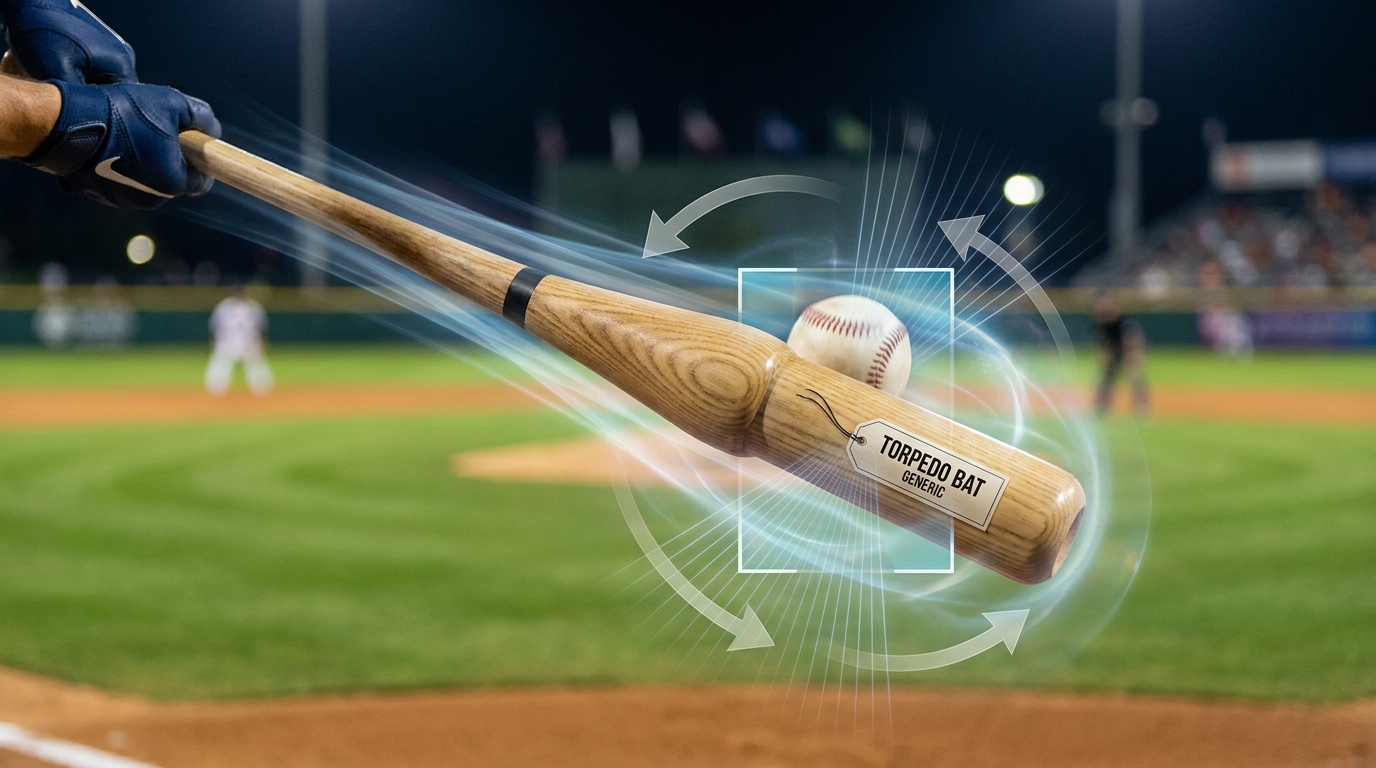
The answer lives in physics. Not complicated physics buried in graduate textbooks, but elegant, applied mechanics that — once you see it — makes you wonder why no one did this a century ago. This page breaks down exactly how the torpedo bat works, what the science says about its real advantages, and where the legitimate tradeoffs lie.
No physics degree required. We explain everything from the ground up.
The Core Mechanism: What Actually Changes When You Swing
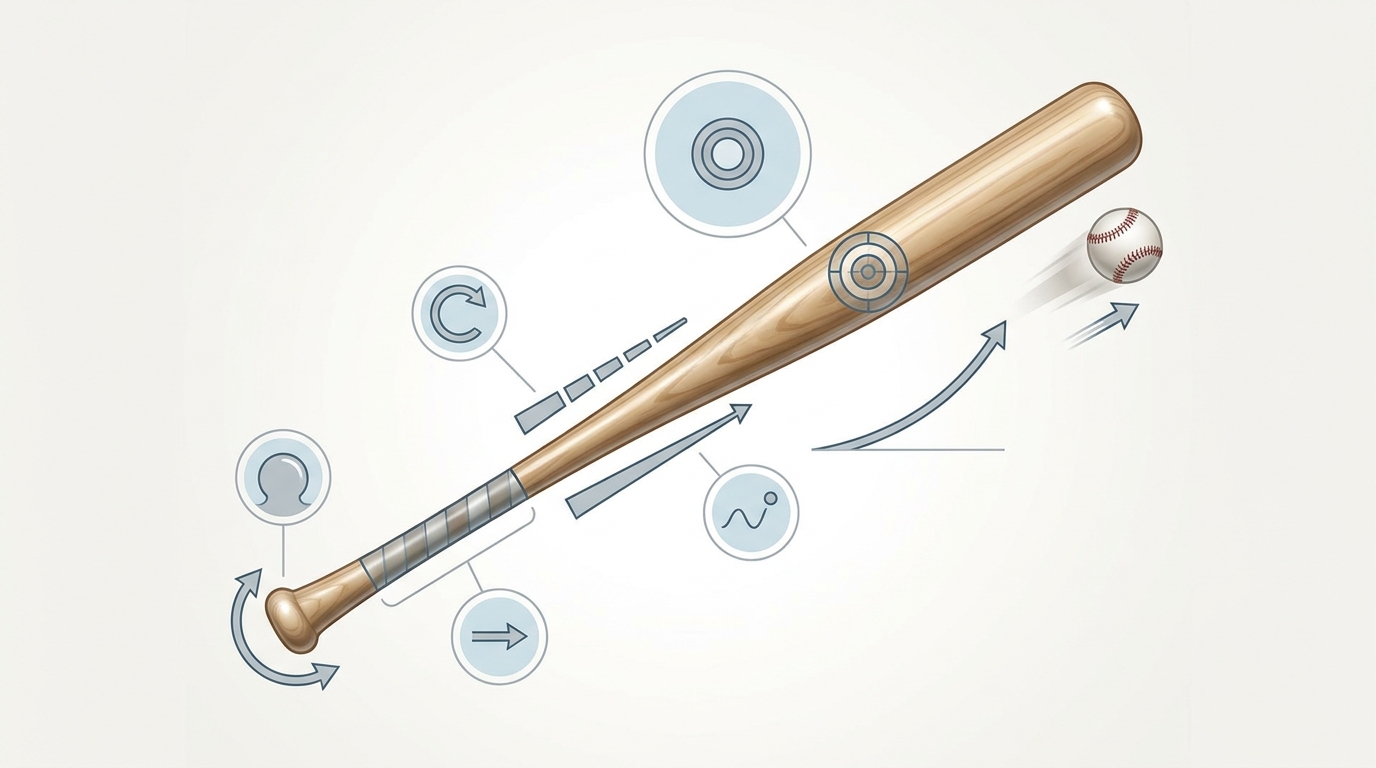
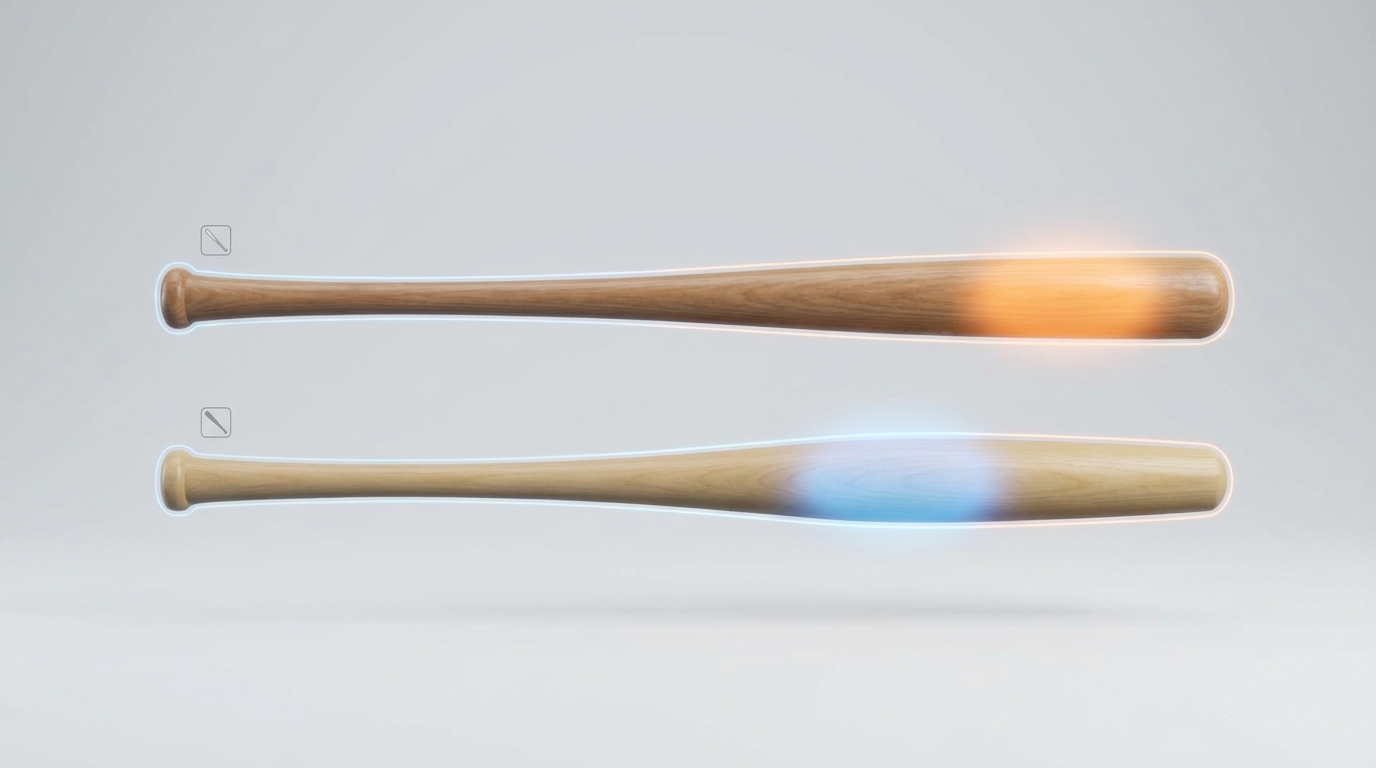
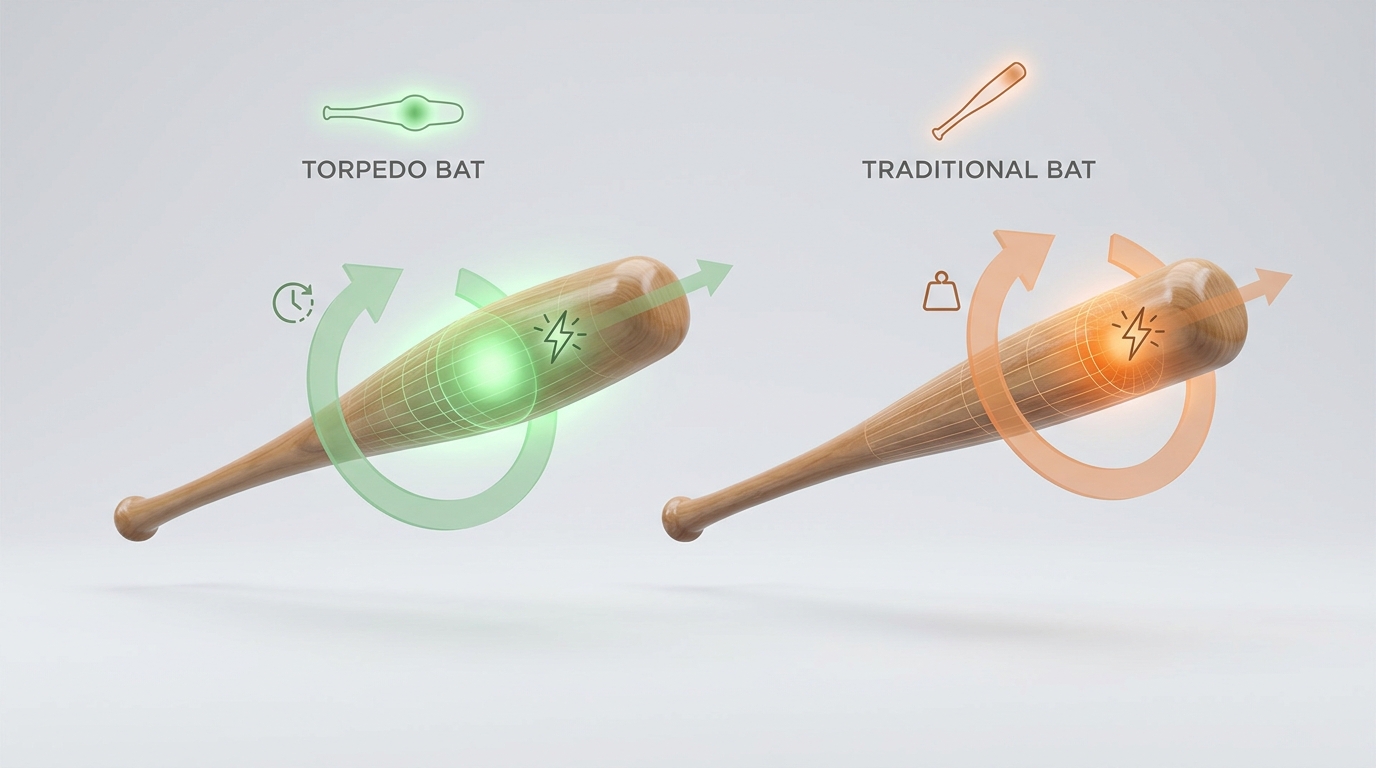
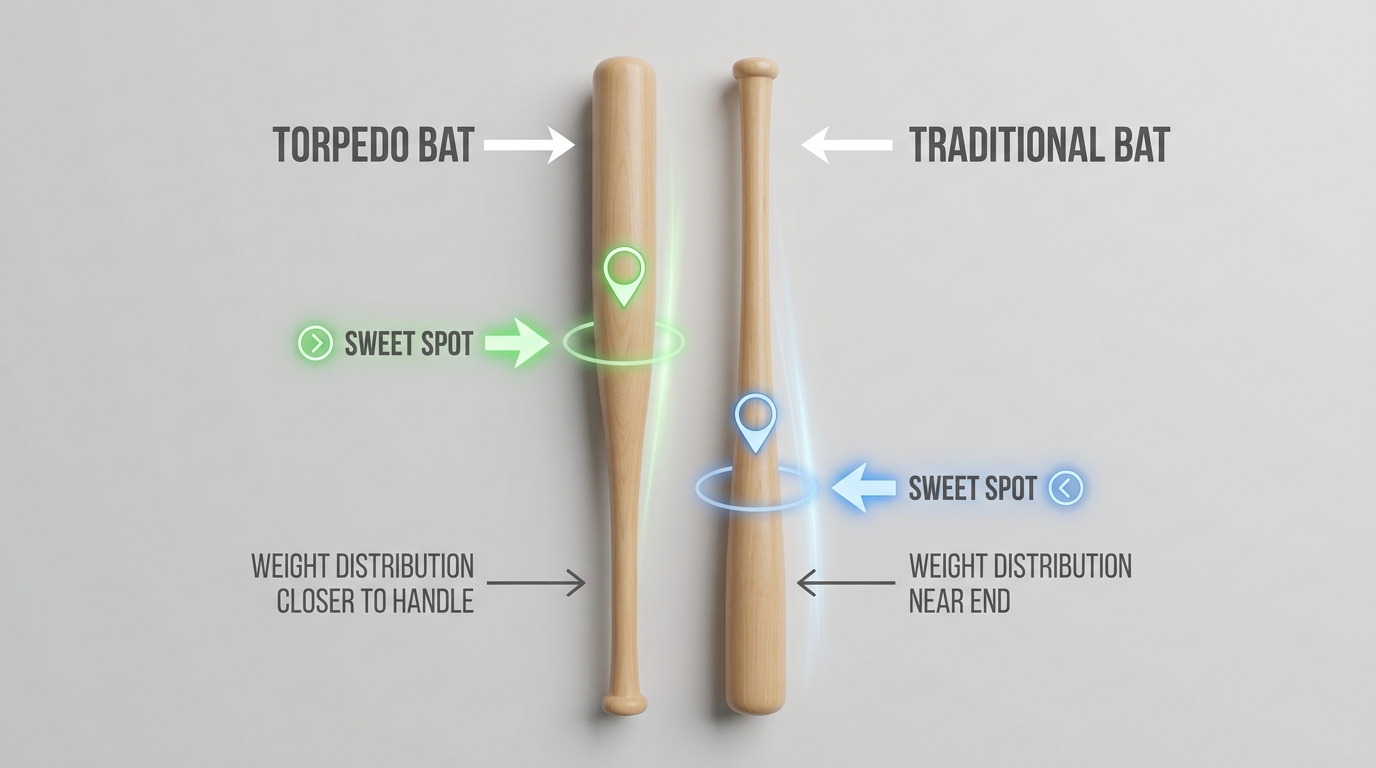
Every benefit the torpedo bat offers flows from one fundamental change: mass is moved from the tip of the barrel to the player's natural contact zone — typically 6 to 8 inches from the end of the bat. That single redistribution of wood triggers a cascade of physics effects.
Effect 1: Lower Moment of Inertia (Swing Weight)
The most immediate physical consequence of moving mass toward the hands is a reduction in the bat's moment of inertia (MOI) — what hitters and coaches call "swing weight."
Think of the classic sledgehammer demonstration. A sledgehammer flipped handle-first — heavy end near your hands — is dramatically easier to swing than one held in the conventional orientation with the heavy head far from your body. The weight hasn't changed. What's changed is where that weight sits relative to the pivot point of the swing.
A torpedo bat works the same way. Alan Nathan, Professor Emeritus of Physics at the University of Illinois, describes it plainly: moving weight from the end of the bat closer to the hands reduces the bat's swing weight, making it easier to swing and easier to control.
The result: Lower MOI directly enables faster bat rotation. Among the five Yankees who used torpedo bats heading into 2025, all five recorded year-over-year bat velocity increases, ranging from +0.3 mph (Paul Goldschmidt) to +3.0 mph (Anthony Volpe).
Effect 2: Greater Bat Quickness
Beyond raw swing speed, lower MOI gives hitters something equally valuable: quickness — the ability to accelerate the bat from its starting position into the contact zone faster.
In practical terms, this means a hitter can wait slightly longer before committing to a swing. Against a 98 mph fastball or a breaking ball with late movement, those extra milliseconds of read time are enormous. The hitter gathers more information about the pitch location and type before having to fire. It also makes mid-swing adjustments more feasible.
Effect 3: Wider Effective Sweet Spot
This is where the torpedo bat's advantage gets most interesting — and most nuanced.
Alan Nathan ran computer simulations comparing a standard bat against a torpedo-profile bat using his 1998 ball-bat collision model. His findings showed that:
- The peak exit velocity (EV) for both bats is approximately the same
- The torpedo bat's peak EV location is shifted about 0.5 inches closer to the handle
- Inside the sweet spot: torpedo bat performs better than standard bat
- Outside the sweet spot (toward the tip): standard bat performs better — but the difference is small
- The gains inside the sweet spot substantially exceed the losses outside it
In plain English: the torpedo bat is more forgiving on the contacts that actually happen. Hits that would have been weak grounders or popups on a conventional bat become solidly struck balls. The bat is built for reality, not for ideal contact.
Key Physics Concepts: Plain English Definitions
Understanding the torpedo bat fully means knowing a handful of physics terms that get thrown around in the debate. Here's what each one actually means for a hitter:
| Physics Concept | Technical Term | What It Means for Hitters |
|---|---|---|
| Swing Weight | Moment of Inertia (MOI) |
How hard the bat is to rotate. Lower MOI = easier to swing faster. |
| Contact Efficiency | Collision Efficiency (q) |
The ratio of how much energy transfers into the ball at impact. Higher = harder hit ball. |
| Barrel Speed | Linear Bat Speed (v) |
How fast the barrel is moving at the moment it hits the ball. Directly drives exit velocity. |
| Ball Speed Off Bat | Exit Velocity (EV) |
Miles per hour the ball leaves the bat. Primary predictor of hits, HRs, and hard contact. |
| Hit Zone Width | Effective Sweet Spot |
The range of barrel locations that produce above-threshold exit velocity (>100 mph). |
| Local Mass | Effective Bat Mass (m_eff) |
How much mass is 'behind' the ball at the contact point. Affects energy transfer in collision. |
| Bat Stiffness | Vibration Node |
The point on the barrel with minimal vibration at impact. Aligns with sweet spot in ideal design. |
The Exit Velocity Equation: What Actually Determines How Hard You Hit
Exit velocity — the speed of the ball off the bat — is determined by three interacting factors. Understanding them explains exactly why the torpedo bat works for some hitters and why it involves genuine tradeoffs.
(Bat Speed × Collision Efficiency) + (Pitch Speed factor)
- Factor 1: Bat Speed at Contact The faster the barrel is moving when it hits the ball, the harder the ball is hit. This is where the torpedo bat's lower MOI helps directly — it enables a faster swing, which raises this number. The gains the Yankees showed in bat velocity year-over-year are evidence of this effect in action.
- Factor 2: Collision Efficiency (q) Collision efficiency describes how effectively the bat transfers energy into the ball. It depends on where on the barrel contact is made, the local mass behind that contact point, and the bending vibration properties of the bat at that location. The torpedo bat improves collision efficiency at the player's natural contact zone by placing more mass there.
- Factor 3: Effective Bat Mass More mass behind the collision point means more energy transferred. This is where the torpedo bat's tradeoff lives. Moving mass away from the barrel tip reduces effective mass at the tip. However, for hitters who never naturally contact the ball at the tip anyway, this loss is largely theoretical. If you never hit the ball there, losing mass there costs you nothing.
The Real Tradeoffs: What the Torpedo Bat Costs You
No bat is a free lunch. Here is an honest breakdown of what the torpedo bat gains and gives up — based on actual physics research, not marketing:
| Mechanism | Gain ✅ | Tradeoff ⚠️ |
|---|---|---|
| Mass moved from tip → contact zone | Larger sweet spot at contact point | Slightly less mass at tip — weaker off-end hits |
| Lower MOI from redistributed weight | Faster swing speed; quicker through zone | Less momentum behind collision if swing speed gains don't compensate |
| Wider diameter at contact zone | Larger surface for contact; more forgiveness | Tip taper means any missed end-of-bat contacts hurt more |
| Sweet spot shifted 0.5" toward handle | Optimized for hitter's natural contact zone | Contact zone moves slightly slower (closer to pivot); partially offset by higher swing speed |
| Reduced distal inertia | Better bat control; easier mid-swing adjustments | Hitters may need adjustment period; not universally better for all swing types |
Who Benefits Most From the Torpedo Bat's Physics?
The physics of the torpedo bat do not apply equally to all hitters. The design is most beneficial for players whose swing profile matches the bat's engineering assumptions.
Best Candidates
- Contact hitters who make frequent inside contact (natural barrel zone 5–8" from tip)
- Hitters who struggle with bat quickness — late on fastballs or inside pitches
- Players with lower grip strength — proximal weight distribution reduces stabilization demands
- Hitters with consistent contact zones — the more consistent your zone, the bigger the gain
Less Ideal Candidates
- Extension hitters who barrel the ball at the tip — moving mass away costs collision efficiency
- Power hitters relying on end-loaded momentum — players like Aaron Judge who already generate maximum bat speed may see less benefit
- Hitters with highly variable contact zones — customization works best with consistency
Bottom line: The torpedo bat is not a universal upgrade. It is a precision tool that works best when matched to the right swing profile — which is exactly why its design starts with player data, not a standard template.
How the Torpedo Bat Connects to the Cupped Bat
The torpedo bat did not arrive in a vacuum. It is the natural evolutionary next step from a design hitters have used for decades: the cupped bat.
Cupped bats have a deep indentation carved into the barrel tip, removing weight from the very end. Hitters adopted them widely because removing that end mass makes the bat easier to swing — the same MOI principle the torpedo bat uses, just at a smaller scale.
As Alan Nathan described it to NPR: "You want to remove the weight where it doesn't do you any good. Now the next logical step is not only to remove weight but move it somewhere else." That next logical step is exactly what the torpedo bat executes.
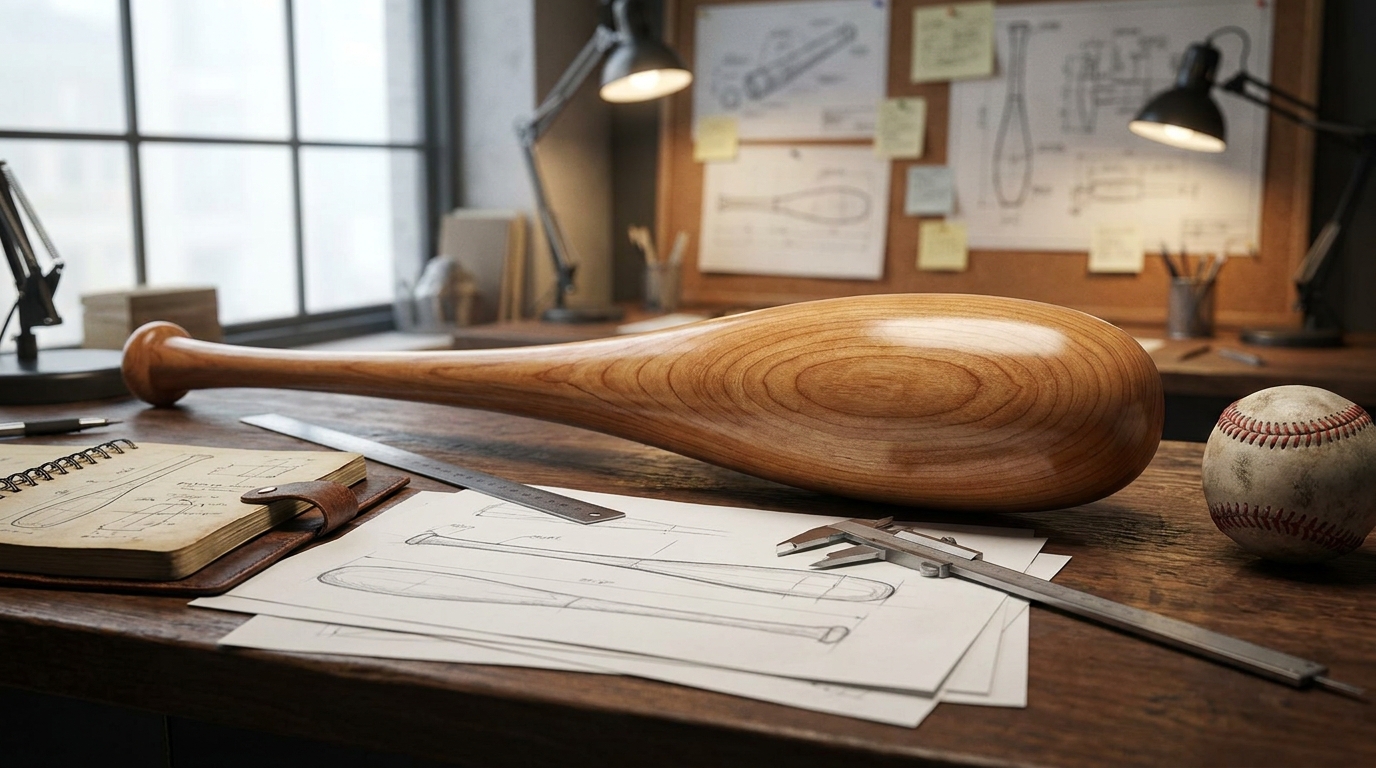
Understanding cupped bats makes the torpedo bat feel less revolutionary and more like an overdue evolution. The underlying insight has been there for decades. Leanhardt simply followed it to its logical end.
Frequently Asked Questions: Torpedo Bat Physics
It depends on the hitter and where they make contact. Alan Nathan's physics simulations show the torpedo bat has a wider sweet spot — more barrel locations that produce above-threshold exit velocity — but the peak EV is approximately equal to a standard bat. The gain is in consistency of hard contact, not necessarily in peak power. Bat velocity gains (from lower MOI) can also contribute to higher average EV if the player generates more swing speed.
Measured data from five Yankees players showed gains ranging from +0.3 mph to +3.0 mph in bat velocity year-over-year. The variation reflects that MOI reduction benefits some swing types more than others. A 3 mph bat speed increase at the barrel translates meaningfully to exit velocity — roughly 1–2 mph of exit velocity for each 1 mph of bat speed.
Because the bat works best for specific swing profiles. Extension hitters who barrel the ball at the tip, or players whose swing already generates maximum bat speed, may see less benefit or even a performance tradeoff. Additionally, the bats require custom manufacturing based on swing data — they are not yet available as a standard off-the-shelf product for all players.
Yes — this is one of its clearest practical benefits. By moving the thickest, most energetically favorable part of the barrel toward the handle, the torpedo bat improves performance on contact made closer to the hands. Inside pitches — which by definition produce contact closer to the handle — land in a better-performing barrel zone with a torpedo bat than with a traditional design.
Alan Nathan's peer-reviewed physics model — published and updated in April 2025 — confirms that the sweet spot width (defined as barrel locations producing EV above 100 mph) is larger for torpedo bats than for standard bats. His conclusion: the gains inside the sweet spot region substantially exceed the losses outside it. The physics supports the wider sweet spot claim.
Gallery