Torpedo Bat Barrel Geometry: The Exact Shape, Dimensions, and Engineering
If you pick up a torpedo bat without knowing what it is, the shape stops you immediately. Something is wrong — or rather, something is deliberately different. The barrel is widest not at the tip but somewhere in the middle, and then it narrows again before the end cap.
That shape is not accidental and not aesthetic. It is the precise geometric result of a single engineering decision: place the maximum diameter of the barrel exactly where this specific player makes contact.
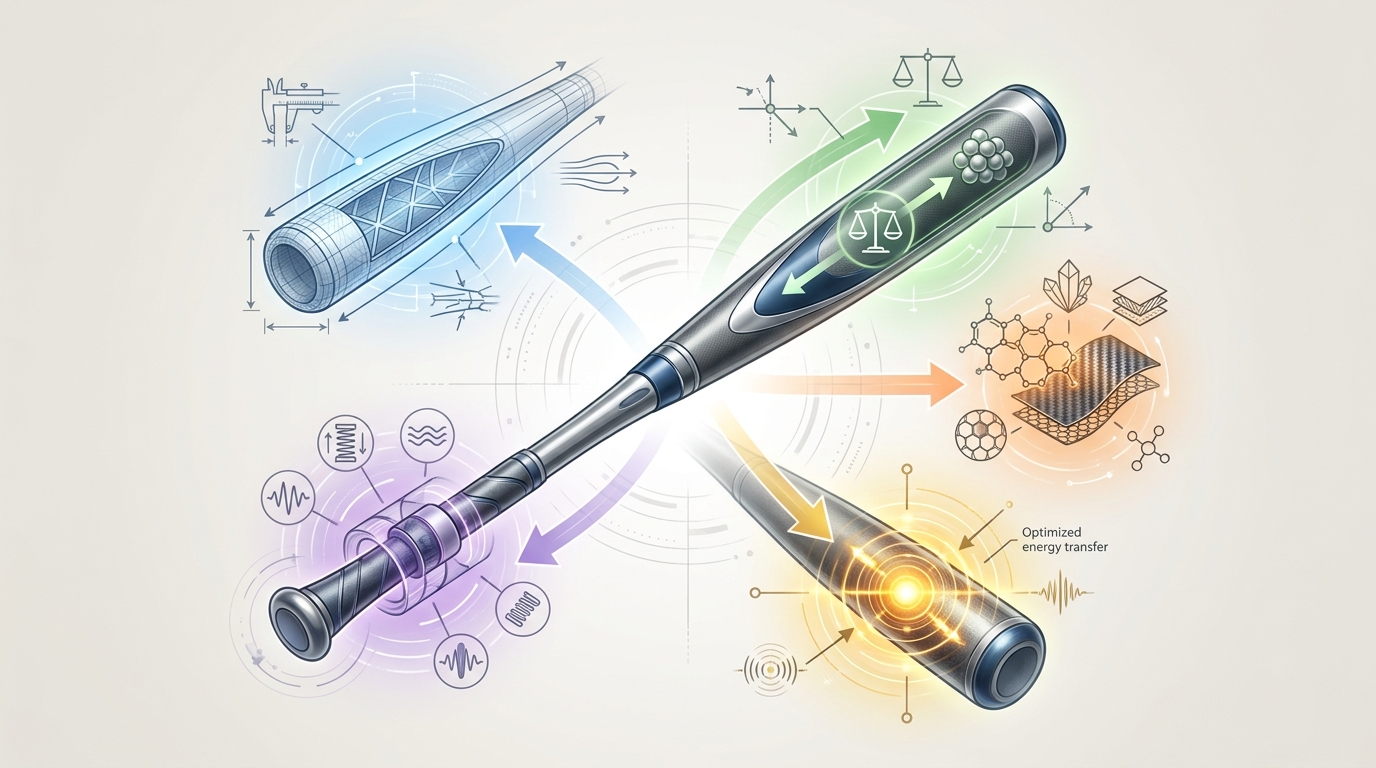
Barrel geometry is the most visible technology dimension of the torpedo bat — and the one that defines all the others.
Complete Torpedo Bat Barrel Geometry Specifications
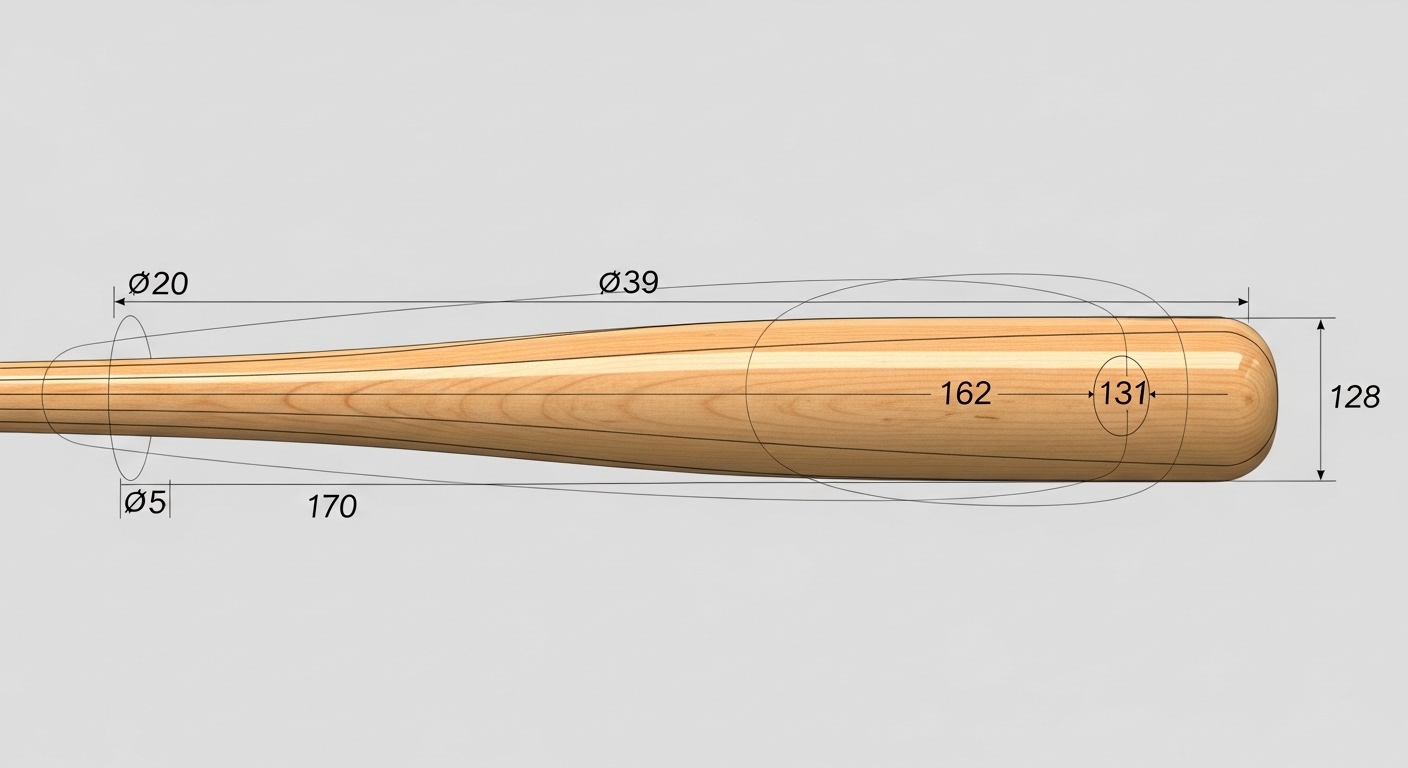
The following table captures every key geometric measurement of an MLB-grade torpedo bat alongside traditional bat equivalents. All torpedo specifications are typical ranges — exact measurements are player-specific and set by CNC program per individual build.
| Geometry Measurement | Traditional Bat | Torpedo Bat (Typical) | Variance / Notes |
|---|---|---|---|
| Max Barrel Diameter | At or within 1" of tip | 6–8" from end cap | Player-specific; CNC set |
| Peak Diameter (inch) | 2.45–2.61" | 2.45–2.50" | Rule 3.02 max: 2.61" |
| Handle Diameter | 0.90–1.00" | ~0.93" (standard) | Unchanged from traditional |
| Handle Length | ~10–12" | ~12" (standard) | Measured from knob |
| Forward Taper Slope | Gradual, single direction | Steeper — reaches peak sooner | Sets peak diameter position |
| Reverse Taper | None — diameter holds near tip | Narrows back after peak zone | Creates bowling-pin shape |
| Barrel Zone Width | ~4–6" near tip | ~4–5" at contact zone | Width of peak mass region |
| End Cap Diameter | ~2.45–2.61" (widest zone) | ~2.10–2.30" (tapered back) | Key structural diff |
| COP Location (typical) | ~5–6" from tip | ~6–8" from tip | Aligned w/ peak mass zone |
| Overall Length (max) | Up to 42" | Up to 42" (unchanged) | Rule 3.02 compliant |
The most important row: End Cap Diameter. On a traditional bat, the end cap sits at the widest zone — 2.45" to 2.61". On a torpedo bat, the end cap sits at a narrowed zone: approximately 2.10" to 2.30". That single measurement tells you more about the torpedo bat's structural reality than any other spec.
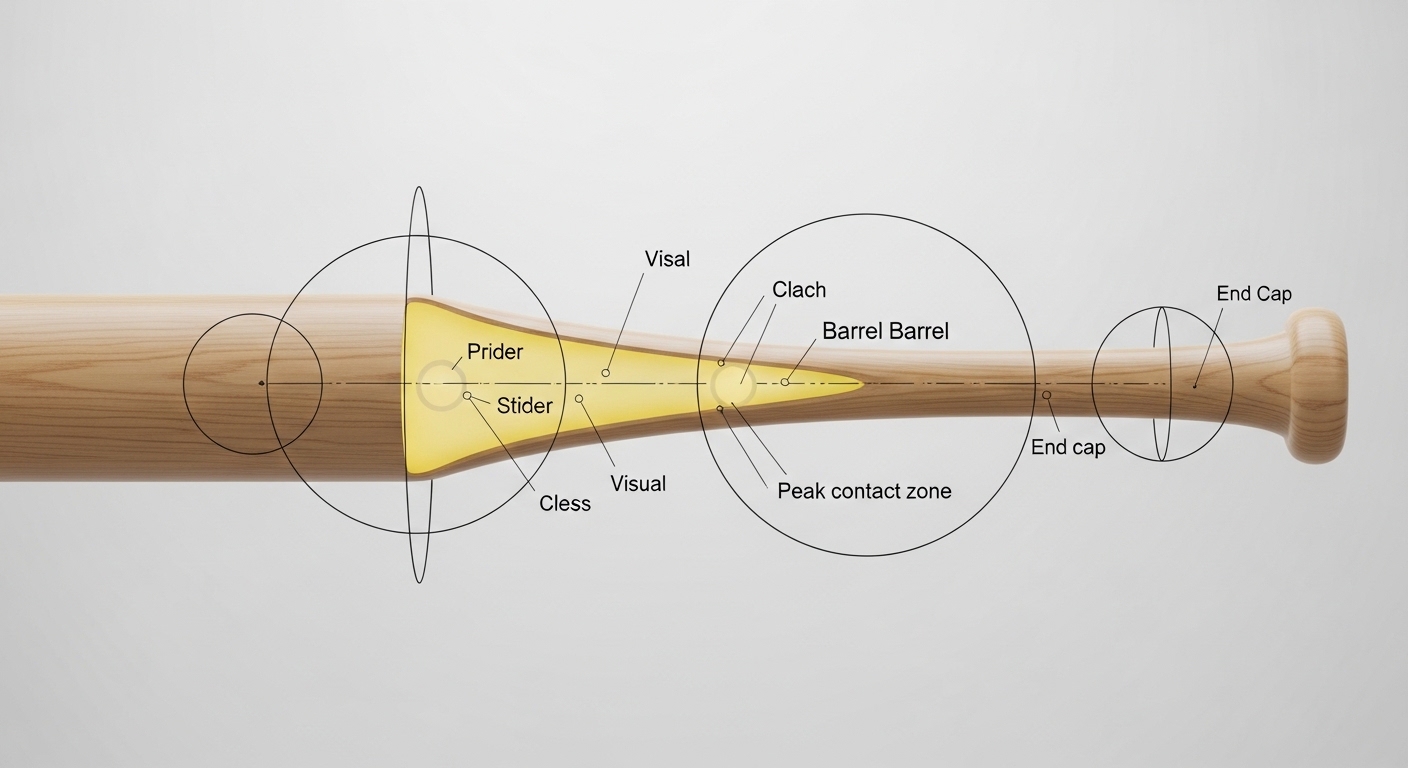
The Three Geometric Zones of a Torpedo Barrel
Traditional barrel geometry has one defining transition: the taper from handle to barrel. Torpedo barrel geometry has three distinct zones, each engineered independently.
The Forward Taper Zone
This is the transition from the handle's thin diameter (~0.93") to the barrel's peak diameter (~2.45–2.50"). On a torpedo bat, the forward taper is designed to reach peak diameter sooner — because the peak must land at the player's contact zone, which is 6–8 inches from the end, not at the very tip.
Feel: A steep forward taper creates a distinct "barrel shelf." A gradual taper produces a smoother, flowing feel.
The Peak Barrel Zone
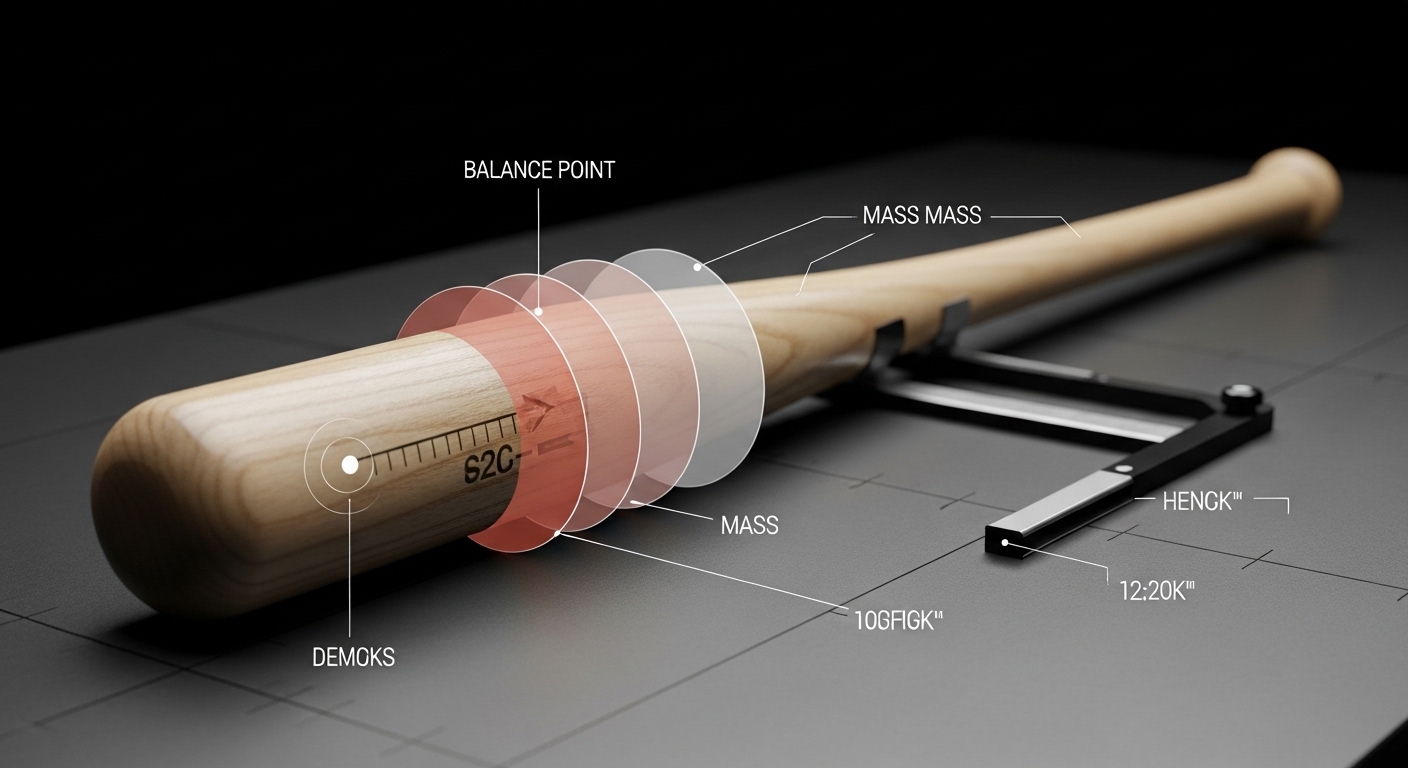
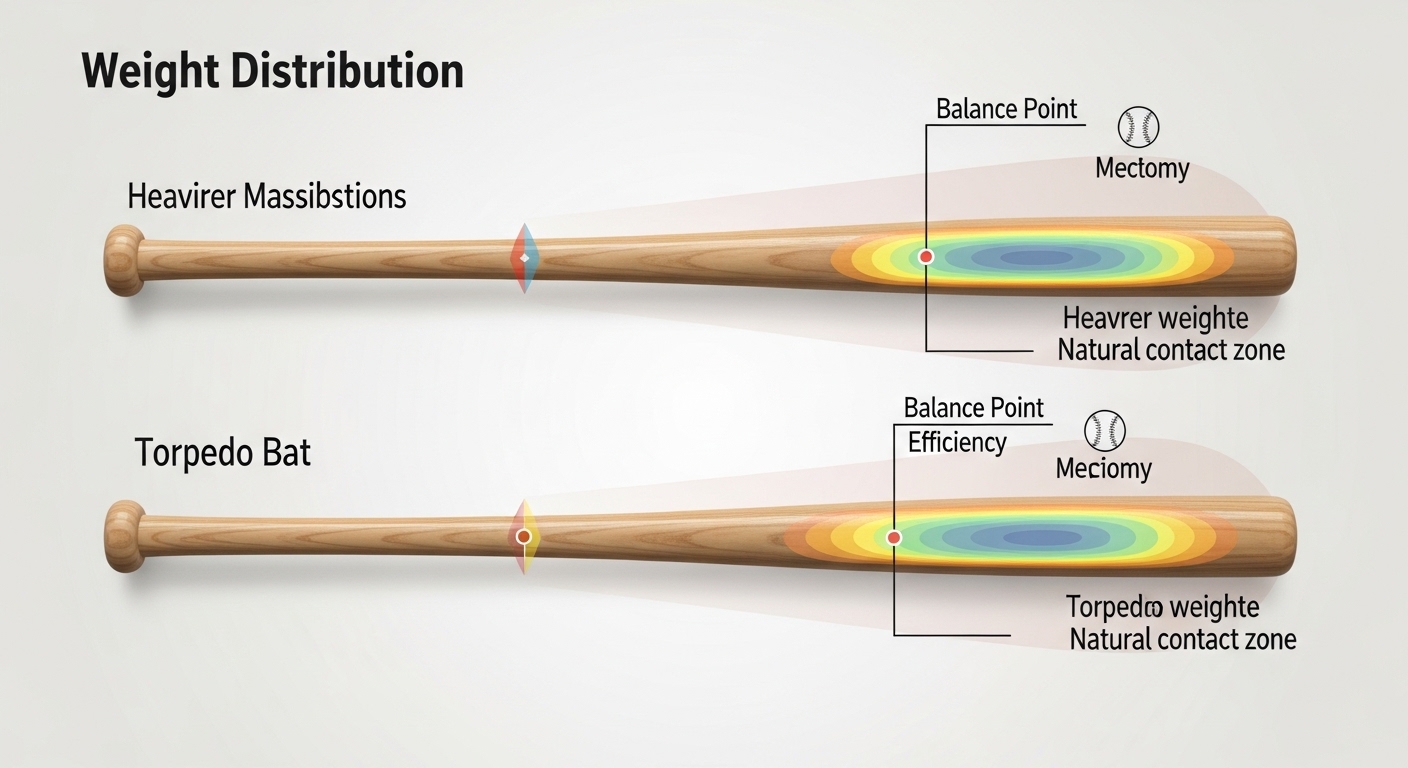
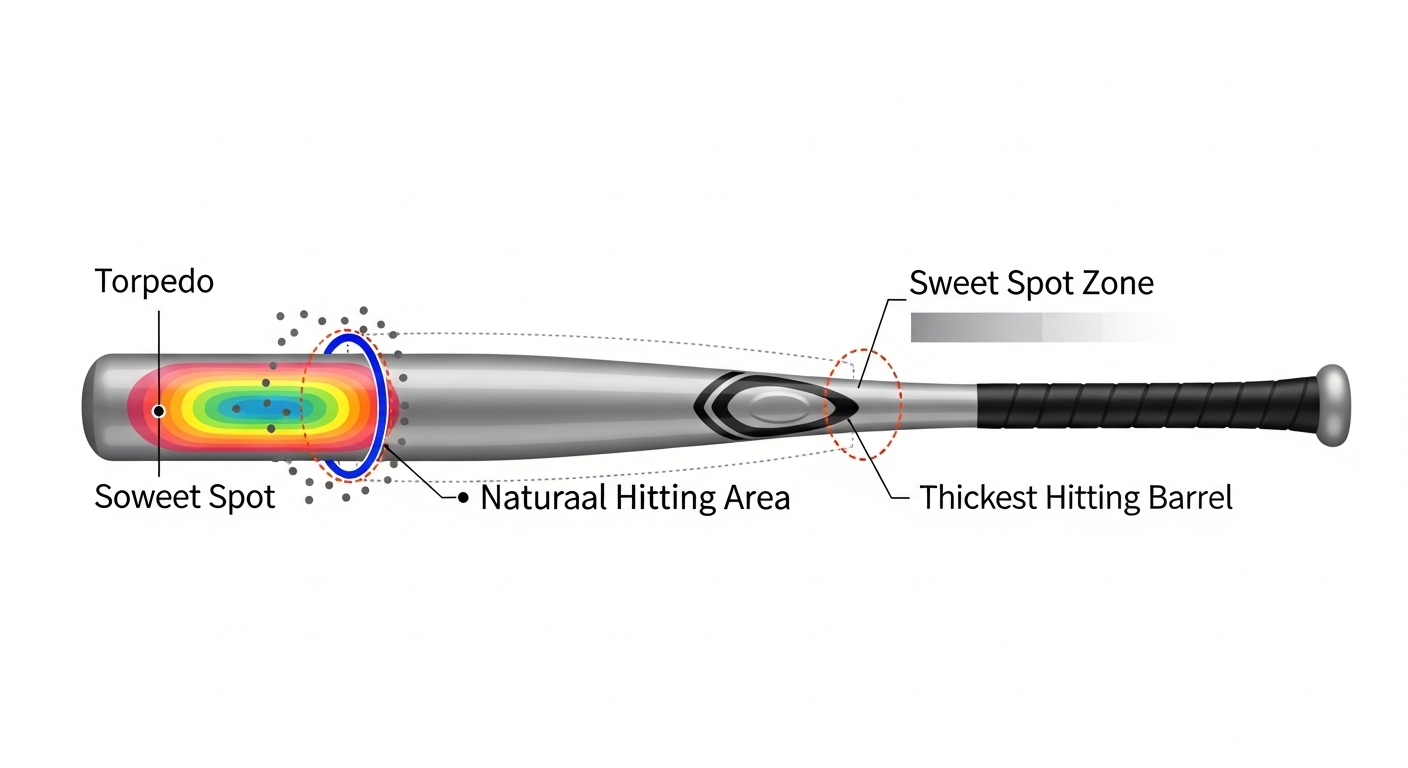
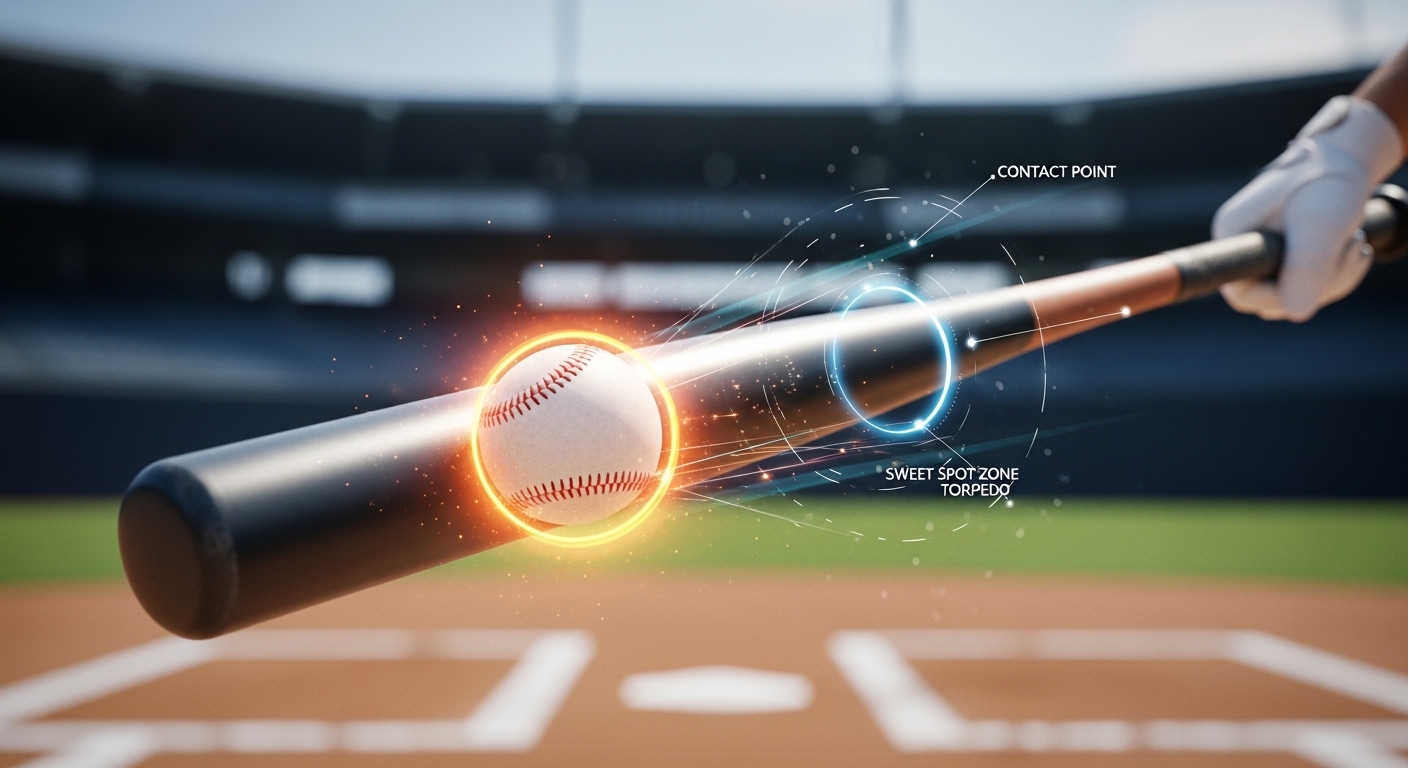
This is the heart of the torpedo design: the region of maximum diameter, typically spanning 4 to 5 inches of barrel length centered on the player's contact zone. This is where the bat is widest, where wood mass is most concentrated, and where all the physics advantages are delivered.
Precision: Set in the CNC program based on Statcast contact zone data (200+ at-bats). Move this zone 1 inch and the bat is no longer optimal.
The Reverse Taper Zone
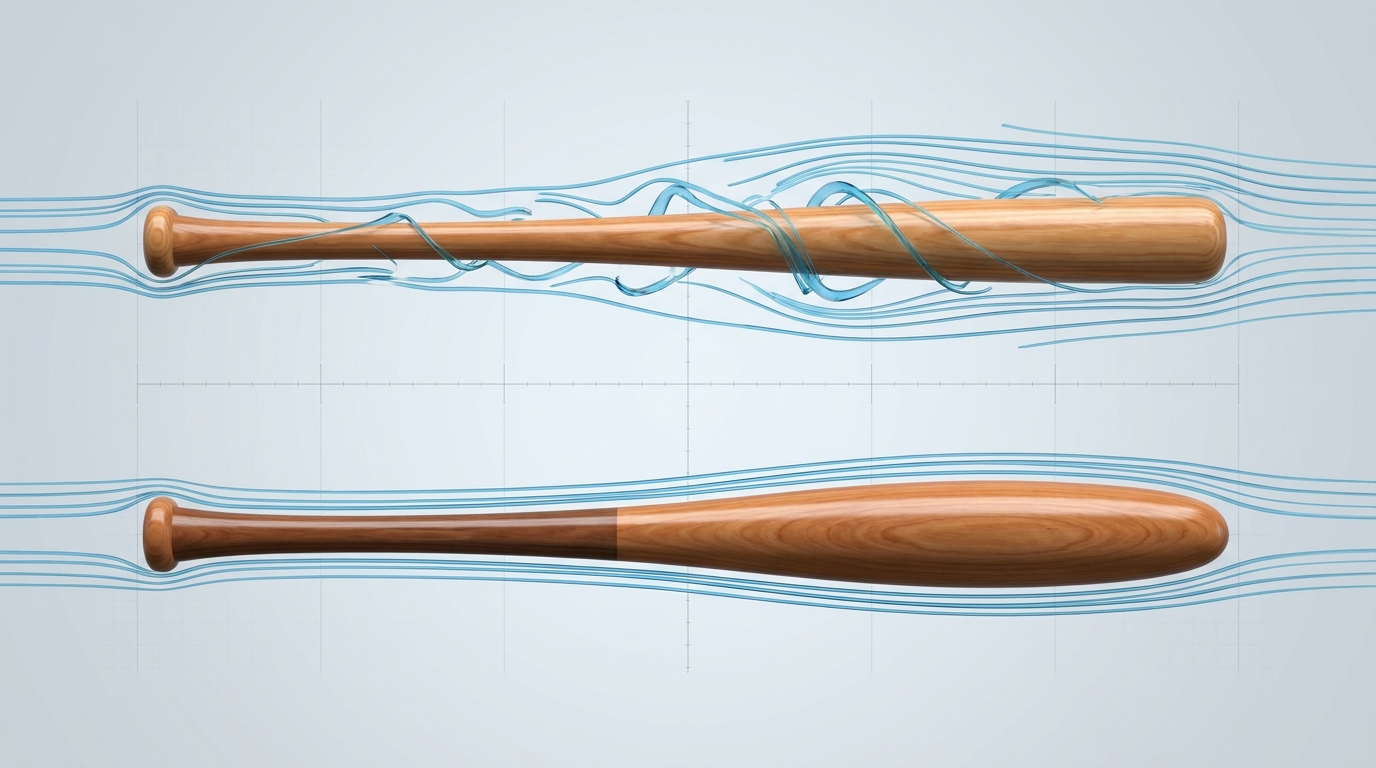
After the peak barrel zone, the torpedo bat does something no traditional bat does: the diameter decreases before reaching the end cap. This reverse taper is the most visually distinctive element of the torpedo design.
Purpose: Redistributes wood from the tip (rare contact) toward the peak zone (frequent contact) and reduces distal inertia.
Key Geometry Measurements at a Glance
Taper Profiles: How Different Slopes Affect Feel
Not all torpedo bats have the same taper profiles. Manufacturers and players can vary both the forward and reverse taper steepness to tune the bat for different hitting styles.
| Taper Style | Direction | Steepness | Effect on Feel | Best For |
|---|---|---|---|---|
| Long / gradual taper | Handle → barrel | Gentle slope | Barrel feels like it arrives smoothly | Contact hitters; transition players |
| Short / aggressive taper | Handle → barrel | Steep transition | Distinct 'shelf' before barrel; defined | Power hitters; barrel feel preferred |
| Torpedo forward taper | Handle → peak | Medium-steep | Earlier barrel feel; more immediate | Hitters who like barrel presence |
| Torpedo reverse taper | Peak → end cap | Gradual to steep | End feels lighter; reduced tip mass | All torpedo users; required by design |
Nuance: The reverse taper's steepness directly controls the size of the performance gain. A steeper reverse taper removes more wood from the end, redistributes more mass to the contact zone, and produces a larger MOI reduction. But it also thins the end faster and increases durability risk. Most manufacturers have converged on a moderate reverse taper slope.
How Barrel Geometry Repositions the Center of Percussion
The Physics of COP Migration
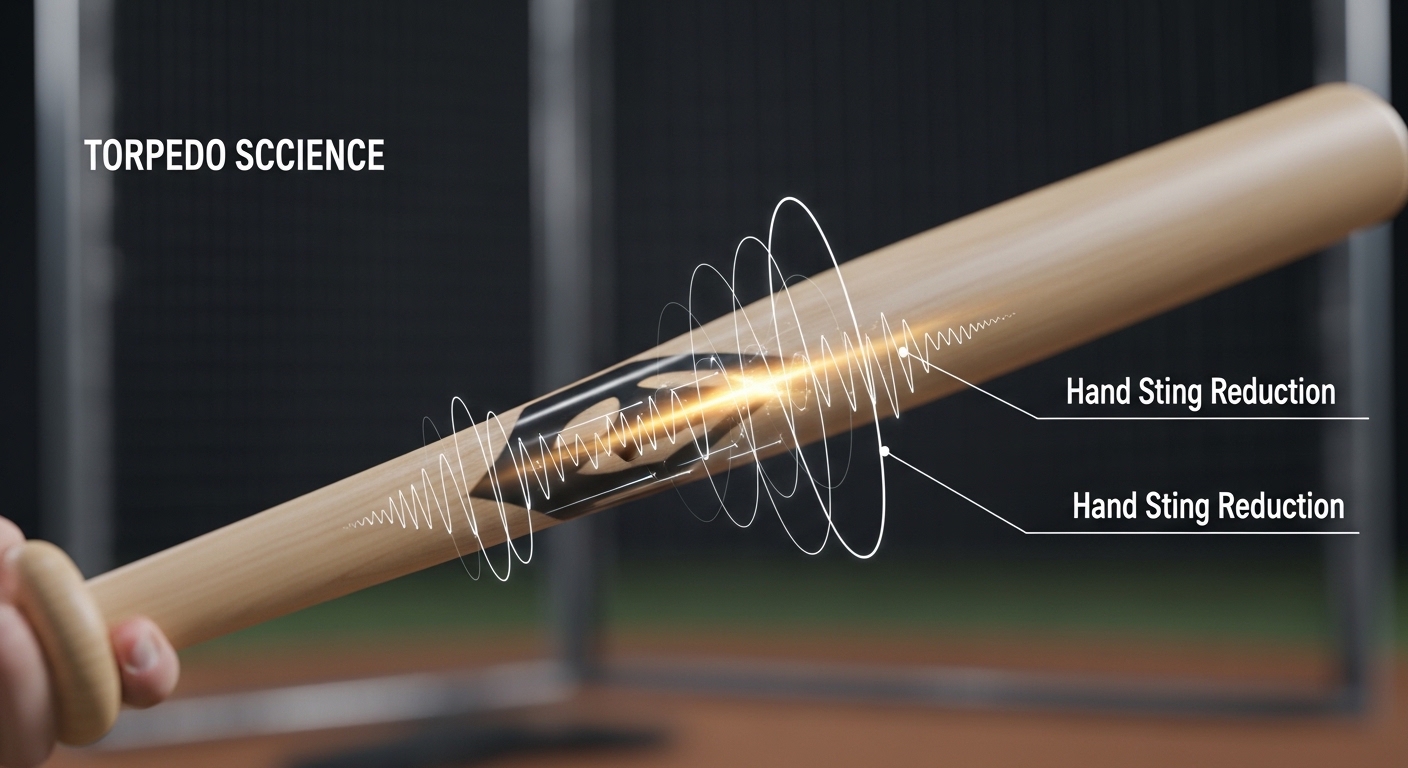
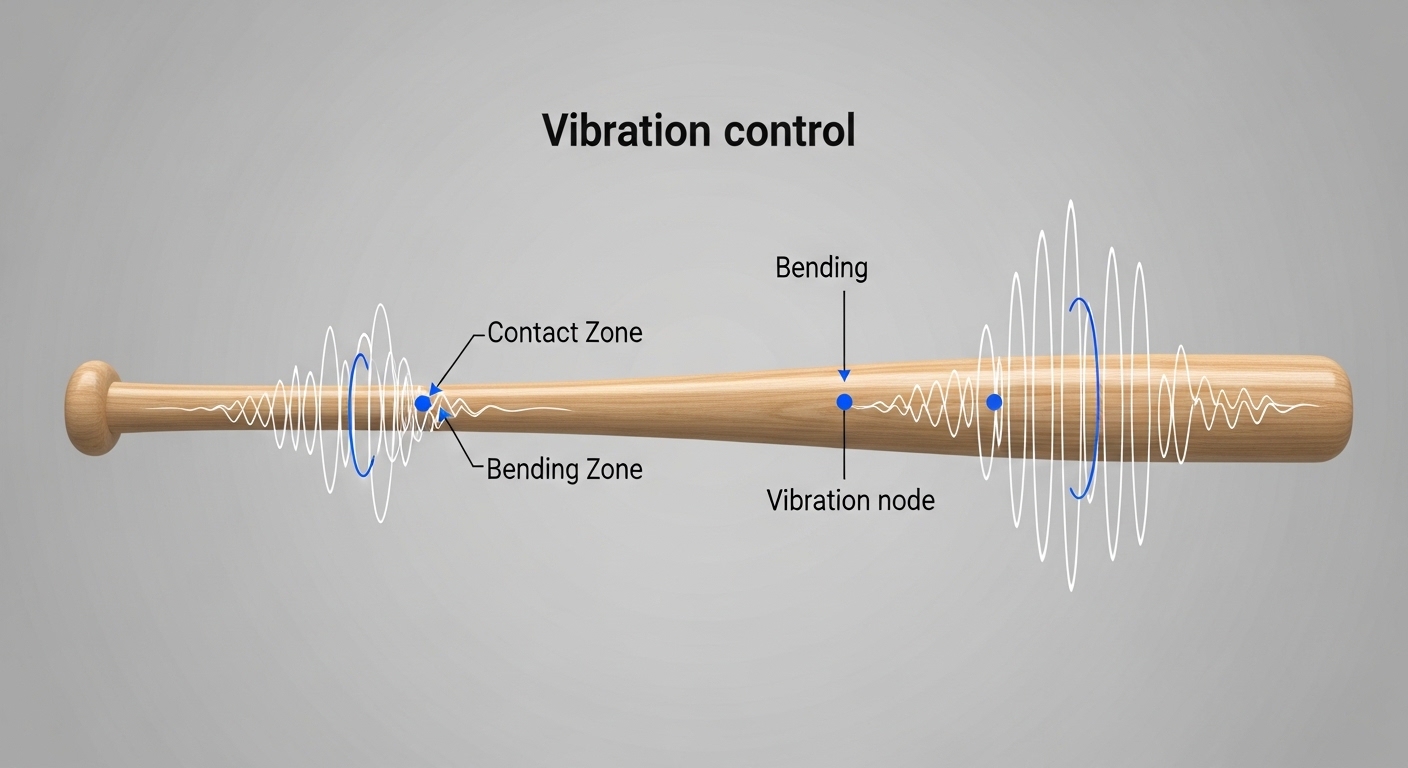
The Center of Percussion (COP) is the point on the barrel at which the bat can be struck and produce zero reactive force at the handle — meaning the hitter feels no sting, no shock, no vibration. It is the geometric equivalent of the sweet spot's structural core.
Critical insight: COP location is not fixed. It moves with mass. When barrel geometry redistributes mass from the tip toward the contact zone (6–8 inches from the tip), the COP migrates in the same direction — toward that same contact zone.
— M.S. Mazloomi & P.D. Evans, 2021
The torpedo bat does not fully implement the Mazloomi-Evans optimization — but it moves significantly in that direction. By placing peak mass at the contact zone, it brings the COP closer to the bending vibration node and closer to the player's actual contact point.
| Design Point | Traditional Bat | Torpedo Bat | Performance Outcome |
|---|---|---|---|
| Peak diameter location | Near tip (~1–2" in) | 6–8" from tip | Mass at contact zone |
| Center of Percussion (COP) | ~5–6" from tip | ~6–8" from tip | COP migrates with mass |
| Vibration node (bending) | ~6–7" from tip | Shifts toward peak zone | More contacts near node |
| COP-node alignment | Partial — some separation | Closer alignment by design | Wider effective sweet spot |
| Player contact zone | ~6–8" from tip (actual data) | ~6–8" from tip (same) | Contact meets mass |
The Engineering Constraints: What Limits the Geometry
The torpedo bat's barrel geometry is not unlimited. Three hard constraints bound the design space.
MLB Rule 3.02 Diameter Limit
Maximum barrel diameter is capped at 2.61 inches anywhere along the bat. This limits how much mass can be added to the peak zone. Going to 2.61" at the peak zone is theoretically possible but would require an even steeper reverse taper to keep end cap diameter within bounds, increasing structural risk at the tip.
The Weight Budget
The player's target weight (e.g., 31 ounces for a 34-inch bat) is a fixed constraint. Every gram of wood added to the peak zone must be removed from elsewhere. The reverse taper removes wood from the end; some manufacturers also slightly reduce handle diameter or taper length. The total wood budget is zero-sum.
Structural Integrity at the Tip
The reverse taper creates a narrowed barrel end that is structurally thinner than any traditional bat. There is a physical minimum diameter below which the tip zone will not survive contact under game conditions. The ~2.10–2.30" end cap diameter range reflects the outcome of durability testing: as narrow as the design needs to be, but no narrower than the wood can reliably sustain.
How the Torpedo Barrel Geometry Is Actually Cut
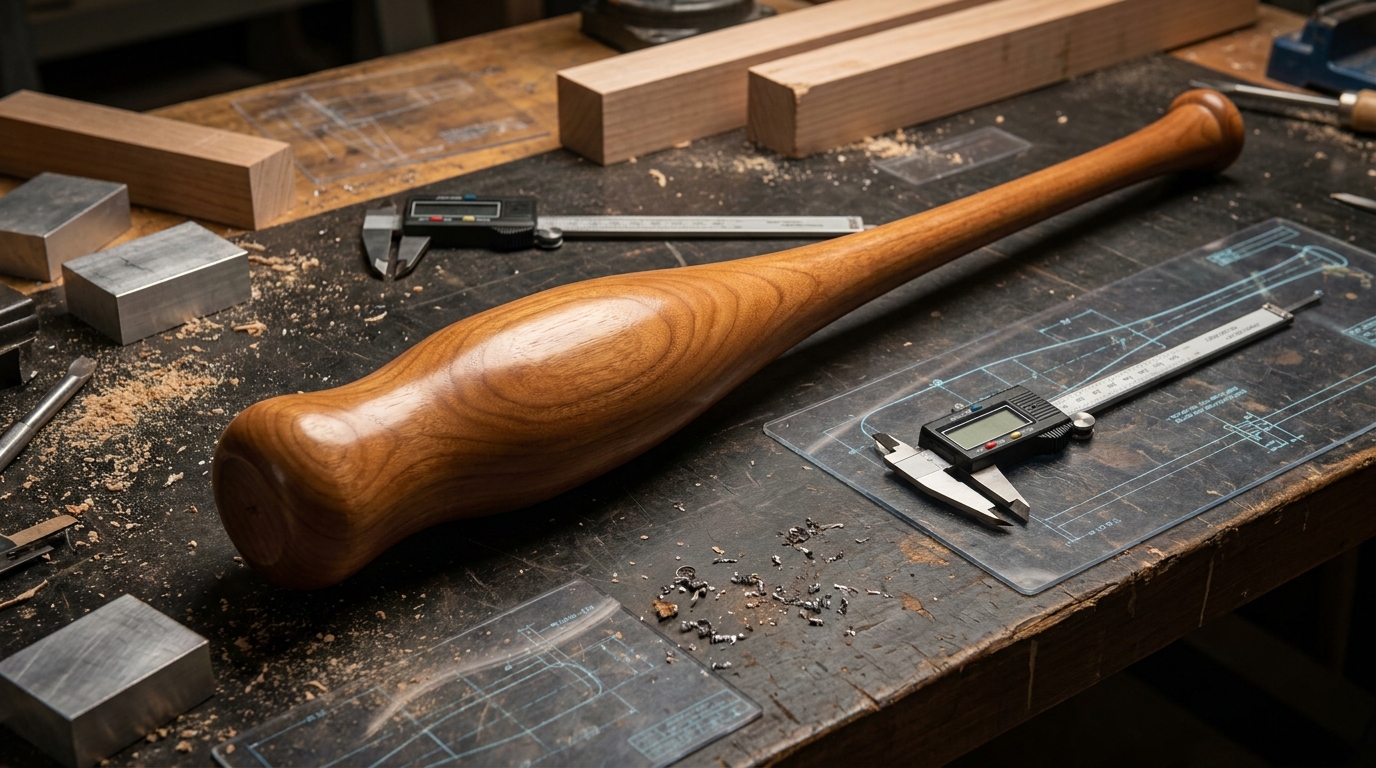
Understanding the geometry is one thing. Understanding how it is physically produced is another — and it explains why torpedo bats require CNC manufacturing rather than traditional lathe techniques.
Traditional Lathe Method
- Turned on a lathe using a physical template — a shaped profile guide that the craftsperson traces with a turning tool.
- The template is a fixed shape shared across all bats of the same model.
- Skill and experience determine how closely the finished bat matches the template, but bat-to-bat variance is inherent and unavoidable.
- Limitation: The reverse taper profile of a torpedo bat cannot be reliably reproduced this way.
CNC Turning Method
- CNC (Computer Numerical Control) lathes eliminate human template-matching by encoding the full bat profile as a digital program.
- The machine follows the program point by point, holding tolerances of
±0.01 inchesor better across the full bat length. - Louisville Slugger describes their torpedo CNC program as holding "thousands of measurement points" — far more than any physical template could capture.
- Advantage: Enables player-specific geometry at scale. The digital specification is the bat.
Frequently Asked Questions: Torpedo Bat Barrel Geometry
What is the exact shape of a torpedo bat barrel?
The barrel has three geometric zones: a forward taper rising from handle diameter (~0.93") to peak diameter (~2.45–2.50"); a peak barrel zone (~4–5 inches wide) at maximum diameter, positioned 6–8 inches from the end cap; and a reverse taper that narrows the barrel back down to approximately 2.10–2.30" at the end cap. This three-zone profile creates the distinctive bowling-pin silhouette.
Why does the torpedo bat taper back before the end cap?
The reverse taper serves two purposes. First, it removes wood from the barrel tip — where most hitters rarely make optimal contact — and redistributes that mass to the peak barrel zone, increasing collision efficiency at the contact point. Second, it reduces the bat's distal inertia (resistance to swing rotation caused by tip mass), making the bat easier to accelerate through the hitting zone without reducing total bat weight.
How precise is the torpedo bat's barrel geometry?
CNC-manufactured torpedo bats hold tolerances of approximately ±0.01 inches across the full barrel profile. This is significantly more precise than traditional lathe-and-template manufacturing, which can produce barrel mass variances of up to 1.5 ounces between bats of the same model. The CNC precision ensures that the peak diameter lands within a fraction of an inch of the player's target contact zone.
What happens if the peak barrel zone is positioned wrong?
If the peak barrel zone is placed even 1–2 inches off from the player's actual contact zone, the bat's collision efficiency advantage disappears — the player is no longer making contact at the mass concentration point. The bat may still be structurally sound and legal, but the performance rationale of the torpedo design is lost. This is why accurate Statcast contact zone data is the critical input to barrel geometry.
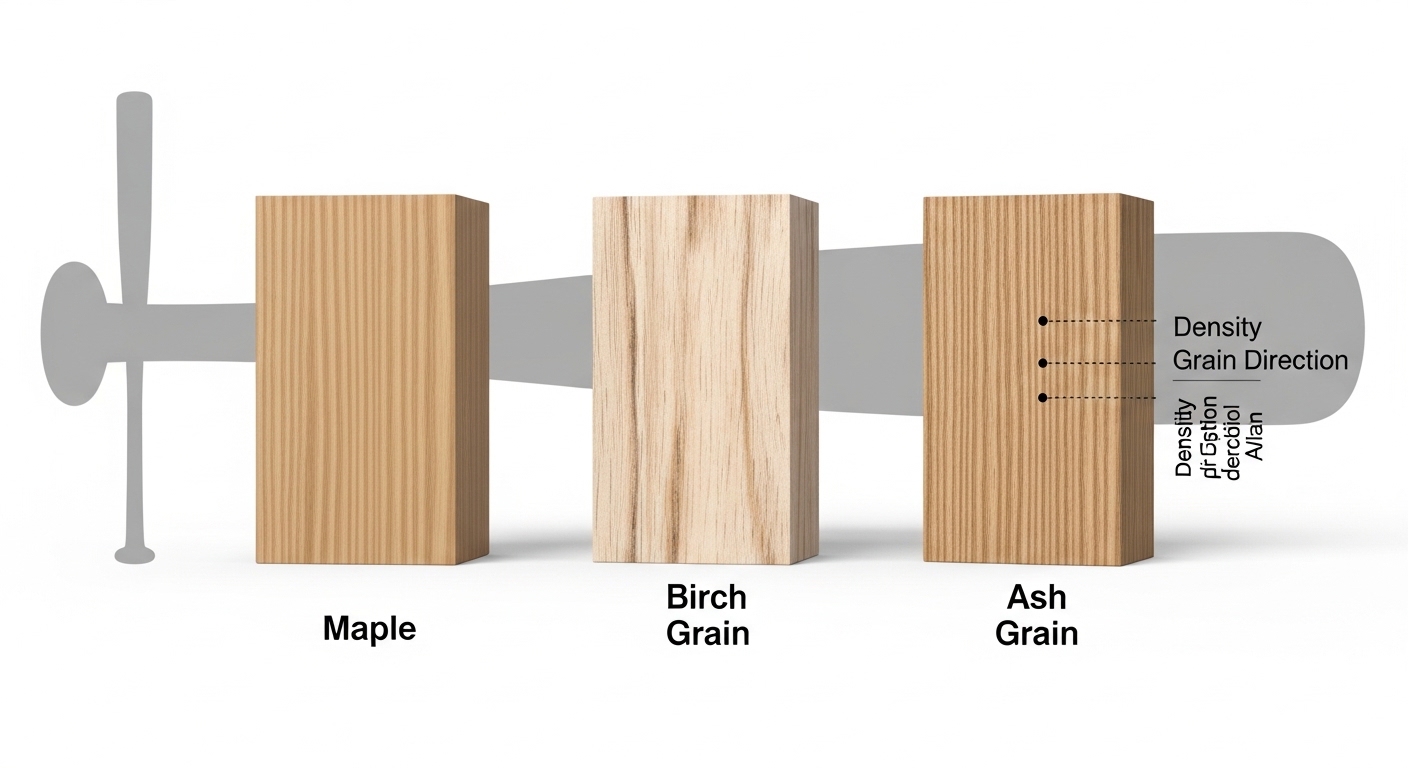
Does barrel geometry differ between maple and birch torpedo bats?
The geometric profile — taper slopes, peak diameter position, end cap diameter — is species-agnostic. The same CNC program can cut the same profile in maple or birch. However, because birch is slightly less dense than maple, a birch torpedo bat at the same weight and geometry will have slightly less effective mass at the contact zone compared to a maple version. Some manufacturers adjust the peak zone width marginally wider on birch builds to compensate for the density difference.
Continue Exploring Torpedo Bat Technology
Gallery