⚾ Torpedo Bat vs. Alloy Bat: BBCOR, Performance, and Which One Is Right for You
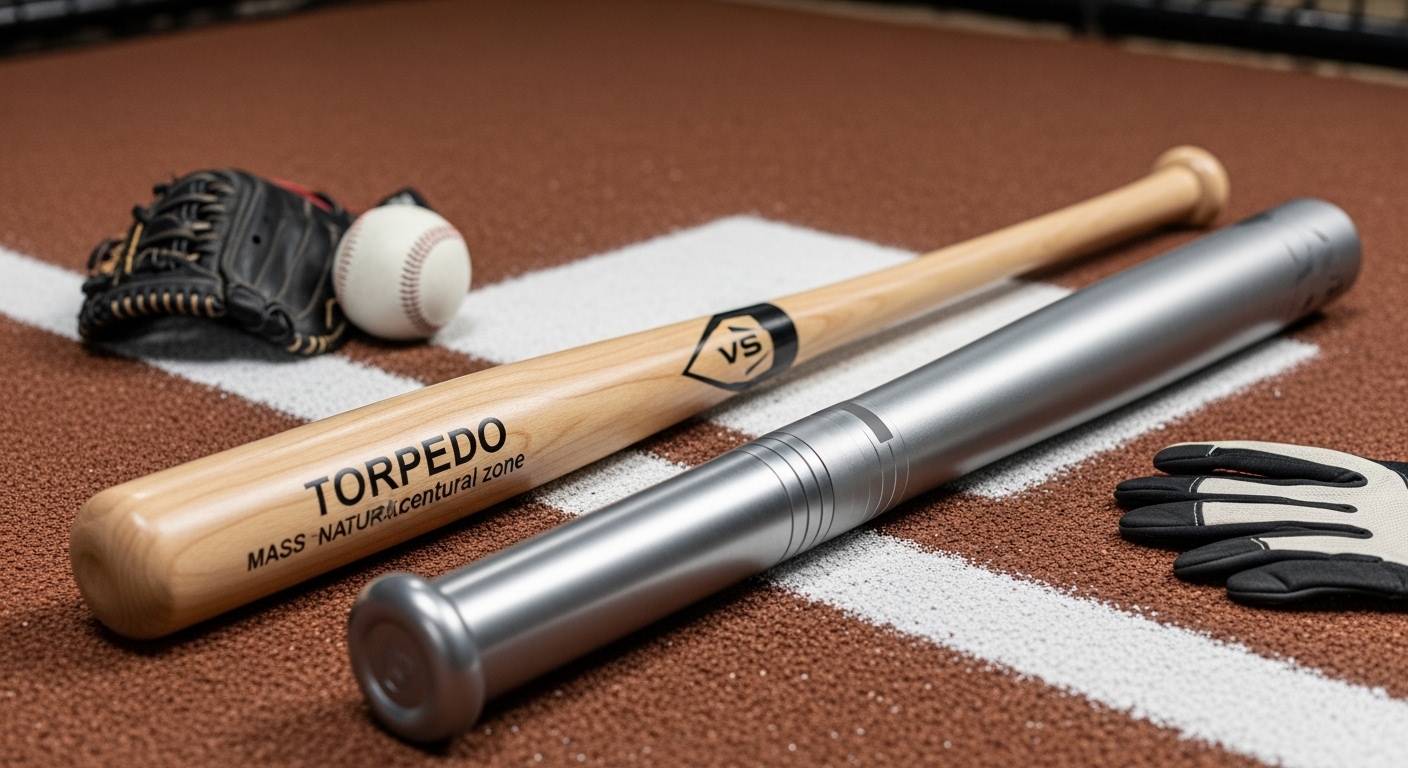
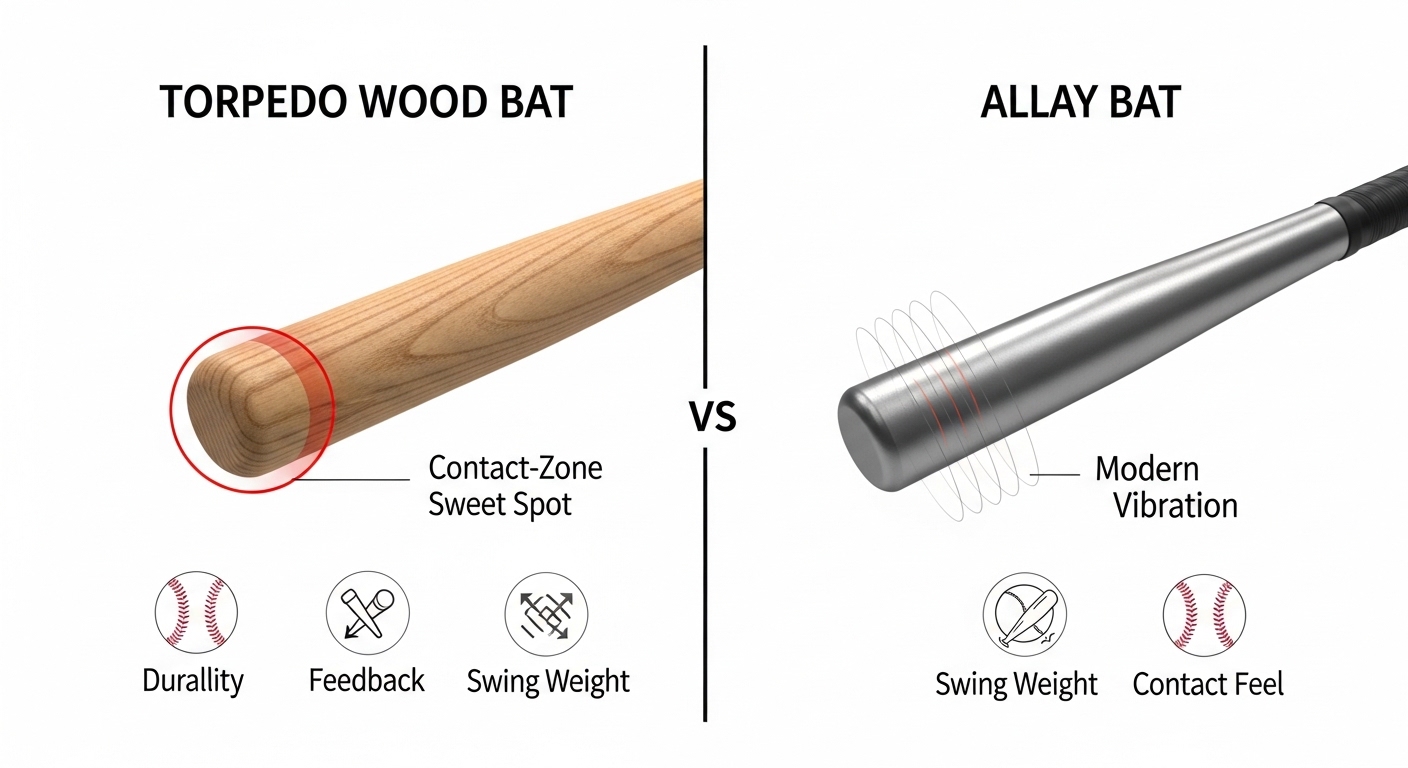
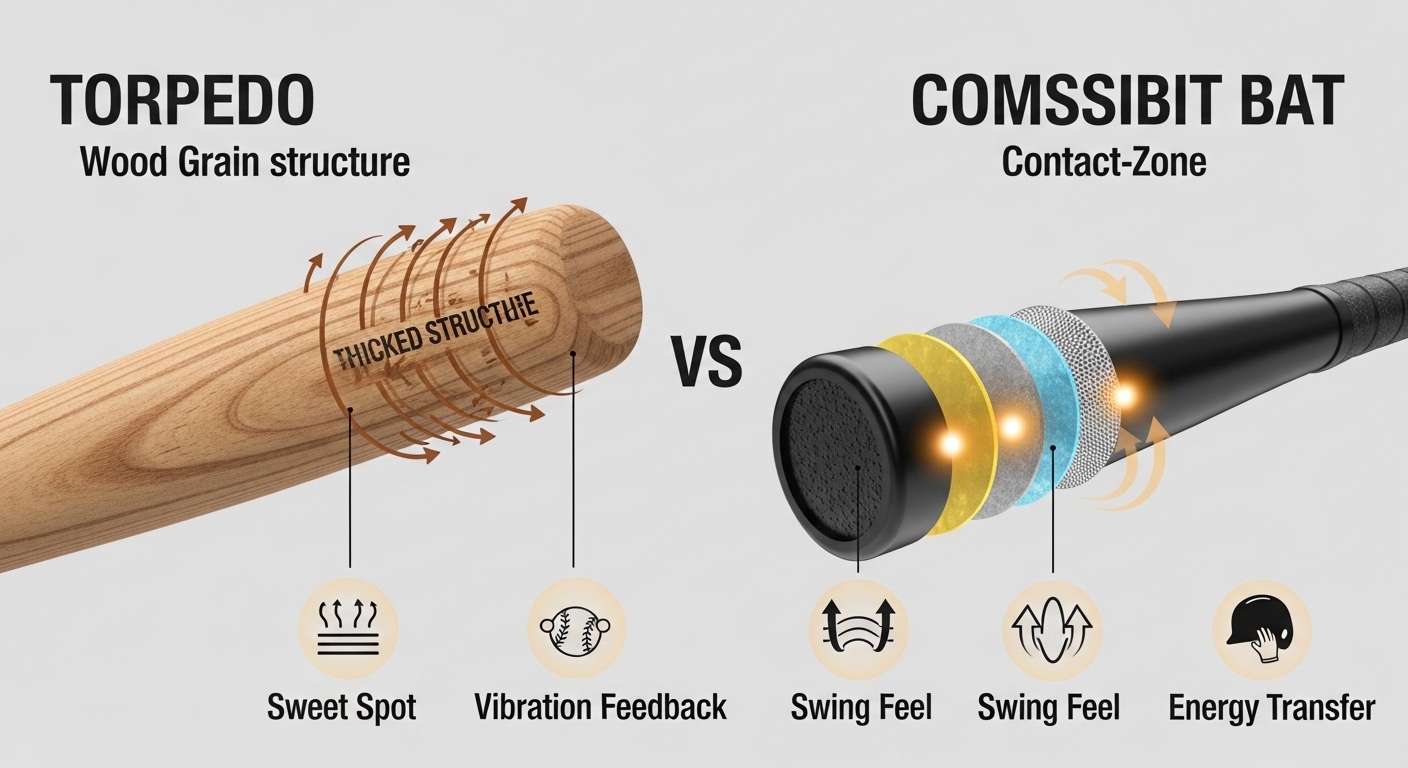
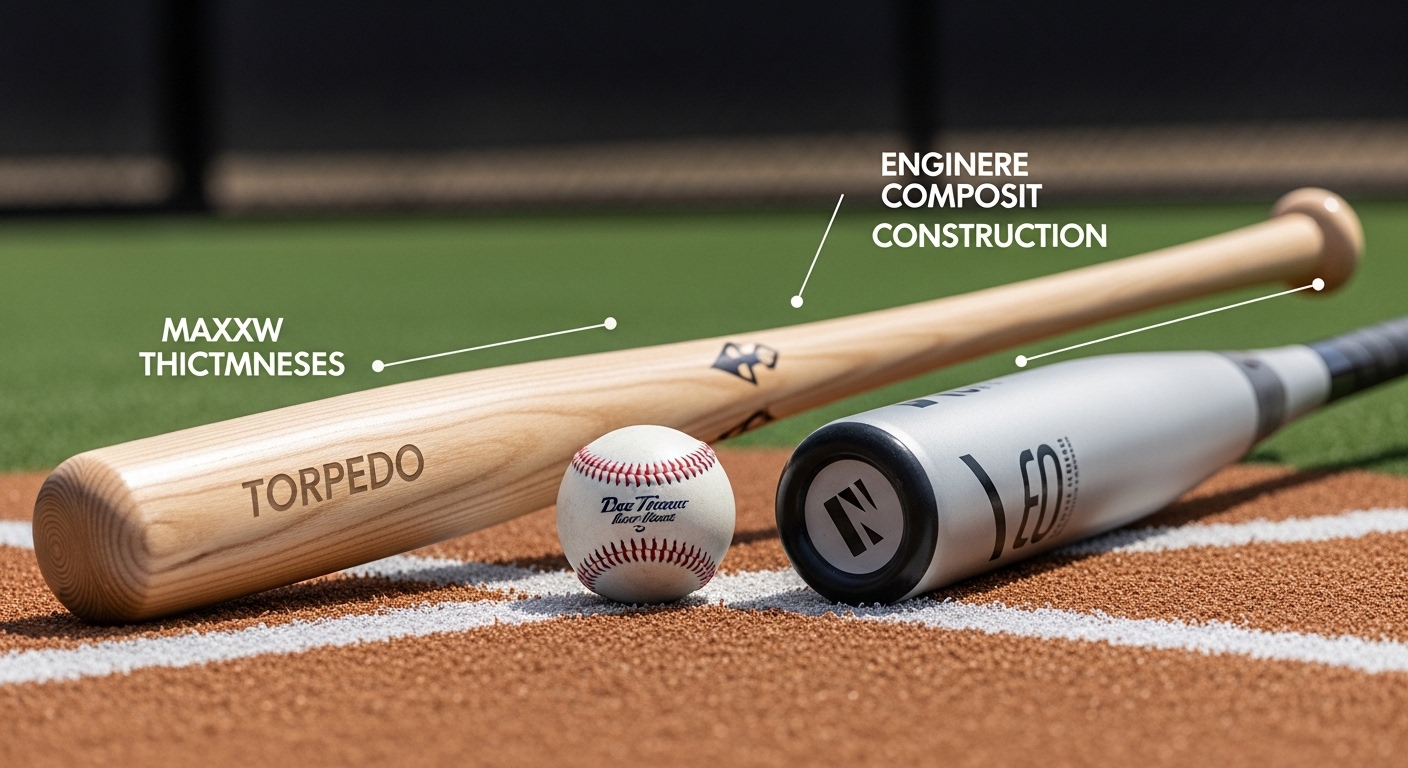
The torpedo bat vs. alloy bat comparison involves two separate questions: bat material (wood vs. metal) and bat geometry (torpedo profile vs. traditional). Getting these straight is essential — because you can have a torpedo-profile alloy bat that is both metal AND torpedo-shaped.
This page covers three scenarios: wood torpedo vs. traditional alloy • alloy torpedo vs. traditional alloy • wood torpedo as training tool alongside alloy game bat
📊 Key Numbers: Torpedo Wood vs. Alloy at a Glance
🔒 Understanding the BBCOR Ceiling: Why It Changes the Comparison
The BBCOR 0.500 certification standard was introduced in 2011 by the NCAA and NFHS specifically to constrain non-wood bat performance to approximate solid wood bat performance. The number represents the maximum allowed collision efficiency measured by the WSU air cannon protocol.
The practical consequence: All BBCOR-certified bats are engineered to measure at ~0.499 — as close to the limit as manufacturing tolerance allows. This means there is essentially no performance gap between a BBCOR alloy torpedo and a BBCOR composite torpedo at the ceiling. Both hit 0.500.
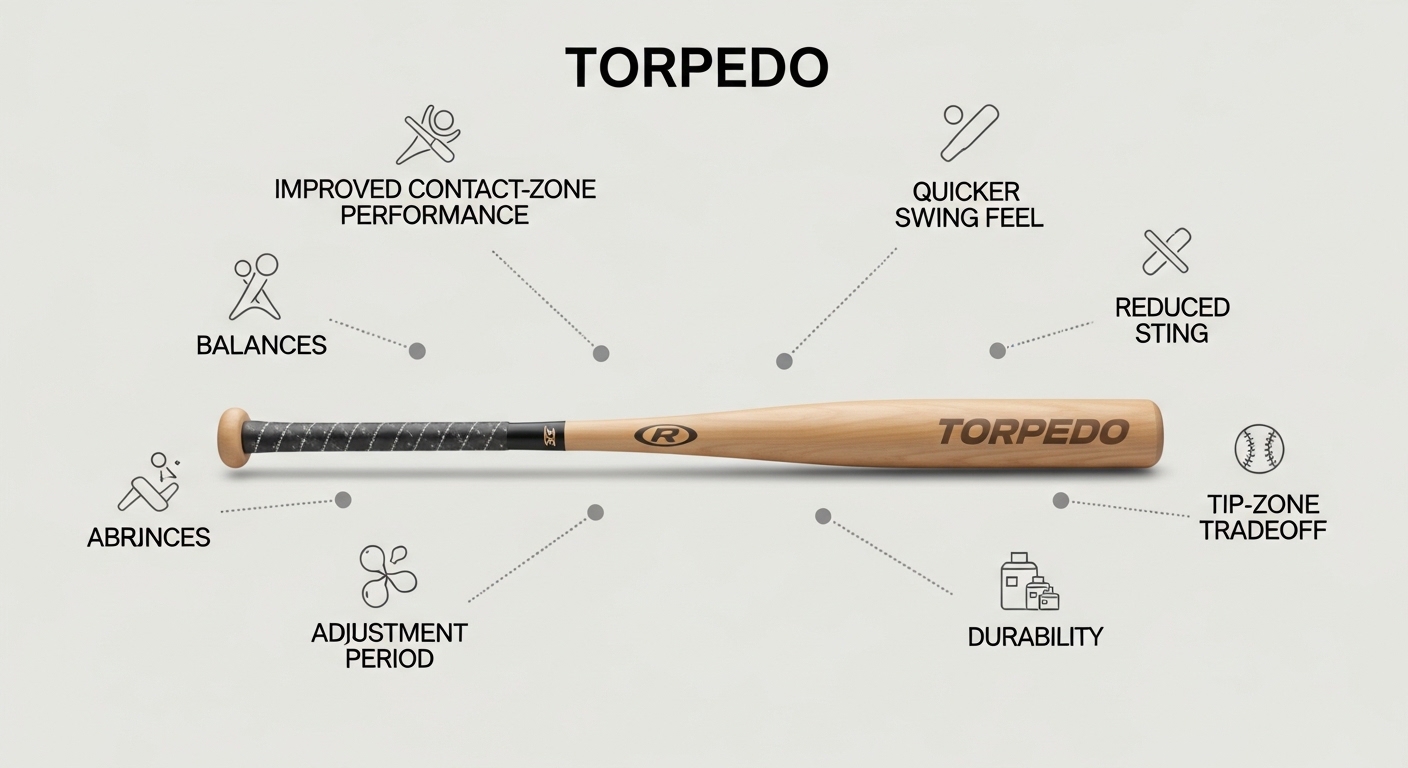
Critical insight for BBCOR players: The torpedo geometry still delivers its MOI benefit within the BBCOR framework. Removing mass from the tip lowers the moment of inertia regardless of material or certification. A BBCOR alloy torpedo will swing faster and feel quicker than a BBCOR alloy traditional bat of the same weight — because mass redistribution affects swing dynamics independently of the collision efficiency cap. The torpedo's MOI advantage is not cancelled by BBCOR.
📈 BBCOR Performance: What the Certification Actually Means
| Bat Type | BBCOR Value | Trampoline Effect | Performance in BBCOR League |
|---|---|---|---|
| Traditional alloy (BBCOR) | ≤ 0.500 (at limit) | Yes — hollow barrel contributes | Full performance at regulatory ceiling. No margin left. |
| Alloy torpedo (BBCOR) | ≤ 0.500 (same limit) | Yes — hollow barrel contributes | Same ceiling as traditional alloy. Torpedo geometry adds MOI benefit on top. |
| Composite torpedo (BBCOR) | ≤ 0.500 (same limit) | Yes — composite adds trampoline up to cap | Same ceiling as alloy. Composite feel is different but no extra performance at the BBCOR limit. |
| Wood torpedo (no BBCOR) | Exempt — no limit tested | None — solid wood, no hollow barrel | Performance limited by wood physics. No trampoline effect. But no regulatory ceiling either. |
| Traditional wood (no BBCOR) | Exempt — no limit tested | None — solid wood | Same as wood torpedo — physics limited. Traditional wood outperforms at tip; torpedo at contact zone. |
Baseball Bat Bros' key finding: At the BBCOR level, composite bats offer essentially no raw performance advantage over alloy bats — the ceiling erases the difference. This applies equally to composite torpedo vs. alloy torpedo: the geometry matters more than the material for performance within BBCOR constraints.
⚔️ Head-to-Head: 14 Categories Compared
| Category | Wood Torpedo Bat | Alloy BBCOR Torpedo | Edge / Notes |
|---|---|---|---|
| League eligibility | Wood-bat leagues only (MLB, NYCBL, etc.) | BBCOR leagues — high school, college, Babe Ruth | ✅ Alloy wins for BBCOR play |
| Performance ceiling | No cap — limited by physics of wood | Capped at BBCOR 0.500 — same as all BBCOR bats | Equal at ceiling; wood torpedo can exceed in wood leagues |
| Torpedo MOI benefit | Full — no regulatory constraint | Full — MOI reduction applies regardless of BBCOR cap | ✅ Both benefit equally from torpedo geometry |
| Trampoline effect | None — solid wood, no hollow barrel | Yes — hollow barrel, up to BBCOR 0.500 limit | ✅ Alloy advantage in BBCOR leagues |
| Cold weather performance | Unaffected — wood handles any temperature | Reliable in cold — alloy stays flexible | ✅ Both good; alloy slightly preferred for cold |
| Durability | Breaks — wood bats average 1 break per 5–20 games | High — alloy dents but rarely shatters; 1–3 season lifespan | ✅ Alloy wins clearly |
| Break-in period | None — game-ready immediately | None — alloy is 'hot out of the wrapper' | ✅ Both ready immediately |
| Feel / feedback | Stiff, precise — mishits sting, rewards clean contact | Stiffer than composite; ping sound; more feedback than composite | Personal preference; wood teaches better habits |
| Sweet spot width | Wider (torpedo geometry — Nathan finding) | Wider (torpedo geometry applies to alloy equally) | ✅ Equal — torpedo geometry helps both |
| Sound on contact | Crack — classic wood sound | Ping — classic alloy sound | Preference — no performance difference |
| Price range | $80–$350 (wood torpedo) | $150–$500 (BBCOR alloy torpedo) | Wood torpedo generally cheaper upfront |
| Drop weight options | Typically -2 to -4 (wood standard) | -3 only (BBCOR mandatory drop) | Wood has more flexibility |
| Training transfer | Excellent — wood swing transfers directly to game feel | Good within BBCOR context | ✅ Wood torpedo superior for pro/college prep |
Two most decisive rows for most readers: League eligibility (alloy torpedo wins for BBCOR leagues — it's the only option) and durability (alloy wins clearly — wood bats break, alloy bats dent). If you play in a BBCOR league, the comparison between wood torpedo and alloy torpedo is somewhat academic — you must use alloy (or composite). The comparison that matters is alloy torpedo vs. traditional alloy.
🎯 Alloy Torpedo vs. Traditional Alloy: Does the Torpedo Geometry Help Within BBCOR?
The more targeted question for most BBCOR players: given that you're already committed to alloy, does the torpedo barrel profile add value over a traditional alloy barrel?
✅ The MOI Argument: Yes, It Helps
The torpedo geometry's MOI reduction applies fully within BBCOR. A torpedo-profile alloy bat with mass redistributed away from the tip will feel lighter at the barrel end and swing faster than an identically weighted traditional alloy bat — just as it does in wood. This is the real performance argument for BBCOR torpedo bats: not more collision efficiency (both are capped at 0.500), but more bat speed from the same physical swing effort. For contact hitters and players below the elite bat speed threshold, this is a genuine, measurable advantage within the BBCOR framework.
✅ The Sweet Spot Argument: Also Yes
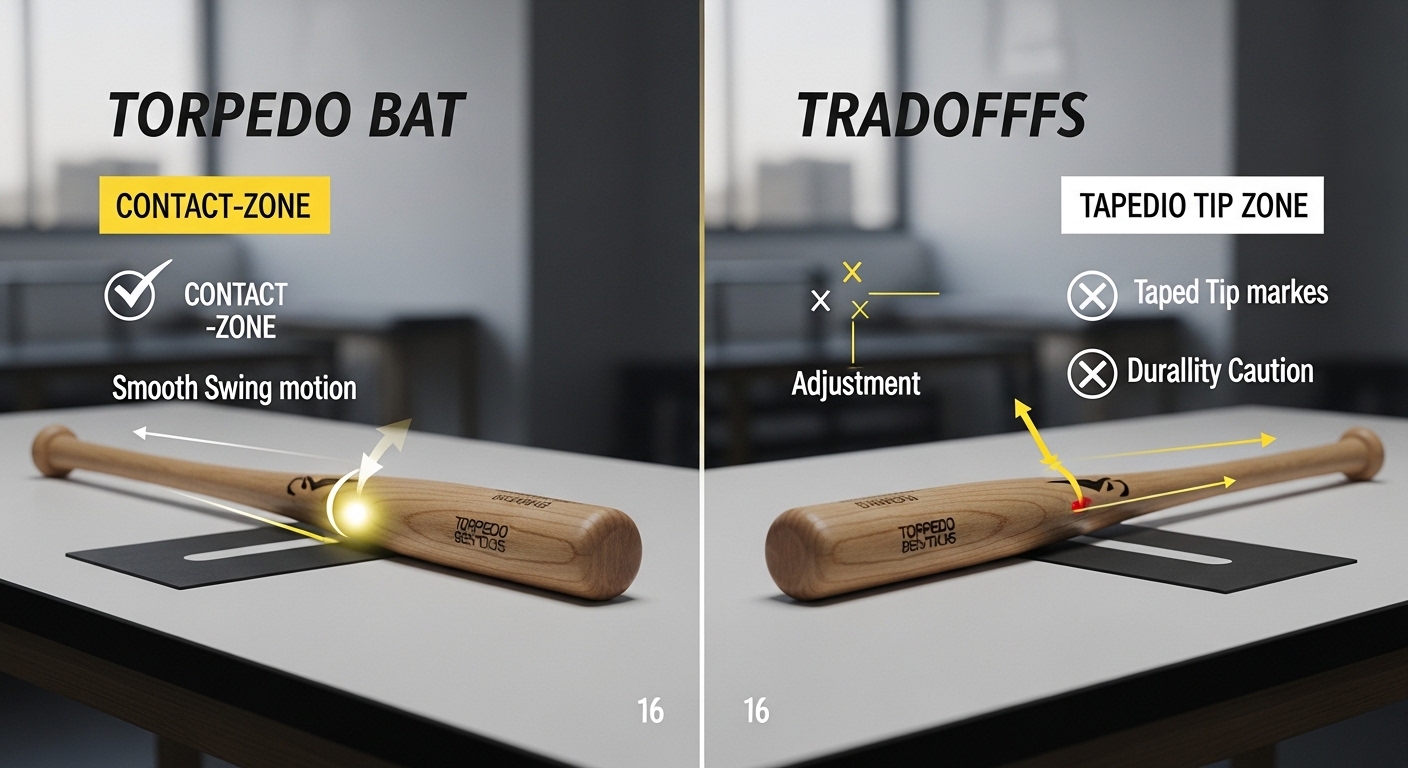
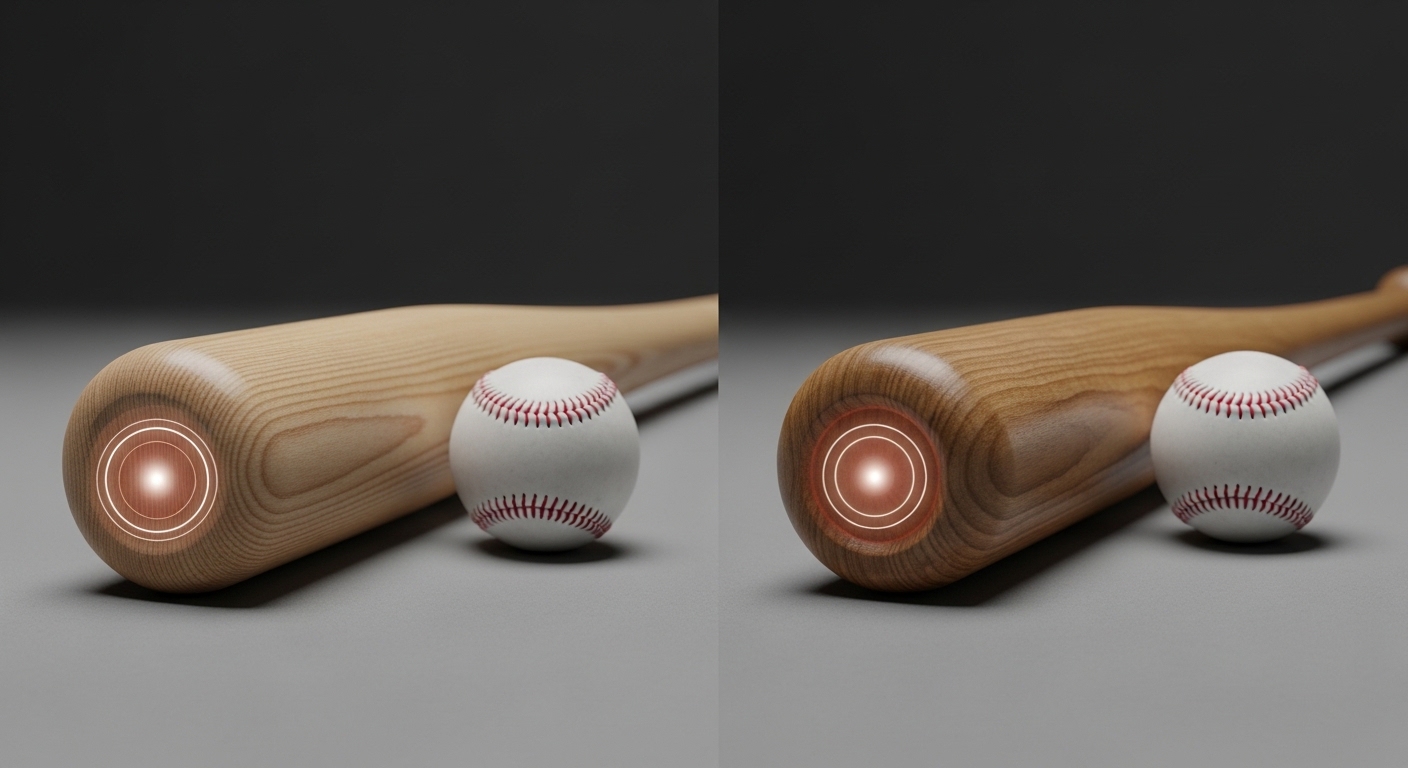
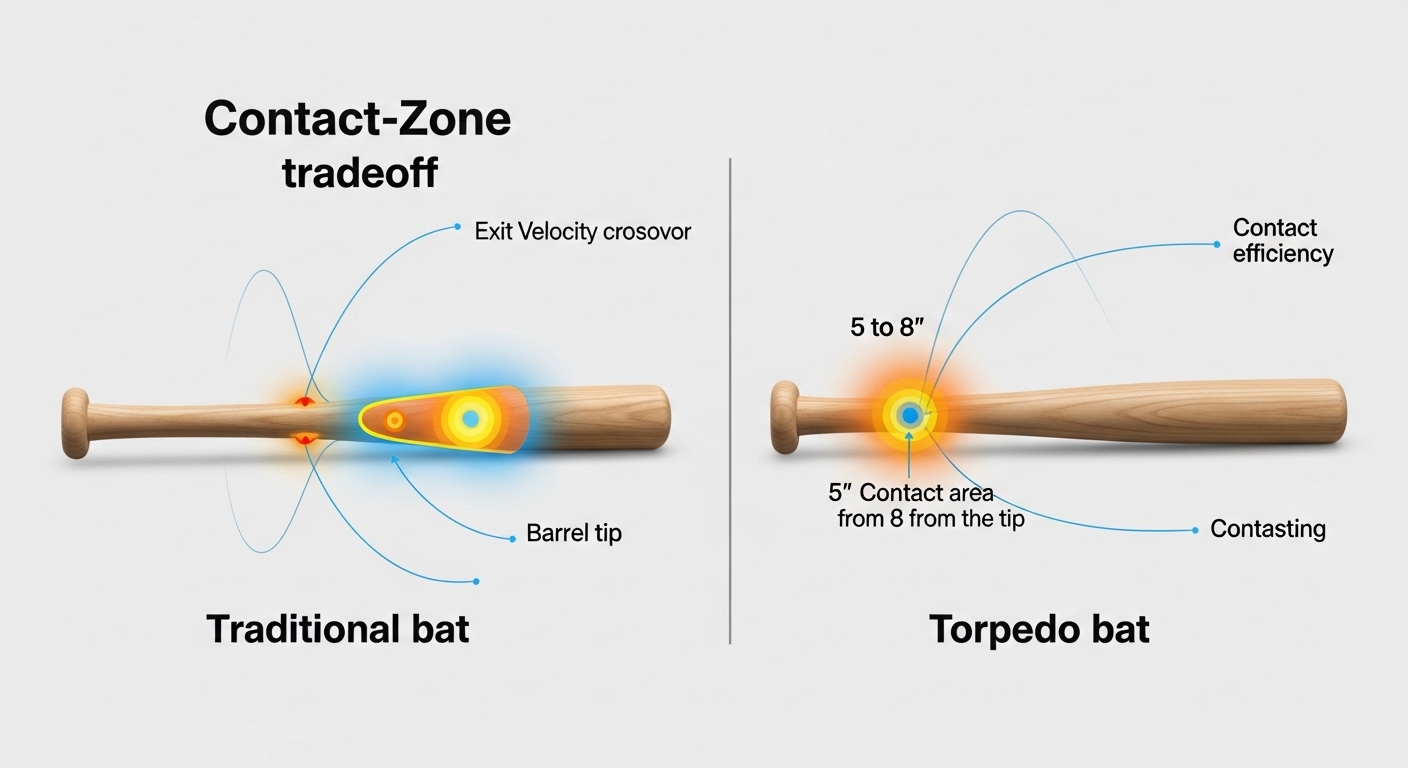
Nathan's finding — that the torpedo geometry produces a wider zone of high collision efficiency (the sweet spot) compared to a traditional profile — applies to alloy construction as well as wood. The mass placement physics that produces this wider zone is independent of material. An alloy torpedo bat should produce a wider effective sweet spot than a traditional alloy bat of identical weight and length, because the contact zone mass concentration broadens the high-eA region.
⚠️ The Barrel Size Argument: It Depends
Traditional alloy BBCOR bats are engineered to maximize barrel size within the 2⅝" diameter limit — wider barrels mean larger sweet spots. Some alloy torpedo designs achieve this maximum diameter at the contact zone while narrowing the tip, which preserves sweet spot size while delivering the MOI benefit. Others sacrifice some barrel width to achieve a more pronounced torpedo taper. Check the specific bat's barrel profile rather than assuming all alloy torpedo bats achieve maximum barrel diameter at the contact zone.
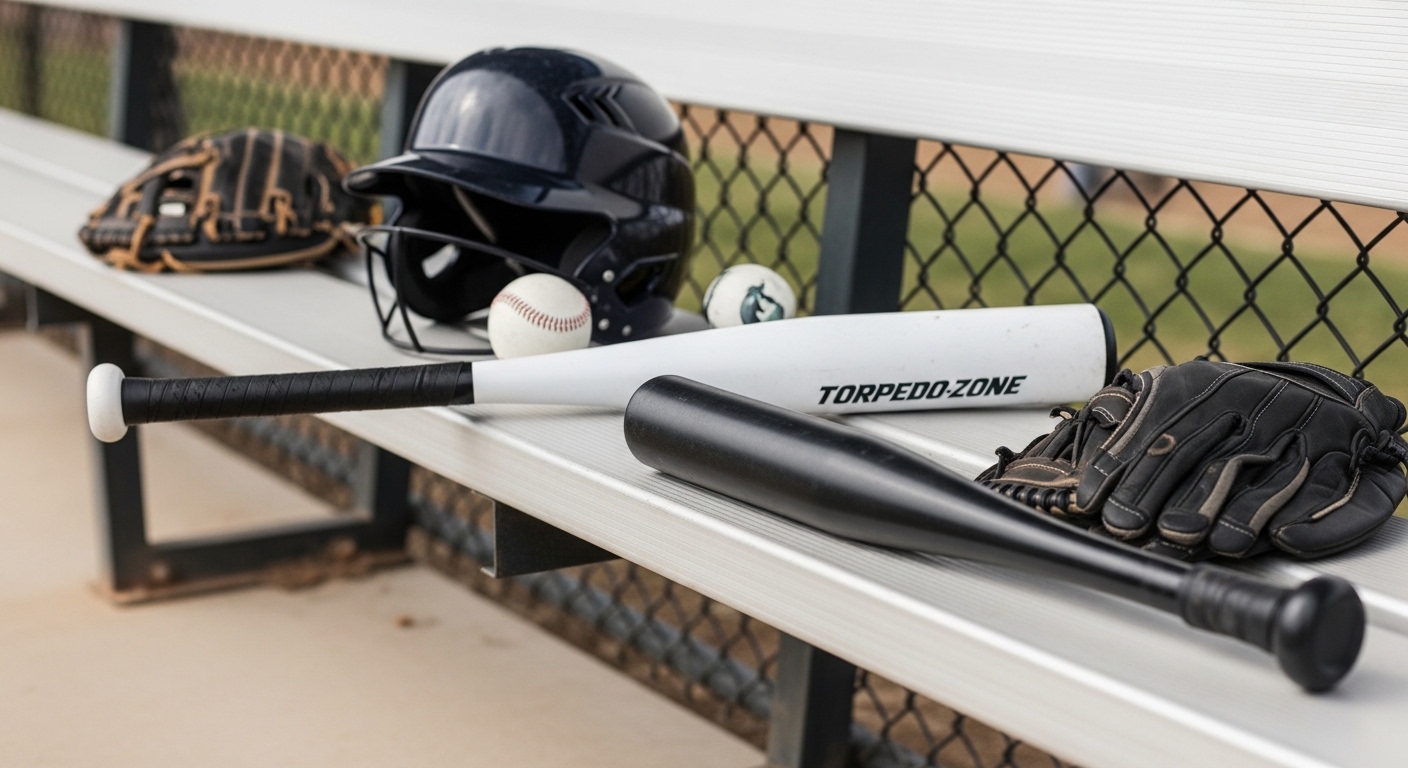
The Marucci CB15 Torpedo and similar alloy BBCOR torpedo designs bring the torpedo geometry to the BBCOR market. The key advantage over traditional alloy: faster swing weight for the same bat mass, and a contact zone that aligns with where most hitters actually make contact. The disadvantage: some tip-zone performance loss for players who fight off inside pitches toward the end of the barrel.
❄️ Cold Weather, Durability, and Price: The Practical Factors
Cold Weather
Alloy bats are the clear choice for cold weather baseball. As HB Sports documents, composite bats become brittle below approximately 60°F — the carbon fiber polymer contracts differently than the ball, and the combination of a harder cold-weather ball and a stiffer, more brittle composite barrel creates real cracking risk. Alloy bats experience some stiffening in cold but remain structurally reliable at temperatures where composite bats should not be used. Wood bats are also reliable in cold — the Marucci storage guidelines note that bats stored at room temperature perform normally regardless of outdoor temperature, though players should let bats reach ambient temperature before hitting. For spring ball, fall ball, or any play in cold climates, alloy torpedo is the most reliable choice; composite torpedo should be avoided below 60°F.
Durability
The durability comparison is stark. Wood bats break — MLB players average approximately one broken bat per 5–20 at-bats at higher velocities, and even in amateur play wood bats have limited lifespans. Alloy bats dent and ding but rarely shatter; a quality BBCOR alloy bat typically lasts 1–3 seasons of regular use. Per Bat Digest's cost analysis, alloy is almost always more cost-effective on a per-season basis once wood breakage is factored in. Exception: if you're using a wood torpedo exclusively as a training bat — tee work, soft toss, light BP — it can last a full year or more because training use produces far fewer maximum-impact contacts than game use.
| Bat Type | Upfront Cost | Lifespan | Est. Season Cost | Cold Weather? |
|---|---|---|---|---|
| Wood torpedo (game use) | $80–$200 | ~3–15 games (breaks) | $200–$600/season | ✅ Fine — any temp |
| Alloy torpedo (BBCOR) | $150–$400 | 1–3 seasons | $100–$150/season | ✅ Best choice |
| Composite torpedo (BBCOR) | $300–$500+ | 1–2 seasons | $200–$350/season | ❌ Cracks < 60°F |
| Hybrid torpedo (BBCOR) | $200–$400 | 1–2 seasons | $150–$250/season | ✅ OK — alloy barrel |
| Wood torpedo (training only) | $50–$150 | ~3–12 months (batting practice) | $80–$200/year | ✅ Fine — any temp |
🎯 10-Scenario Decision Guide: Which Bat for Your Situation
🏆 Clearest takeaway: If you play in a BBCOR league, use an alloy torpedo BBCOR bat — the torpedo geometry delivers its MOI benefit within the BBCOR framework, and the alloy construction gives you cold-weather reliability and durability that wood cannot match. If you play in a wood-bat league and want the MLB torpedo experience, use a wood torpedo — alloy torpedo is a BBCOR design that doesn't replicate the uncapped, fit-to-contact-zone physics of what Volpe and Raleigh actually use.
🔄 The Training Combination: Wood Torpedo + Alloy BBCOR
An increasingly common approach — and one endorsed by multiple hitting coaches and bat manufacturers — is to train with a wood torpedo bat and compete with an alloy BBCOR bat.
"Like running with ankle weights and then sprinting without them" — Athlenow's analysis
The logic: Wood's stiff, unforgiving feedback in batting practice teaches correct contact zone habits more efficiently than alloy's more forgiving construction, while alloy's trampoline effect and durability make it the better game-day choice in BBCOR leagues. JustBats specifically recommends torpedo bats as training tools regardless of game-use eligibility.
🎯 Recommended approach: Swing a wood torpedo bat for tee work, cage BP, and soft toss to build contact zone habits. Use your alloy BBCOR torpedo for games. The wood bat's stiff feedback tells you when you miss; the alloy bat's performance ceiling gives you maximum output when you hit it right.
❓ Frequently Asked Questions: Torpedo Bat vs. Alloy Bat
Gallery