⚾ Youth Torpedo Bat Guide: Rules, Sizing, and Whether It's Right for Your Player
The torpedo bat became the talk of MLB baseball in 2025 — and within weeks, parents across every level of youth baseball were asking the same question: can my child use one? The answer depends on three things: your player's league, their age division, and whether you're asking about game use or training use.
The short answer: A solid one-piece wood torpedo bat is legal in every Little League division without any certification stamp. A non-wood torpedo bat needs either a USA Bat stamp (for Little League Majors and below) or BBCOR certification (for Intermediate, Junior, Senior League, and high school).
🎯 The Two Questions Parents Are Actually Asking
Before diving into the rules, it helps to separate the two distinct questions that most parents conflate:
- "Is a torpedo bat legal for my child's games?" — This depends entirely on your league's certification rules.
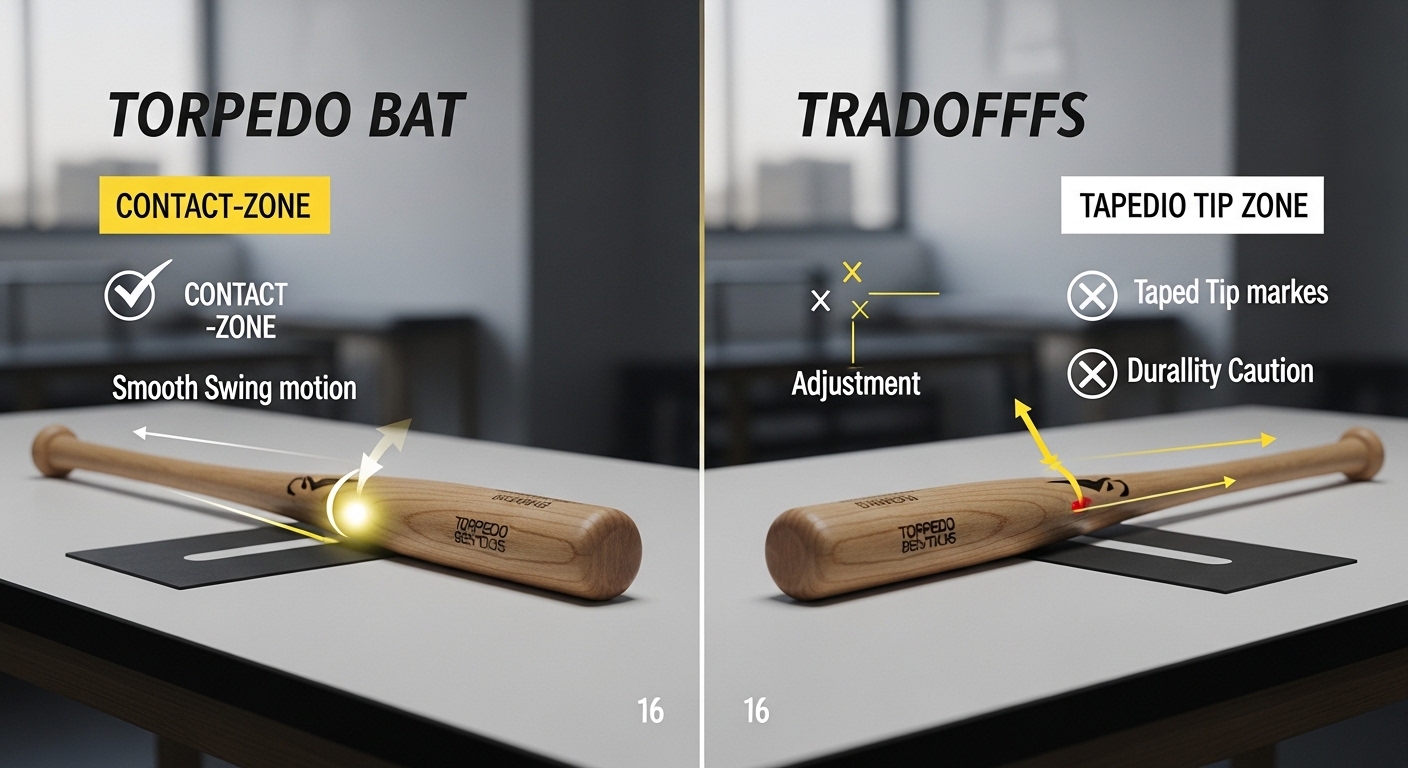
- "Is a torpedo bat a good training tool for my child?" — This depends on your player's age, bat speed, contact zone development, and whether they can handle the torpedo's less forgiving tip zone.
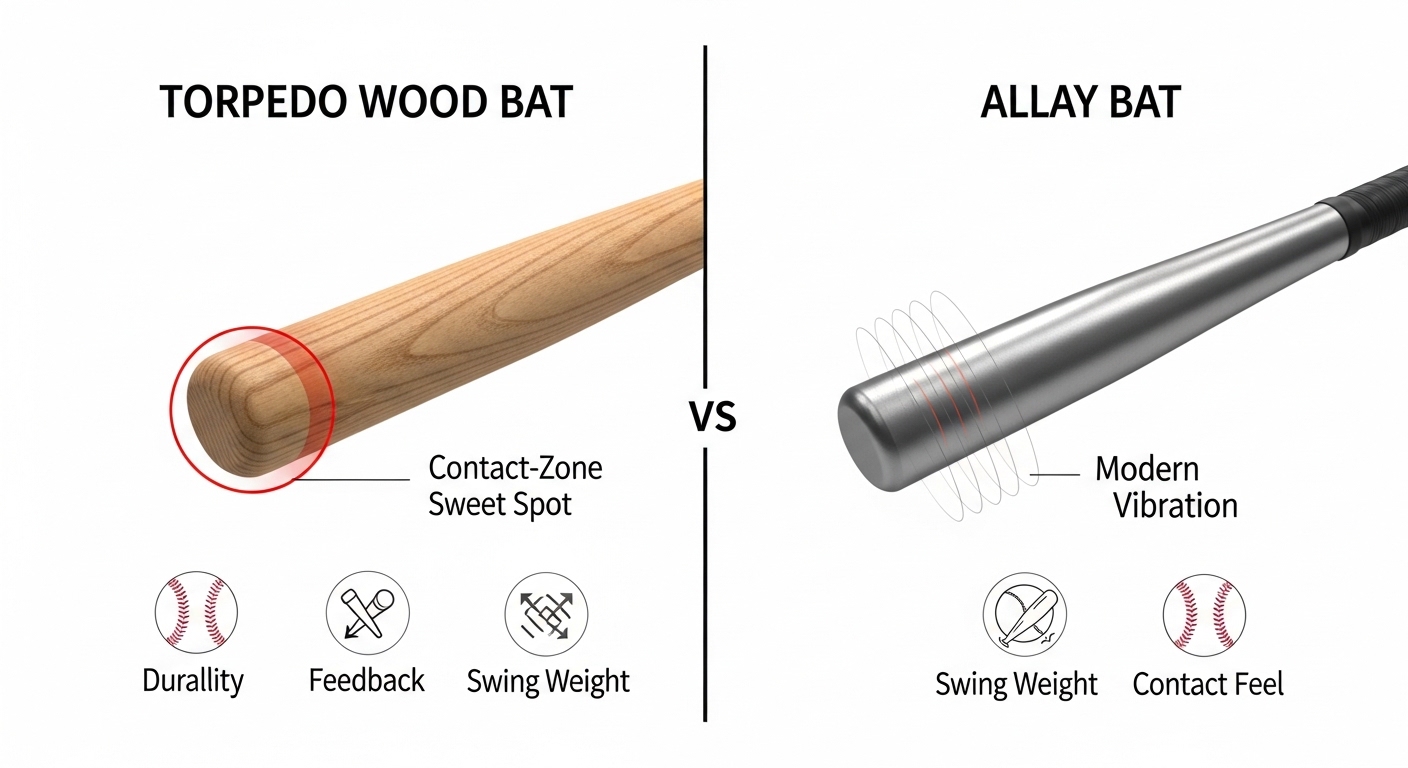
Important: A bat that is illegal for game use in your specific league may still be an excellent training bat that your player swings in the cage every day. Many youth coaches now recommend exactly that approach — train with a wood torpedo, compete with whatever the league requires.
📋 Key Rules and Numbers at a Glance
📜 League Rules by Division: The Complete Breakdown
Find your player's division, read across, and you will know exactly what torpedo bat options are legal for game use.
| Division | Ages | Non-Wood Rule | Wood Torpedo Legal? | USA Bat Torpedo Legal? | BBCOR Torpedo Legal? |
|---|---|---|---|---|---|
| Tee Ball | 4–6 | USA Bat stamp required | ✅ Yes | ✅ If USA stamped | ❌ No |
| Minor League (Coach/Machine) | 5–8 | USA Bat stamp required | ✅ Yes | ✅ If USA stamped | ❌ No |
| Little League Majors | 9–12 | USA Bat stamp required | ✅ Yes | ✅ If USA stamped | ❌ No |
| Intermediate (50/70) | 11–13 | USA Bat or BBCOR | ✅ Yes | ✅ Yes | ✅ Yes |
| Junior League | 12–14 | USA Bat or BBCOR | ✅ Yes | ✅ Yes | ✅ Yes |
| Senior League | 13–16 | BBCOR only | ✅ Yes (wood exempt) | ❌ No | ✅ Yes |
| USSSA (travel ball) | 8U–14U+ | USSSA 1.15 BPF (14U→BBCOR 2026) | ✅ Yes | ⚠️ Depends on event | ✅ Yes at 14U+ from 2026 |
| PONY Baseball | Various | USA Bat or BBCOR by division | ✅ Yes | ⚠️ Check division | ⚠️ Check division |
🎮 Game Use vs. Training Use: The Clear Legal Distinction
| Situation | Game Use Legal? | Training Use Legal? | Key Rule / Note |
|---|---|---|---|
| Wood torpedo, Little League Majors | ✅ Yes | ✅ Yes | Solid one-piece wood exempt from USA Bat stamp requirement. Must meet length/diameter rules. |
| Non-wood torpedo without USA Bat stamp, Little League | ❌ No | ✅ Training only | Non-wood bats in Little League Majors and below must have USA Bat stamp for game use. Training use in private practice is not regulated. |
| USA Bat-stamped alloy torpedo, Little League | ✅ Yes | ✅ Yes | Stamp confirms compliance with USA Baseball Youth Bat Performance Standard. Check the bat for the USA Baseball logo. |
| BBCOR torpedo, Little League Intermediate/Junior | ✅ Yes | ✅ Yes | BBCOR bats are permitted in Intermediate (50/70) and Junior divisions as an alternative to USA Bat standard. |
| USSSA torpedo, Little League event | ❌ No | ✅ Training only | USSSA certification does not satisfy Little League's USA Bat or BBCOR requirement. Common mistake — check your league's specific standard. |
| Any torpedo, private cage/training session | N/A | ✅ Always legal | No governing body regulates private practice equipment. Any torpedo bat can be used for training outside league-sanctioned events. |
📏 Drop Weight and Sizing by Age: Where Torpedo Fits
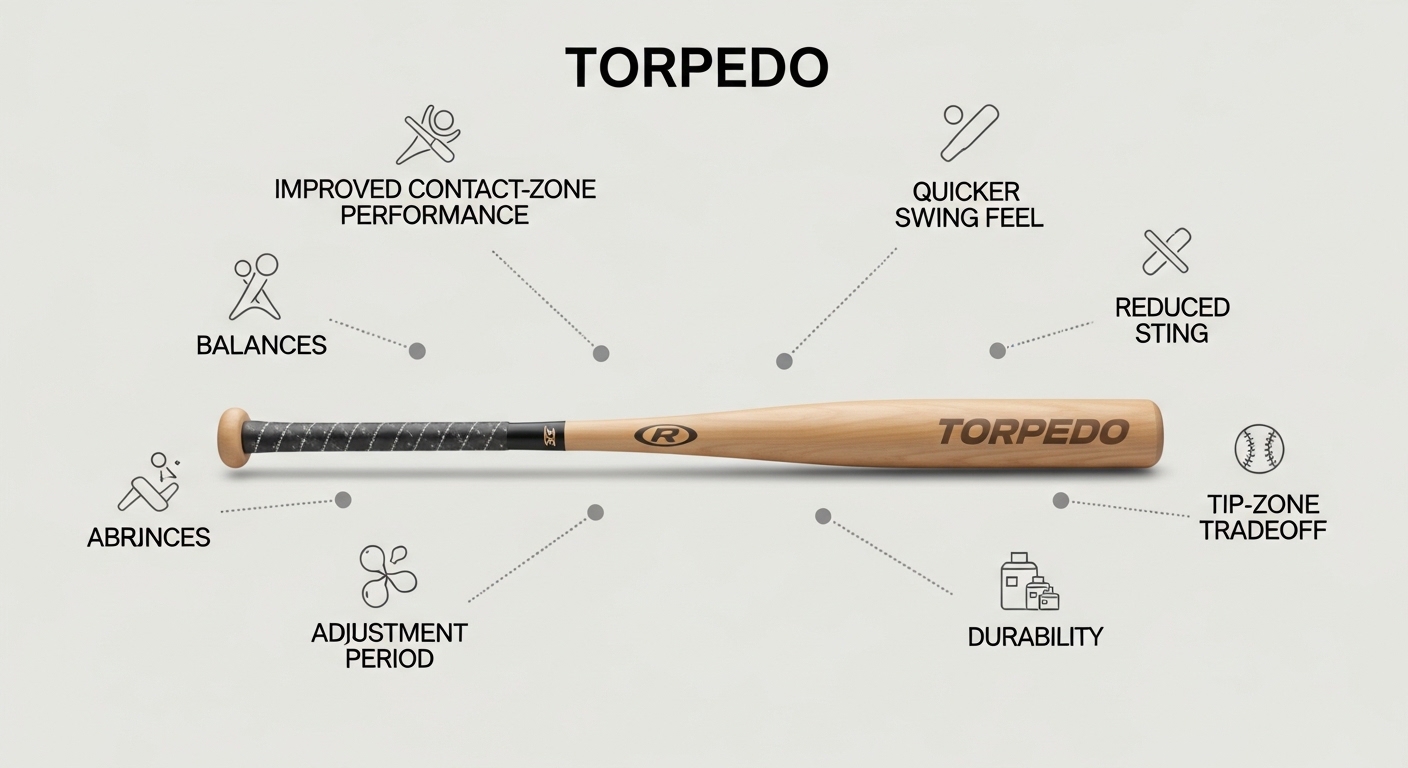
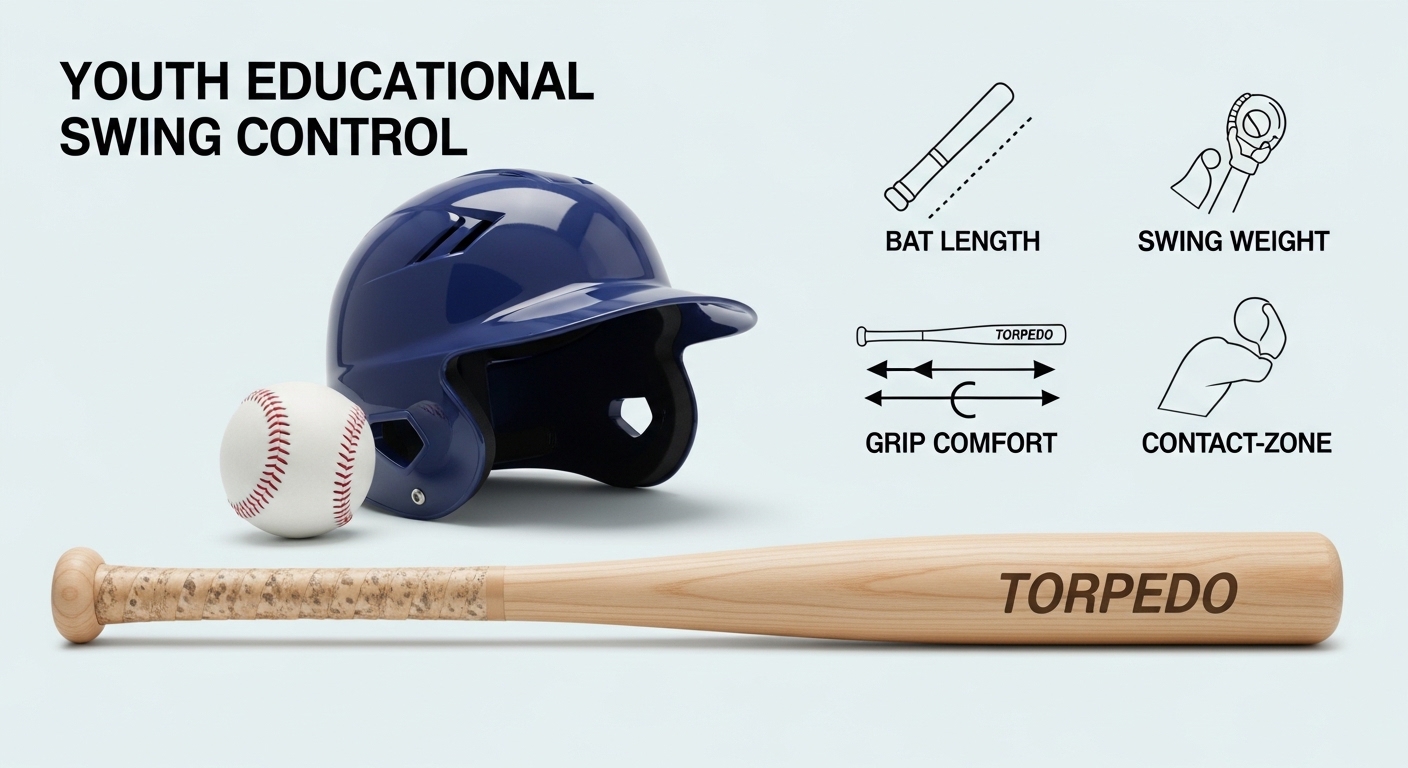
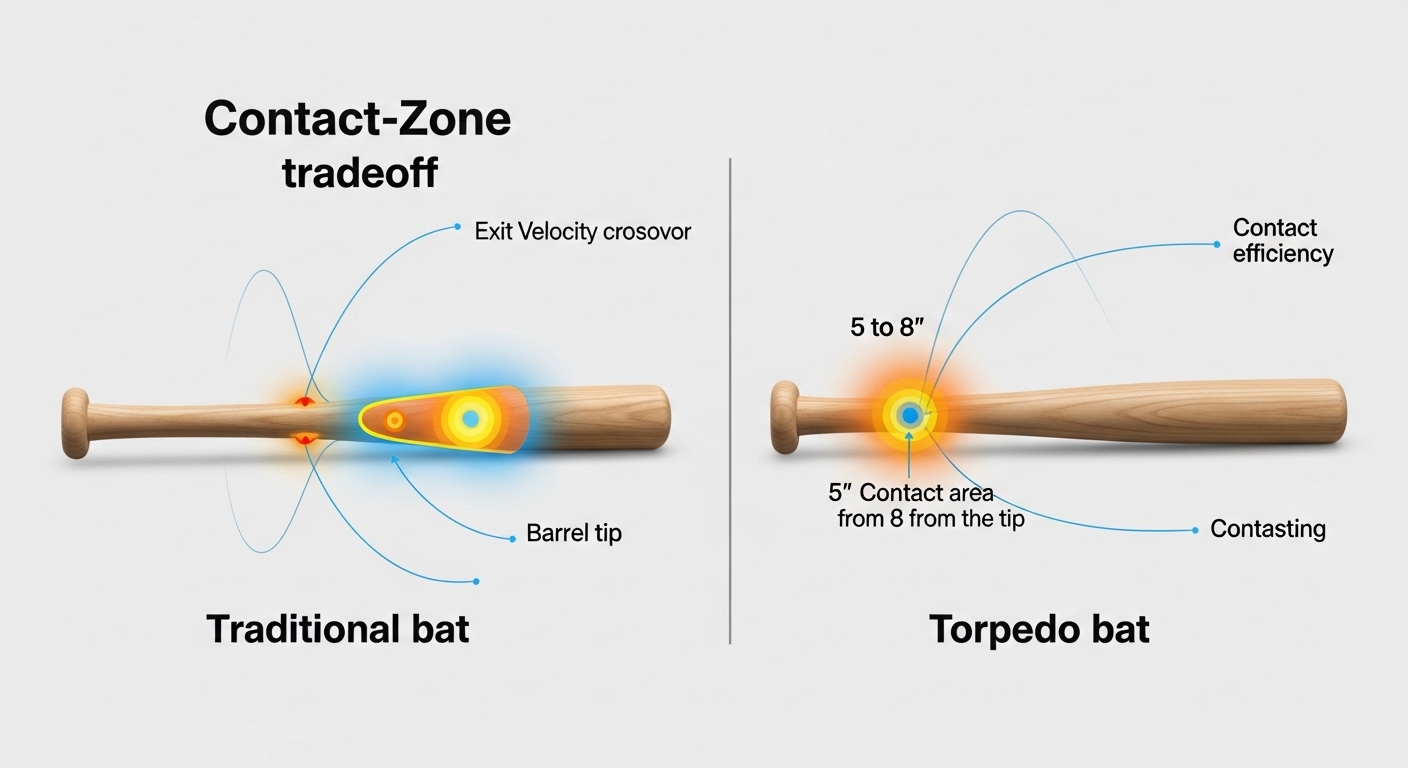
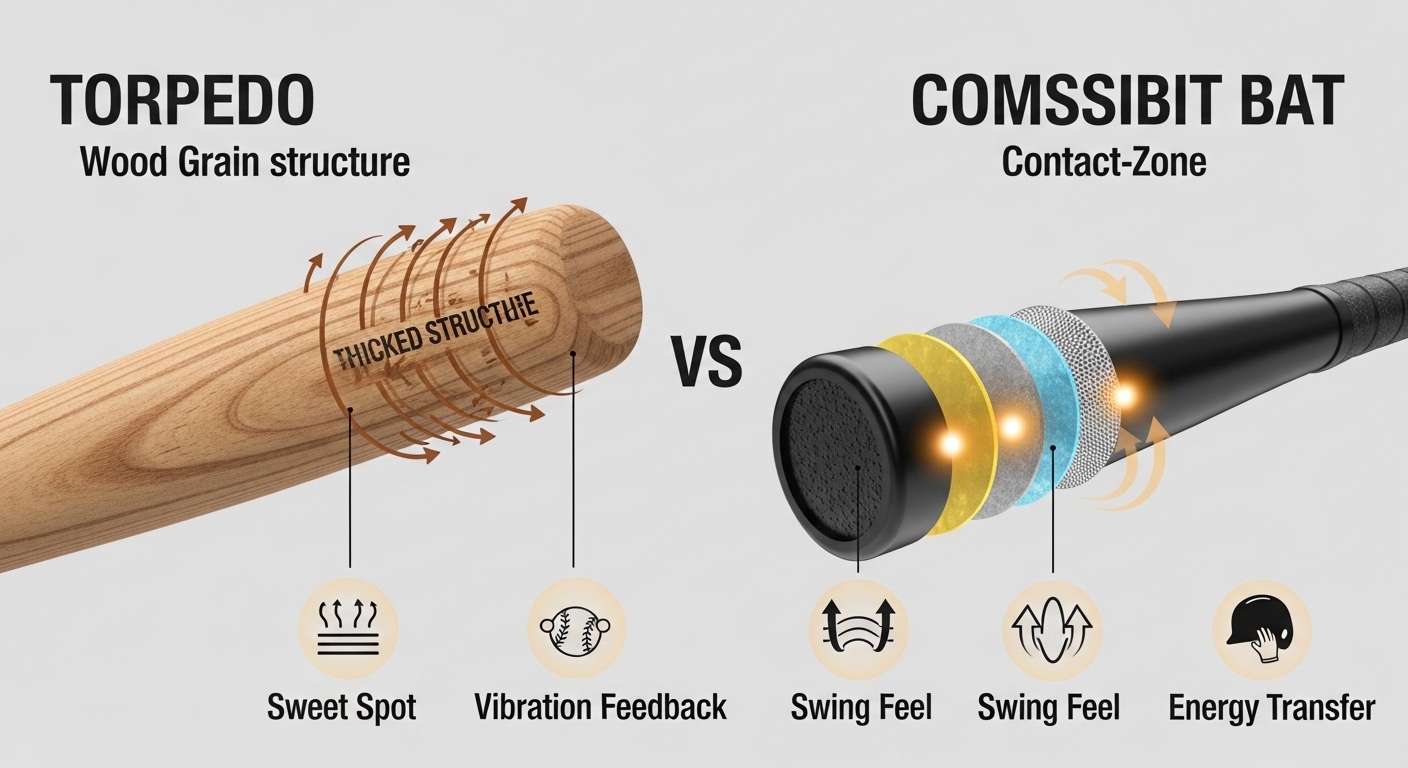
The torpedo bat's design principle — redistributing mass away from the barrel tip toward the contact zone — applies to youth bats in exactly the same way it applies to adult bats. For youth players, however, the drop weight question is more significant than the torpedo geometry question — using the right drop weight for a player's age, size, and strength is the most important sizing decision.
| Age | Length Range | Recommended Drop | League Standard | Torpedo Availability | Notes |
|---|---|---|---|---|---|
| 6–7U | 24–26" | -11 to -13 | USA Bat (Tee Ball) | Limited — mainly wood or alloy | Torpedo profile available in wood; some USA Bat alloy torpedo starting to appear |
| 8–9U | 26–28" | -10 to -12 | USA Bat | Wood torpedo; few USA Bat alloy | Wood torpedo ideal for training. Check USA Bat stamp for game use. |
| 10–11U | 28–30" | -8 to -10 | USA Bat / USSSA | Growing market — alloy/composite available | USSSA composite torpedo emerging. MOI benefit meaningful at this age. |
| 12U | 29–31" | -8 | USA Bat / USSSA | Good selection alloy + composite | Torpedo MOI benefit clear for developing bat speed. Contact zone alignment starts to matter. |
| 13U | 30–32" | -5 | USSSA (some events BBCOR) | Strong selection | Strong case for torpedo at this age — bat speed developing, contact zone establishing. Prep for BBCOR transition. |
| 14U+ | 31–33" | -3 (BBCOR from 2026) | BBCOR from 2026 | Full BBCOR torpedo market | BBCOR torpedo is the top choice from 14U onwards per 2026 USSSA transition. Same as high school standard. |
🎯 Age-Based Torpedo Bat Recommendations
🧒 Early Development
- Training: Tee work only with wood torpedo
- Game bat: Standard USA Bat alloy for confidence
- Why: Young hitters contact all over the barrel; torpedo's narrowed tip can discourage early players
- Focus: Building confidence and consistent contact habits
⚾ Contact Zone Development
- Training: Wood torpedo for tee/soft toss
- Game bat: USA Bat alloy (stamped)
- Why: Torpedo feedback accelerates contact zone calibration
- Focus: Rewarding centre-barrel contact, building bat speed
🔄 BBCOR Prep Phase
- Training: Wood torpedo or USSSA composite torpedo
- Game bat: USA Bat or USSSA alloy
- Why: 13U is ideal time to introduce BBCOR tolerance
- Focus: Preparing for -3 BBCOR transition in 2026
🏆 BBCOR Standard
- Primary recommendation: BBCOR torpedo for training AND games
- Why: 2026 USSSA transition makes BBCOR the standard
- Benefit: Same contact zone alignment principle as MLB torpedo
- Focus: High school readiness, competitive performance
🎓 The Training Value Table: What Torpedo Bats Develop in Youth Hitters
| Training Use Case | How Torpedo Helps | Age Range | Recommended Bat Type |
|---|---|---|---|
| Tee work — contact zone habits | Torpedo's peak mass rewards contact in the 6–8" zone; mishits in tip zone give clear feedback | 8U and up | Wood torpedo (any age) |
| Soft toss — swing path development | Lower MOI = faster bat through zone; develops swing speed without overloading the player | 8U and up | Wood or USA Bat torpedo |
| Live BP — timing development | Quicker feel helps young hitters recognise pitch speed earlier; encourages contact over pull-dominated swings | 10U and up | Wood torpedo or game bat |
| Preparing for BBCOR transition (13U → 14U) | Training with wood torpedo builds habits that transfer directly to BBCOR torpedo game bat — same contact zone alignment principle | 13U specifically | Wood torpedo + BBCOR alloy |
| Bat speed development | MOI reduction from torpedo geometry accelerates bat more easily for developing muscles — builds speed without requiring a lighter bat | 10U–13U | Alloy or composite torpedo |
| Confidence at plate | Wider sweet spot = more forgiving contact at developing skill levels. BUT: wood torpedo's stiff feedback is better for skill development than composite's forgiveness | All ages | Age and skill dependent |
💡 The 13U Transition Strategy
A player moving from -5 USSSA to -3 BBCOR in 2026 who has spent a year training with a wood torpedo has already built the contact zone habits and swing feel that the BBCOR torpedo will reward.
"The wood torpedo is the best preparation tool for the BBCOR transition that exists."
Recommended approach: Use a wood torpedo for tee work, cage BP, and soft toss to build contact zone habits. Use your league-appropriate certified bat (USA Bat or USSSA) for games. The wood bat's stiff feedback tells you when you miss; the certified game bat gives you legal performance when you hit it right.
❓ Frequently Asked Questions: Youth Torpedo Bats
Gallery