Torpedo Bat for Power Hitters: Best Options & Who Should Use One in 2026
Power Fit, Current Bats & What the Latest Research Shows
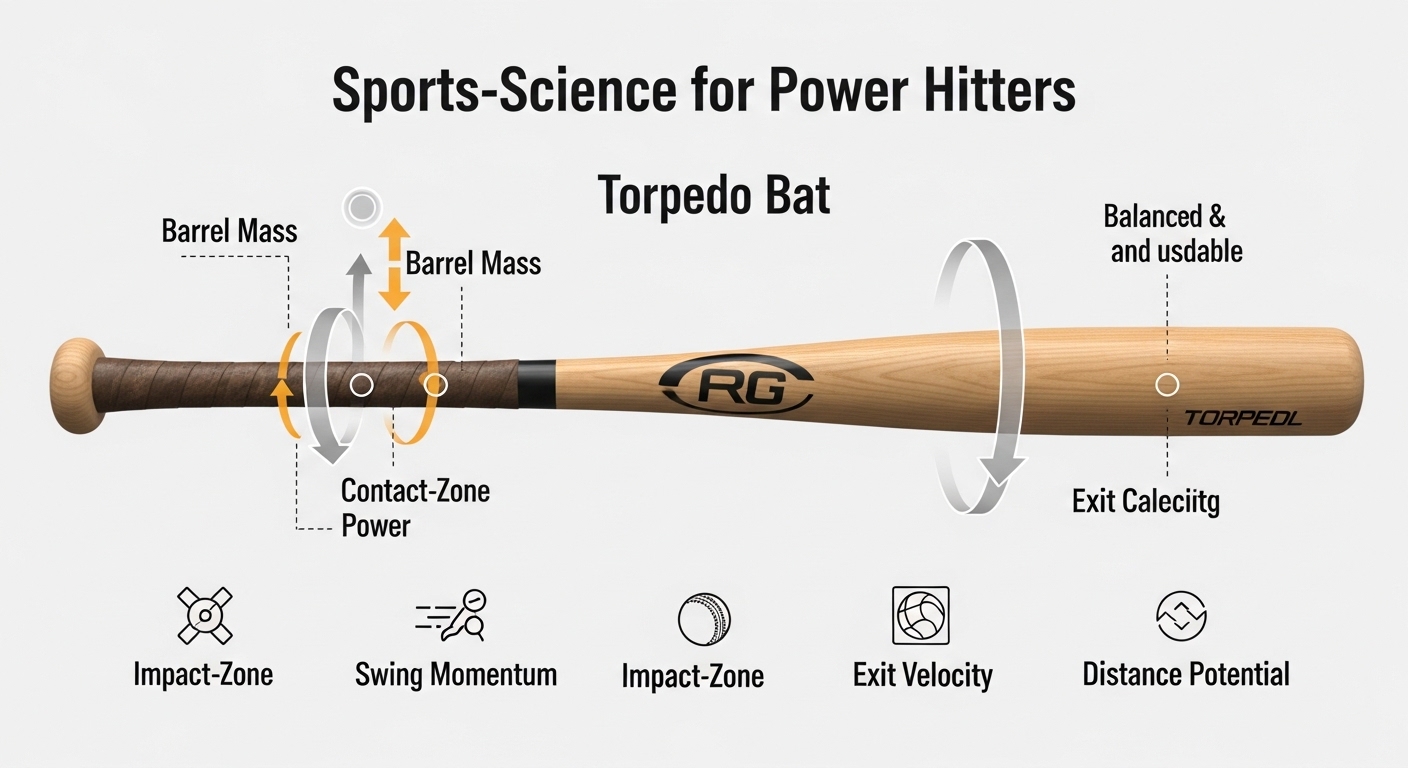
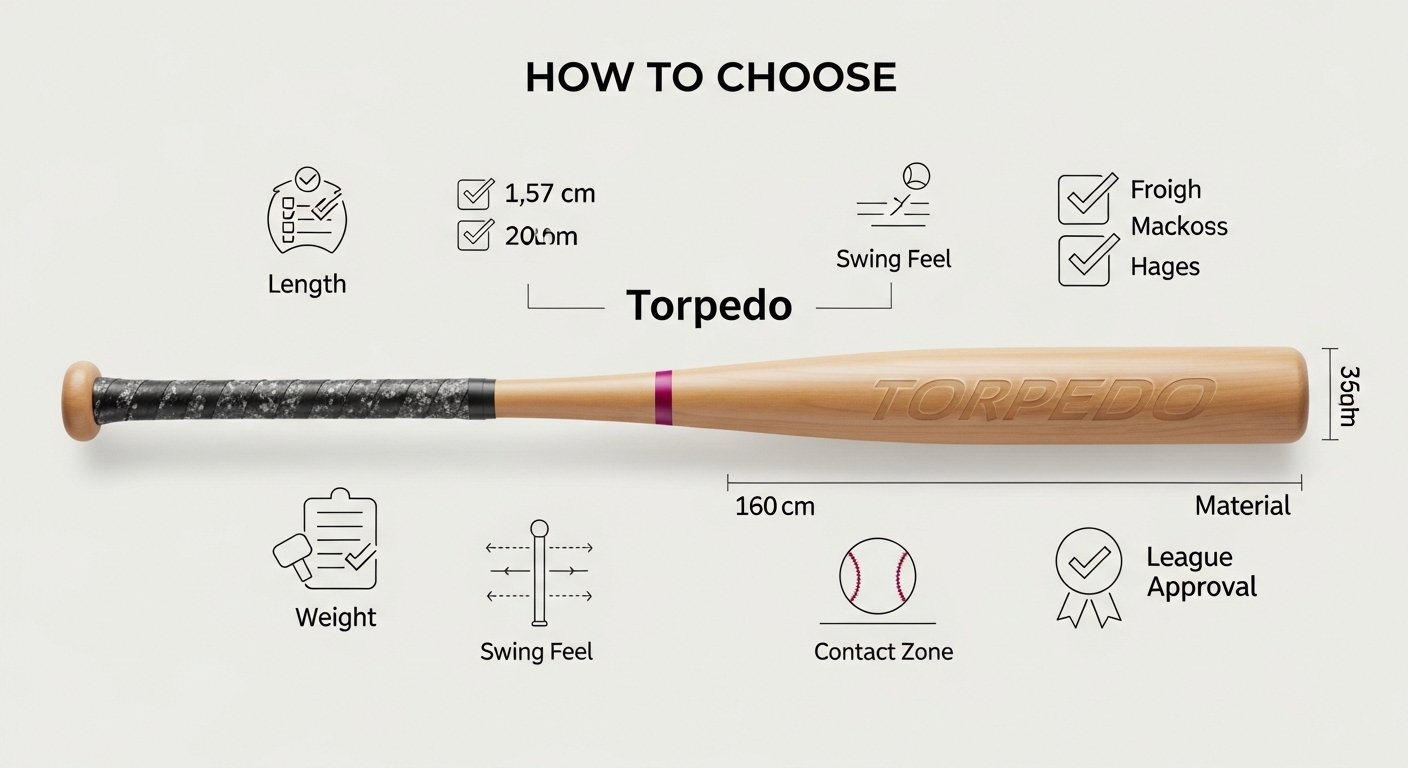
Power hitters often get the wrong message about torpedo bats. One extreme says the design creates extra home-run power. The other says torpedo bats are only for contact hitters. Neither is a good buying rule. A torpedo bat redistributes barrel mass so the thickest part of the bat sits farther in from the tip. That can suit a hitter who consistently makes contact closer to the hands, including a hitter with serious home-run power.
The stronger question is not “Am I a power hitter?” It is “Does this barrel geometry put the best part of the bat where I actually hit the ball?” Giancarlo Stanton is the clearest reminder that elite power and torpedo geometry can coexist: he used the design during 2024, including his seven-homer postseason run. Aaron Judge, meanwhile, declined to change from his traditional setup. Those two examples show why torpedo fit is individual rather than a simple contact-hitter-versus-power-hitter rule.
What the New 2026 Torpedo Bat Research Changed
The First Controlled Laboratory Comparison
In 2026, researchers Alan Nathan, Lloyd Smith and Daniel Russell published the first experimental study comparing torpedo and standard maple bats. They tested two standard bats and two torpedo bats based on actual MLB-player profiles, with the bats built to very similar length, weight and moment of inertia.
- Peak performance was essentially the same across the bats. The study did not find a universal “torpedo = more peak power” result.
- The location of peak performance shifted. Moving mass from the barrel tip toward the hitting area changed where the bat performed best, which can help hitters who naturally make contact closer to their hands.
- One torpedo bat produced a wider high-performance zone. Its range above the study's BBCOR threshold was 2.7" versus 2.4" for the standard bats; the other torpedo did not show the same widening.
- Wood variation mattered. The two torpedo bats shared the same shape profile but did not perform identically, so shape alone cannot explain every result.
For a power hitter, the practical takeaway is important: do not buy a torpedo because you expect a fixed percentage increase in exit velocity. Buy it if the redistributed hitting area matches your contact pattern and the swing feel works for you.
Which Power Hitters Are Good Torpedo Candidates?
| Power-Hitter Profile | Torpedo Fit | What to Look For |
|---|---|---|
| Consistent contact closer to the hands | ✅ Strong candidate | If your barrel marks cluster farther in from the tip than the traditional sweet spot, moving the high-performing area inward is directly relevant to your swing. |
| Power hitter who prefers a balanced BBCOR feel | ✅ Strong candidate | The current Marucci RCKLESS Torpedo Puck BBCOR is balanced and engineered to keep swing weight manageable despite its extended barrel profile. |
| Power hitter who wants some end-loaded wood feel | ✅ Possible fit | Torpedo geometry does not have to mean ultra-balanced. The Marucci AP5 Torpedo Pro Wood is a current slightly end-loaded torpedo option. |
| Advanced hitter with a repeatable barrel path | ✅ Good testing candidate | A specialized barrel shape is easier to evaluate when your contact location is already consistent. Tater specifically positions its Torpedo for advanced hitters with repeatable mechanics. |
| Hitter whose best contact is frequently near the tip | ⚠️ Test before switching | The torpedo removes material from the distal barrel and moves it inward. If your productive contact lives near the end, the geometry may move the best-performing zone away from where you need it. |
| Traditional end-loaded slugger who loves heavy barrel momentum | ⚠️ Depends on model | Do not reject torpedo geometry automatically, but do not assume a balanced RCKLESS will replace the feel of a dedicated end-loaded BBCOR bat either. |
| All-fields hitter with a wide impact-location spread | ⚠️ Individual fit | A highly specialized hitting zone can be less useful when your contact moves substantially along the barrel depending on pitch location. |
Best Torpedo Bats for Power Hitters in 2026
| Pick | Bat | Type / Swing | Current Price Context | Best Power-Hitter Use |
|---|---|---|---|---|
| Best BBCOR torpedo | 2027 Marucci RCKLESS Gen 2 Torpedo Puck (MCBRTP2) | BBCOR -3, one-piece AZR alloy, balanced | About $350 | High school/college power hitters who want torpedo geometry but still prioritize a controlled, balanced swing feel. |
| Best wood torpedo for a power-oriented feel | Marucci AP5 Torpedo Pro Model | Maple, slightly end-loaded | About $170 | Wood-bat hitters who want the torpedo contact-zone concept with more barrel presence than a fully balanced wood model. |
| Best balanced wood torpedo for advanced hitters | Tater Torpedo Maple | Maple, balanced feel | Stock versions currently around $130; custom builds cost more | Advanced hitters who already know their swing path and want a specialist wood torpedo with a concentrated hitting zone. |
| Best previous-generation BBCOR value | 2026 Marucci RCKLESS Torpedo Puck (MCBCRPT) | BBCOR -3, one-piece alloy, balanced | Worth considering when genuinely discounted | Players who want the original RCKLESS torpedo/puck concept and find remaining stock meaningfully below the Gen 2 price. |
Best BBCOR Choice: 2027 Marucci RCKLESS Gen 2 Torpedo Puck
The current RCKLESS Gen 2 Torpedo Puck is the clearest non-wood torpedo recommendation for a high school or college power hitter who actually fits the geometry. It is a one-piece AZR alloy, -3 BBCOR bat with a balanced load, 2 5/8" barrel and a 1" weighted Puck Knob.
Marucci says the tapered distal barrel redistributes mass into the hitting zone and gives the Torpedo roughly three additional inches of barrel across the sweet spot compared with the standard RCKLESS Alloy. The Puck Knob counterbalances the extended barrel so a 34"/31 oz Torpedo is designed to swing with the same MOI as a 33"/30 oz standard RCKLESS Alloy.
Sizing matters: Marucci recommends ordering one size longer than your normal bat because the Puck Knob raises the hands about one inch. A hitter who normally swings a 33" standard BBCOR should therefore evaluate the 34" Torpedo rather than assuming the labeled lengths are directly equivalent.
Best Wood Choice for Power Feel: Marucci AP5 Torpedo Pro Model
The AP5 Torpedo is useful because it proves that a torpedo does not have to feel completely balanced. Current listings describe the model as slightly end-loaded, giving a stronger hitter more barrel presence while retaining the torpedo-style mass concentration farther in from the tip.
That makes it a more natural wood option for a hitter who likes the torpedo concept but does not want to give up every trace of end-loaded feel. It is currently listed around $169.99. As with any wood bat, check your league's wood-bat rules and do not assume a specific drop or turn model is legal in every competition.
Balanced Wood Alternative: Tater Torpedo Maple
Tater's current Torpedo is a maple-only, balanced-feel model with a thin handle, medium barrel and mass concentrated in the sweet spot. The company specifically positions it for advanced hitters who already know their swing path and warns that the tapered end can make outside-pitch contact harder to square up.
For a power hitter, that is useful honesty. The Tater is not a generic “more power” bat; it is a specialized choice for a hitter whose repeatable contact already occurs in the part of the barrel the Torpedo is designed around.
Torpedo vs. End-Loaded: They Are Not Opposites
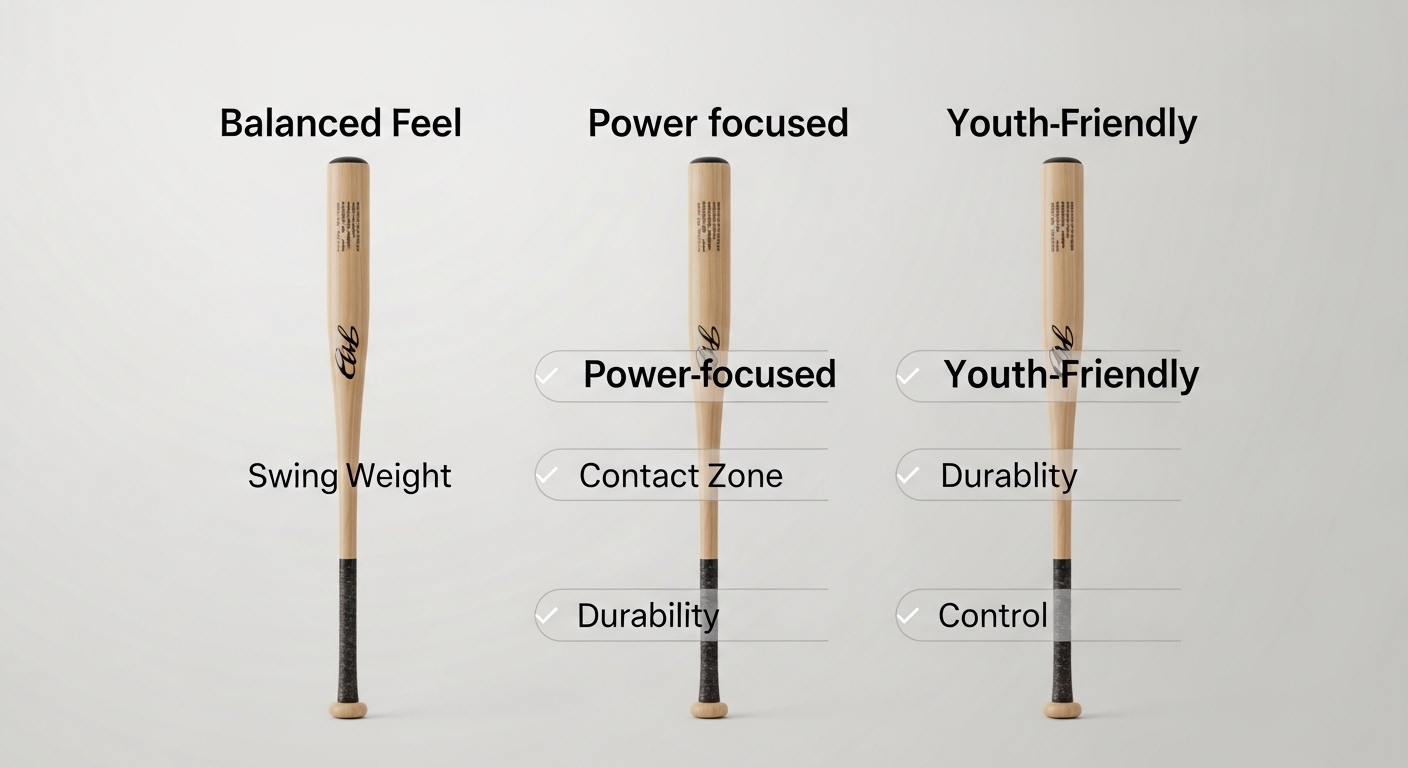
The old version of this page treated a torpedo bat and an end-loaded bat as if they solve opposite problems. That is too simple. Torpedo describes the barrel's shape and where mass is concentrated; end-loaded or balanced describes swing weight. Those characteristics can overlap.
| Bat Style | Mass / Swing Character | Power-Hitter Fit |
|---|---|---|
| RCKLESS Gen 2 Torpedo Puck BBCOR | Torpedo barrel + counterweighted knob + balanced load | For hitters who want the hitting zone farther in but still want quick barrel control. |
| AP5 Torpedo Pro Wood | Torpedo profile + slightly end-loaded wood feel | For stronger wood hitters who want torpedo geometry with more barrel presence. |
| Traditional Select PWR-style BBCOR | Conventional barrel + clearly end-loaded swing weight | For hitters who prefer traditional barrel momentum and do not gain enough from moving the hitting zone inward. |
| Traditional balanced BBCOR | Conventional barrel + balanced swing weight | For hitters who want quick hands and broad conventional feel without adopting torpedo geometry. |
If you want the deeper physics comparison rather than the buying recommendation, see our existing Torpedo vs. Traditional Bat guide. That page should carry the detailed barrel-zone discussion so this buying page can stay focused on power-hitter fit.
MLB Power-Hitter Examples: Useful Context, Not Proof
| Player | Torpedo Use | What We Can Actually Conclude |
|---|---|---|
| Giancarlo Stanton | Used a torpedo during 2024, including the postseason | Elite power does not rule out torpedo geometry. Stanton hit seven postseason home runs in 2024, but he himself downplayed the idea that the bat suddenly transformed his performance. |
| Aaron Judge | Did not switch | A power hitter does not need a torpedo simply because teammates use one. Judge said his existing results gave him no reason to change a setup that already worked. |
| Jazz Chisholm Jr. | Adopted the torpedo with the Yankees | Shows that a power/contact hybrid can choose the profile, but individual season statistics should not be used as proof that the bat itself caused an improvement. |
How a Power Hitter Should Test a Torpedo Bat
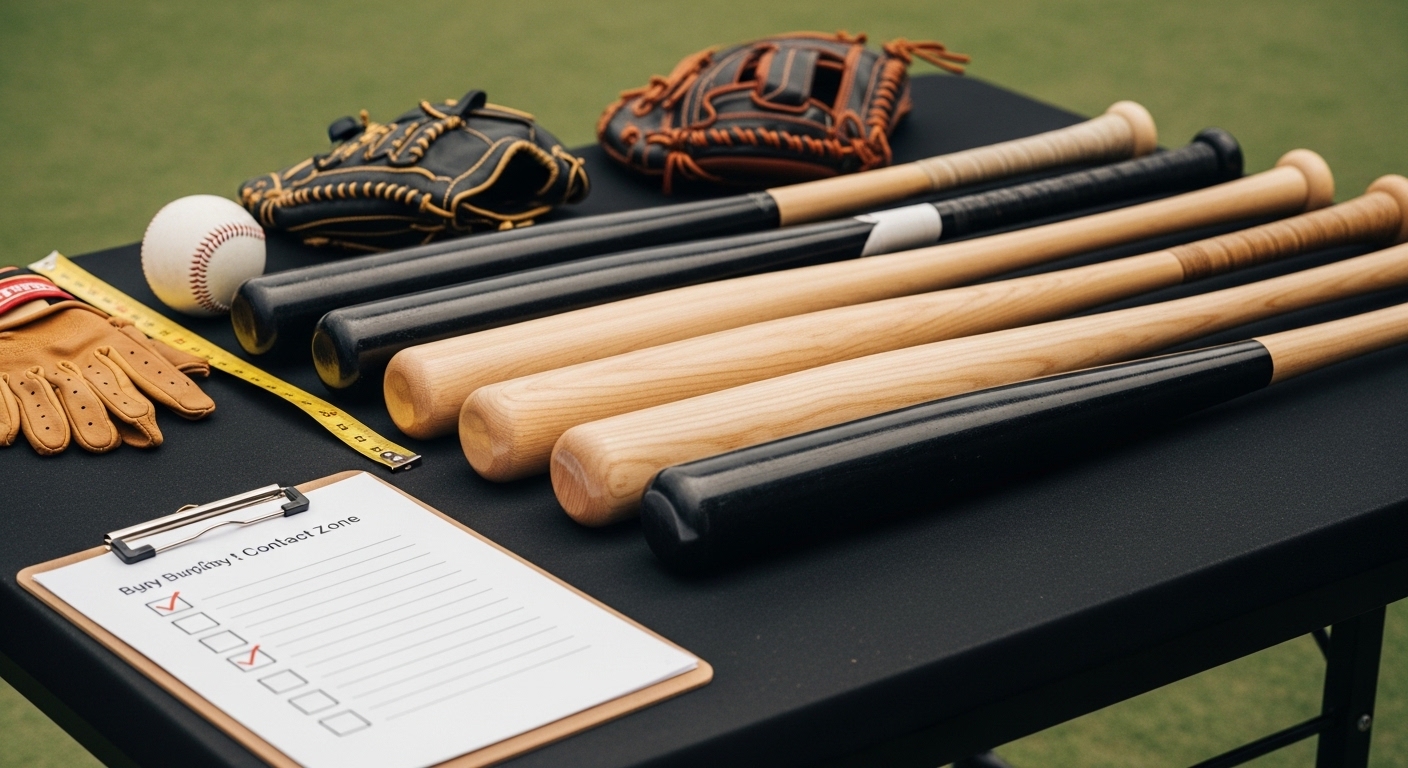
A power hitter should evaluate a torpedo by repeatable contact quality, not by the longest ball hit in one batting-practice session. If possible, compare your normal bat and a torpedo under similar conditions.
| Test | What to Measure | Why It Matters |
|---|---|---|
| 1. Map impact location | Use barrel marks, impact tape or slow-motion video to see where clean and poor contact occurs. | The main reason to choose a torpedo is that its high-performing area better matches your real contact location. |
| 2. Compare swing control | Can you get the barrel to inside velocity without losing posture or timing? | A different mass distribution is only useful if it improves or preserves a repeatable swing. |
| 3. Compare distributions, not one maximum | Look at average/median EV, hard-contact frequency and the spread between good and poor swings. | The 2026 research suggests the more interesting benefit may be the usable high-performance zone, not a higher theoretical peak. |
| 4. Test inside and outside pitches separately | Track whether performance changes when your contact point moves along the barrel. | A hitter who dominates inner-half pitches with the torpedo but loses too much on outer-half contact may prefer a less specialized barrel. |
| 5. Match game certification | Confirm BBCOR or wood legality before treating the test bat as a game option. | A great-feeling bat is irrelevant if the exact model cannot be used in your competition. |
For certification details, use our BBCOR, USA Bat and USSSA certification guide before buying.
When a Traditional Power Bat Is the Better Choice
A torpedo is not the best purchase just because you are curious about the technology. If testing shows that your hardest, most repeatable contact still comes from a conventional barrel and you prefer a strong end-loaded feel, stay with that profile.
Example: Louisville Slugger Select PWR BBCOR
The current Select PWR is a useful contrast to the RCKLESS Torpedo. It uses a traditional extended alloy barrel with an end-loaded power swing weight, rather than relocating the thickest part of the barrel into a torpedo profile. For a strong BBCOR hitter who likes additional barrel presence and does not benefit from moving the hitting zone inward, that conventional power setup can make more sense.
The goal is not to choose the newer idea. It is to choose the weight distribution you can consistently deliver to the ball.
The Best Power Torpedo Bat Recommendation
If your contact pattern fits a torpedo
- BBCOR game bat: 2027 Marucci RCKLESS Gen 2 Torpedo Puck — the strongest current non-wood torpedo choice for high school/college hitters who want a balanced swing. Current price is about $350.
- Wood power-oriented option: Marucci AP5 Torpedo Pro Model — slightly end-loaded and currently around $170.
- Balanced specialist wood option: Tater Torpedo Maple — best considered by advanced hitters with repeatable mechanics and a contact location that matches the barrel profile.
If your contact pattern does not fit a torpedo
- Do not force the switch because of MLB visibility or marketing.
- If you want a traditional end-loaded BBCOR power feel, compare a current Select PWR-type model instead.
- If you are unsure, test a torpedo against your existing bat and compare contact consistency across pitch locations before purchasing.
Frequently Asked Questions: Torpedo Bats & Power Hitters
Are torpedo bats good for power hitters?
They can be. The latest evidence does not show a universal peak-power advantage, but it does show that torpedo geometry can shift the high-performing part of the barrel and, in some builds, widen it. A power hitter is a good candidate when that relocated hitting area matches where they consistently make contact.
Will a torpedo bat increase my home-run power?
Not automatically. The 2026 laboratory study found essentially the same peak BBCOR performance between comparable torpedo and standard wood bats. The benefit is more hitter-specific: where the sweet spot sits, how wide the effective zone is, and whether the mass distribution improves your swing control.
What is the best torpedo bat for a BBCOR power hitter?
As of August 2026, our current pick is the 2027 Marucci RCKLESS Gen 2 Torpedo Puck BBCOR. It is a balanced one-piece AZR alloy bat with a 1" Puck Knob and a torpedo barrel designed for hitters who prefer the sweet spot closer to the hands. Marucci recommends ordering one size longer than your usual bat.
What is the best wood torpedo bat for a power hitter?
The Marucci AP5 Torpedo Pro Model is a strong starting point because it combines torpedo geometry with a slightly end-loaded wood feel. A hitter who prefers a balanced specialized profile can also consider the Tater Torpedo Maple.
Is a torpedo bat the opposite of an end-loaded bat?
No. Torpedo describes barrel geometry and where mass is concentrated, while end-loaded describes swing weight. A torpedo can be balanced or slightly end-loaded. The RCKLESS Torpedo Puck BBCOR is balanced, while the Marucci AP5 Torpedo Pro Wood is slightly end-loaded.
Why did Giancarlo Stanton use a torpedo bat?
Stanton experimented with the design and used it during 2024, including the postseason. His example proves that an elite power hitter can be comfortable with a torpedo profile, but it does not prove that the bat caused his power output. Stanton himself downplayed the idea that it suddenly transformed his results.
Why doesn't Aaron Judge use a torpedo bat?
Judge said he had no interest in changing because his existing setup was already working. That is a useful buying lesson: a hitter should not change barrel geometry simply because another player benefits from it.
Continue in the Buying Guide
Gallery